
 Wildlife Tours
The first light is still gray when the camp cook knocks with tea in a metal flask. Canvas walls hum in the wind. Breakfast gets packed into the back of the vehicle while you pull on boots. That is the routine in a good migration camp. The only thing that can ruin the mood is realizing you booked too late to sleep in a camp like this at all.
The direct answer to maasai mara how early book migration is 9 to 12 months for peak season. This post walks through a 12-month plan: which months need the earliest booking, which zones sell out first, and what you can still find later. No guide can guarantee a river crossing. A good plan just makes it far more likely you are in the right place when the herd moves.
Maasai Mara How Early Book Migration: A Month-by-Month Timeline
Book 9 to 12 months ahead for July and August migration travel, especially if you want a specific camp, a private safari vehicle, a premium room, or a riverside location. Six to nine months can work for September and October, while flexible travelers may find options later. Booking early improves choice. It does not guarantee a crossing.
Think of the 12-month plan as a reverse calendar. Twelve months out, you pick the month and the zone. Nine months out, you pick the camp and put down a deposit. Six months out, you confirm flights and vehicle type. Three months out, you are packing.
The camp list is where early booking really shows. In August, premium rooms near the Mara River and in the private conservancies go first. I have watched good travelers wait until May and end up in a comfortable camp 45 minutes from the river. The camp was fine. The daily drive time was not.
Which Migration Months Need the Earliest Booking?
July and August require the earliest booking because demand is highest and the first major river-crossing opportunities attract photographers and peak-season travelers. September usually offers a better balance of availability and wildlife viewing, while October can provide softer rates and fewer crowds. Migration timing still varies with rainfall each year.
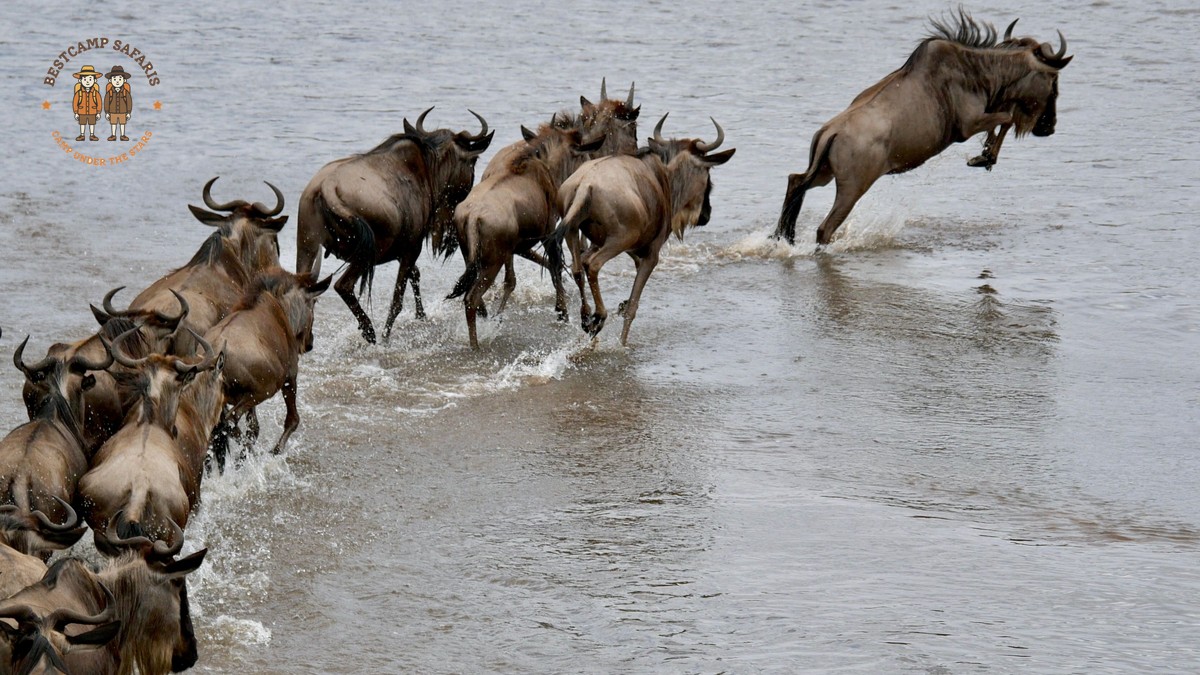
The Maasai Mara migration season in a normal year runs from late July through October. The wildebeest and zebra move north from the Serengeti, then spread across the Mara’s short grass plains. The action concentrates where the herds have to cross water: the Mara River and the Sand River. Mara River crossings are not a bus schedule. A herd can stand at the bank for hours, then explode across in minutes.
For the Great Migration Kenya, August is the busiest market. That is why the table below uses different lead times for different months. Booking in September does not hurt your wildlife viewing. It often helps your budget and your peace of mind.
| Month or season | Safe lead time to book | Zone to book early | Masai Mara reserve fee (non-resident) | Indicative full-board tented camp rate |
|---|---|---|---|---|
| July | 9 to 12 months | Mara Triangle, Mara River | USD 200 per adult per day | USD 550 to 1,100 per person per night |
| August | 9 to 12 months | Mara River, Naboisho, Mara North | USD 200 per adult per day | USD 600 to 1,200 per person per night |
| September | 6 to 9 months | Mara Triangle, Olare Motorogi | USD 200 per adult per day | USD 450 to 950 per person per night |
| October | 3 to 6 months | River zones and conservancies | USD 200 per adult per day | USD 400 to 800 per person per night |
| January to June | 2 to 4 months | Any zone works | USD 100 per adult per day | USD 350 to 750 per person per night |
The reserve fee above is set by the Narok County Government, not the Kenya Wildlife Service. Inside private conservancies such as Naboisho and Mara North, the fee is different: roughly USD 80 to 150 per person per night, bundled into your lodge rate. Camp rates come from real BestCamp quotes, but they move with season and demand. Treat them as a planning range, not a quote.
How Booking Lead Time Changes Camp and Location Choices
Early booking mainly protects your choice of location, not simply a bed. Camps near the Mara River, in the Mara Triangle, or inside private conservancies can sell out first, as can family rooms and private vehicles. A late booking may require changing zones, accepting shared drives, or choosing a less convenient camp.
Think of the Mara as three worlds. The Mara Triangle is the west section, reached through Oloololo Gate. Fewer vehicles use it, and the scenery is dramatic below the Oloololo Escarpment. Angama Mara sits above that escarpment with views over the river loop. The central reserve around the Mara River and Musiara is home to classic camps such as Governors’ Camp. The northern and eastern conservancies, including Naboisho and Mara North, offer private land and a slower pace. Our guide to Maasai Mara conservancies breaks down how each zone compares on cost and crowding.
A private safari vehicle changes the trip more than any single room upgrade. In a shared truck with seven guests, every request becomes a vote. With a private vehicle, you can wait at a crossing, turn around for a lion sighting, or spend an hour with a single cheetah. Photographers almost always choose private. They also book it early because the number of private vehicles is limited.
Camp comfort matters too. If you are weighing a mobile tented camp against a permanent lodge, our guide to Kenya safari camping comfort levels explains what each feels like after dark. A mobile camp can move closer to the herd. A permanent lodge has solid walls. Both work. The lead time for the best mobile pitches in August is often longer than the lead time for a lodge.
Can You Still Book a Last-Minute Maasai Mara Migration Safari?
Last-minute migration bookings are possible, but they work best when dates, camp category, and location are flexible. Availability may remain three to six months ahead, but the preferred camps and vehicle arrangements can already be gone. Within three months, travelers should expect compromises in room type, zone, routing, or price.
Three months out, the search becomes about airstrips, not just camps. Flights from Wilson Airport in Nairobi land at Musiara, Kichwa Tembo, Mara Serena, and Keekorok. A last-minute seat might pair you with a camp 20 minutes from the airstrip, or one that doubles the drive. The camp can still be excellent. The daily transfer time is the hidden cost.
Last-minute also means losing early-booking discounts. Some camps offer an advance purchase rate that disappears about 60 days out. You are not being penalized. You are just paying the standard rate while early planners pay less.
Vehicle congestion is the other question. If you worry about crowds at crossings, our look at Kenya safari dry-season crowds explains which zones pack up first. The short version: September usually feels calmer than August, but the riverbanks in August are the busiest place in the reserve by far.
How Many Nights Should You Book for Better Crossing Odds?
Book at least three nights in the Maasai Mara for a reasonable chance of seeing migration activity, and consider four nights if a river crossing is the main goal. Crossings cannot be scheduled: herds may wait, turn back, or move elsewhere. Extra nights create more viewing opportunities and reduce weather-related risk.
Three nights give you roughly five game drives: two or three at dawn, one or two at dusk. Four nights push that to six or seven drives. For a wildlife photographer, the extra drive is not a luxury. It is the difference between photographing a crossing and photographing the bank where a crossing happened yesterday.
A mobile tented camp adds another layer. Some camps in the Mara move their tents to stay near the active river zone. You wake in canvas, hear the tea being poured, and step out onto grass the herd may have crossed the night before. The best mobile pitches are a product of early booking and planning, not luck.
If photography is your main goal, our Kenya safari migration photography plan walks through the lenses, the light, and the patience drills that help when the herd stalls. You can also ask a camp to place you near a likely crossing point. That request works far better when made before the camp fills.
What to Confirm Before Paying for a Migration Safari
Confirm the camp’s exact zone, seasonal rate, park or conservancy fees, vehicle type, maximum passengers, transfer time, and cancellation terms before paying. Ask whether the price includes game drives and whether the operator is promising only migration-season access or incorrectly guaranteeing a crossing. These details often matter more than the camp’s star rating.
Start with the reserve fee. For non-residents, the Masai Mara National Reserve charges USD 200 per adult per day from July through December, and USD 100 per adult per day from January through June. Many quotes include this fee. Some do not. Ask until you know which one you agreed to.
If you stay in the Naboisho or Mara North Conservancy, add roughly USD 80 to 150 per person per night. This is bundled into your lodge rate rather than paid at a gate. It pays for private land, lower vehicle density, and the freedom to stay with a crossing for a long time. In the reserve itself, expect more vehicles and no conservancy fee.
Check the vehicle next. A private safari vehicle is a separate line item in most quotes. Shared drives are fine for many travelers. For a photographer, a full truck with six other guests can turn a patient wait into a rushed goodbye. Confirm maximum passengers before you pay.
Finally, read the crossing language. If an operator says they can guarantee a Mara River crossing on your date, walk away. No one can. Herd movements depend on rainfall, grass, and river levels. A truthful operator will promise good positioning, extra nights, and a flexible plan. That is the promise that matters.
Frequently Asked Questions
How early should I book Maasai Mara for the migration?
Book 9 to 12 months ahead for July and August, especially for premium camps, private vehicles, and preferred river or conservancy locations. September and October can often be booked 6 to 9 months ahead, although specific camps may sell out sooner.
What month is best for the Maasai Mara migration?
Late July through September is generally the strongest window for migration activity and river crossings, with August often associated with the highest demand. September may offer a better crowd-to-wildlife balance, while October can provide lower pressure and continued herd activity.
Can I book a last-minute Maasai Mara safari?
Yes, but last-minute availability is most realistic when travel dates and accommodation choices are flexible. Three to six months ahead may still produce workable options, while bookings within three months can mean fewer camps, shared vehicles, different zones, or higher prices.
How many nights do I need in Maasai Mara to see a river crossing?
Plan for at least three nights, or four nights if witnessing a crossing is the primary objective. No safari operator can guarantee a crossing on a particular day because herd movement depends on rainfall, grass, river conditions, and animal behavior.
Is July or August better for the Maasai Mara migration?
August is usually the safer choice for travelers prioritizing dense herds and crossing potential, but it is also one of the busiest and most expensive months. July can offer earlier activity and fewer vehicles at some times, but arrival dates vary significantly between years.
The BestCamp Safaris Difference
I have slept in enough Mara camps to know that planning beats luck. BestCamp Safaris builds migration trips backwards from the calendar. We start with your preferred month, show you where the herd has the best chance of being, and reserve a camp near that zone before the good rooms vanish. We protect your private safari vehicle, your airstrip transfer, and your drivers.
We plan mobile tented camps for travelers who want the full routine: tea in a metal flask at dawn, a canvas bucket of hot water, dinner by lamplight, and the feel of the ground under the tent at 5am. We also plan permanent lodges for those who prefer wooden floors and solid walls. The itinerary follows the migration, not a brochure.
The honest part is this: we do not sell guaranteed crossings because guaranteed crossings do not exist. We sell a booking calendar, a location, and the extra nights that give the herd time to perform. That is the practical difference.
Plan Your Maasai Mara Migration Safari
Start with the month, then the zone, then the camp. That is the 12-month plan in three steps. When your dates are firm, the BestCamp Safaris team can compare availability across the Mara Triangle, the river, and the conservancies, then send you a clear quote with the fees itemized. Start planning with BestCamp Safaris and bring your flight dates. We will handle the route, the camp, and the timing.


