
 Adventure Tours
Most photographers come to the Masai Mara for one picture: a column of wildebeest hitting the river. That frame only happens when the plan is built around the river, the light, and your own patience. This Kenya safari migration photography plan gives you seven days, five full shooting days, a camp that moves with the herds, and a realistic budget. I have slept in these tents. I know what it feels like to be woken at 5am by canvas, coffee, and a cold dawn. This is how I would shoot the migration.
Best Months for Kenya Migration Photography
Plan for late July through September if river crossings are the priority. August offers frequent dramatic activity, while September usually brings cleaner light and fewer vehicles. Choose July for arriving herds and lower pressure, or October for thinner crowds and warm dust tones. Migration timing stays weather-dependent, so no date can guarantee a crossing.
August is when the biggest herds sit on both sides of the Mara River. But August is also when the reserve can feel like a busy highway. I have waited at a crossing with eight vehicles lined up beside us. I have also had a bank almost to myself in late September. The difference is often the guide’s radio network and your willingness to wait. If your dates are flexible, ask about the first half of September. The light stays lower, the dust glows gold, and the action remains intense. If you want to avoid the busiest weeks entirely, read our notes on Kenya’s dry-season crowds and quiet months.
How Many Days You Need for a Kenya Migration Photography Safari
Allow seven days in the Masai Mara for a serious migration photography plan: one arrival day, five full photographic days, and one departure day. That gives you multiple dawn and sunset sessions, flexibility to wait at a crossing, and time to recover from travel. A broader Kenya photography itinerary works better at 10 to 14 days.
A two-day safari is a game drive with a plane ticket. You will see animals, but you will not have room for a missed crossing. Five full days is the minimum for the rhythm this type of photography needs. That rhythm includes dawn starts, a waiting game at the river, and one quiet conservancy morning. Day seven is a soft landing: a dawn drive, a camp breakfast, and a flight back to Nairobi. If you have 10 to 14 days, add Amboseli for elephant dust and Lake Nakuru for flamingo lines. Every extra day improves your odds.
Masai Mara Reserve Versus Private Conservancy
Stay inside or near the Masai Mara National Reserve for broad wildlife access and proximity to known crossing areas. Choose a private conservancy for fewer vehicles, quieter sightings, and more flexible camp experiences. The practical compromise is splitting nights between both. Expect higher conservancy rates, while the reserve can feel busier during August peak activity.
The reserve holds the classic crossing points and the open plains photographers return to year after year. The trade-off is company. In August, ten vehicles can surround a single crossing attempt. A conservancy like Naboisho or Mara North enforces strict vehicle limits. You can spend an hour with a cheetah and hear nothing but the shutter. The reserve fee is USD 100 per adult per day from January to June and USD 200 from July to December. Conservancy fees are bundled into your camp rate, roughly USD 80 to 150 per person per night. That fee buys private land, night drives, and walking safaris, which the reserve does not allow after dark.
| Base for your shoot | Daily entry fee | Vehicle pressure | Crossing access | Camp feel |
|---|---|---|---|---|
| Masai Mara National Reserve | USD 100 (Jan-Jun) / USD 200 (Jul-Dec) per adult | High in August; busy at river | Best; most crossing points are inside | Mobile camps just outside the gates |
| Naboisho Conservancy | Roughly USD 80 to 150 per person per night, bundled | Low, strict vehicle limits | Good; drive into the reserve for river mornings | Private, quiet, night drives allowed |
| Mara North Conservancy | Roughly USD 80 to 150 per person per night, bundled | Low, strict vehicle limits | Good; quicker access to northern crossings | Wild and open, fewer fences |
A 7-Day Kenya Safari Migration Photography Plan
This plan is the one I would run with BestCamp Safaris. Each day has one main subject and one fallback, so a quiet river never wastes a morning.
- Day 1: Arrival and orientation. Fly from Nairobi’s Wilson Airport to the Mara (roughly 45 to 60 minutes) or drive about 270 km via Narok (5 to 6 hours). Afternoon game drive. Shot focus: herd scale from a distance, camp scenes at golden hour.
- Day 2: Plains sunrise. Start near the Oloololo Escarpment on the western plains. Shot focus: columns moving at dawn, dust backlit, calves running beside their mothers.
- Day 3: Mara River crossing watch. Position near a known crossing zone like Kichwa Tembo or Lookout Hill on the guide’s call. Shot focus: gathering, jump, swim, predator, exit bank. Keep two bodies ready.
- Day 4: Conservancy morning. Naboisho or Mara North. Shot focus: big cats without car clutter, low-angle grass portraits. Walk if your camp allows.
- Day 5: Golden hour plains. Shot focus: herd-scale wide shots, dust storms, males jostling. Use the 70-200mm for environmental frames.
- Day 6: Second river session, or repeat a theme. Shot focus: a different crossing point or a predator sighting in softer light.
- Day 7: Departure. Dawn drive, breakfast, flight back to Nairobi. Shot focus: final portraits of camp and the escarpment.
Camera Gear and Settings for Migration Photography
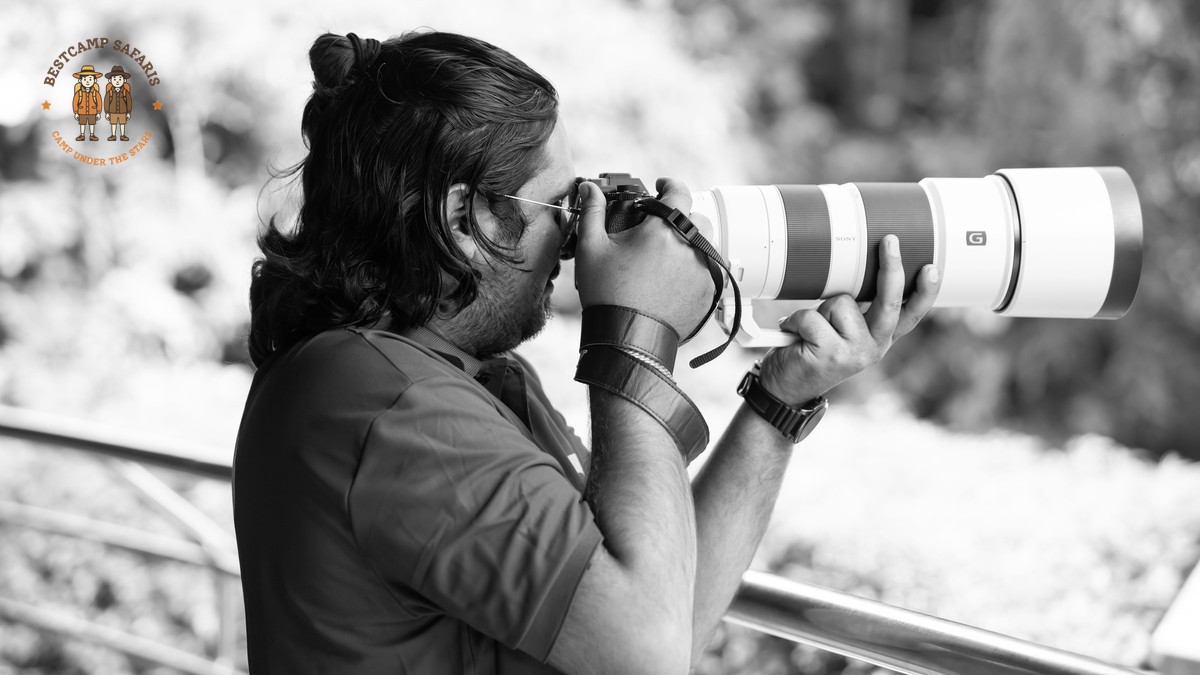
Pack a camera with reliable autofocus, a 100-400mm or 200-500mm telephoto, a 70-200mm zoom, spare batteries, memory cards, dust protection, and a beanbag. Start around 1/1,000 second for running animals and 1/1,600 to 1/2,000 for crossings. Use continuous autofocus, burst mode, and higher ISO when light falls.
The 100-400mm zoom is the most versatile lens in a safari vehicle. You can frame a herd across a plain and then tighten onto a single zebra. A 500mm prime helps with crossings, when the action happens 50 meters away and the vehicle cannot move. A 70-200mm is best for environmental portraits and camp scenes. A beanbag is non-negotiable. Set it on the vehicle door and rest the lens on it. When light drops at the crossing bank, push the ISO to 1600 or 3200 instead of lowering speed. Dust is the bigger enemy. Keep a rocket blower in your pocket and wrap a spare body in a dry bag.
Where and How to Photograph a Mara River Crossing
Work through five visual moments: herds gathering, animals jumping, swimming, predator activity, and climbing the exit bank. Photograph wide environmental scenes and tight action sequences. Check the histogram as light changes. Follow the guide’s positioning and keep a safe distance. The crossing may happen suddenly or not at all during your stay.
The gathering is the first signal. Wildebeest bunch near the bank, test the water, turn back, and re-form. That is the time to frame wide shots with the curve of the river. The jump happens without warning. Keep the second body ready and the lens focused on the bank. Swimming animals create lines and splashes. Predators are rare, but crocodiles are often below the surface. Look for the exit bank where the first animals climb out covered in mud and light. Watch the histogram because the water’s surface reflects light unpredictably. Your guide will position the vehicle for safety and for the bank you need. Trust that position. A crossing can be over in 90 seconds, and there is no retake.
Photography Safari Costs, Camps, and Transport
Budget about $2,500 per person for a five-night mid-range mobile-camp safari and $12,000 or more for an ultra-luxury conservancy stay during peak season, before custom extensions. Road transfers can lower costs but consume shooting time. Scheduled or chartered flights preserve field hours and simplify heavy camera-gear logistics.
The biggest cost decision is how you get to the Mara. A road transfer from Nairobi takes five to six hours and costs far less than a flight. It still eats a half day of shooting. A scheduled flight from Wilson Airport takes about 45 to 60 minutes. For two photographers with heavy camera bags, the flight usually pays for itself in field hours. Park fees are the next line item. The Masai Mara National Reserve charges USD 200 per adult per day from July to December, the peak season for migration photography. Conservancy fees are bundled into camp rates. Kenya safari costs by accommodation vary from basic tented camps to private conservancy villas. Compare per-night cost plus fees, not the headline price.
The BestCamp Safaris Difference
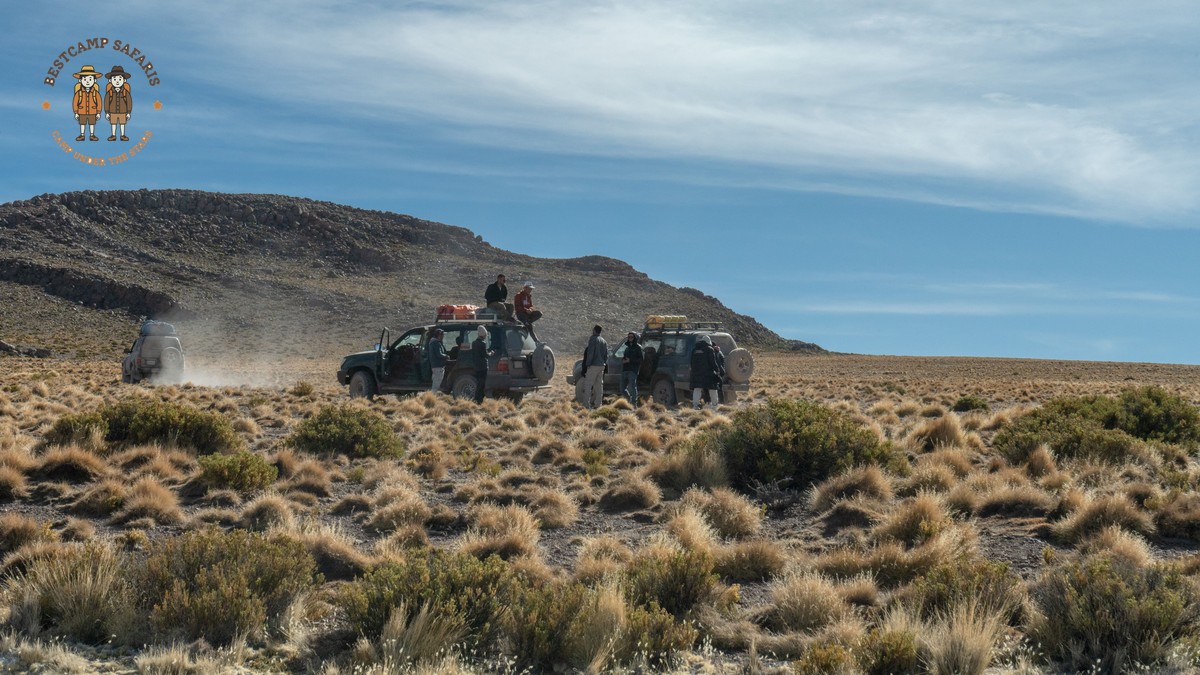
BestCamp Safaris runs mobile-camp migration photography trips built around light and herd movement instead of a fixed lodge schedule. Every vehicle carries a beanbag, a backup charging station, and a guide trained to read light and position for a crossing. Camps relocate as the herds move, splitting nights between the reserve edge and a low-vehicle conservancy.
The wake-up call at a BestCamp Safaris mobile camp is not a phone. It is the sound of the cook stacking the breakfast box and the zip of another tent. You pull on a fleece, drink coffee standing in damp grass, and the first light hits the canvas. By 5:45am you are in the vehicle, beanbag ready, and the reserve is still in that grey hour before the sun clears the escarpment.
We build seven-day itineraries around photographers, not around fixed lodge schedules. The camp moves when the herds move. Some nights we sleep on the edge of the reserve; other nights we stay inside a conservancy with a strict vehicle limit. Every vehicle carries a beanbag, a backup charging station, and a guide who thinks in light. After dark, dinner is served by lantern. The night sky over the Mara is clear enough that you can plan tomorrow’s frames before you close your eyes. If you are worried about the cold, a July night in canvas can drop near 10°C. Read our notes on how cold safari tents can feel at night before you pack.
Frequently Asked Questions
Short answers for the questions photographers ask most.
What is the best month for migration photography in Kenya?
August and September are the strongest months for dramatic river-crossing photography. September often offers cleaner light and less vehicle pressure. July and October can provide excellent images with fewer visitors, although crossing activity is less predictable.
How many days do you need for a Kenya migration photography safari?
Seven days is a practical minimum for a dedicated Masai Mara trip. It provides five full shooting days plus arrival and departure time. That increases your chances of seeing changing herd behavior and photographing dawn, midday, and sunset conditions.
Is the Masai Mara or a private conservancy better for photography?
A private conservancy is generally better for quieter compositions and fewer vehicles. The national reserve offers wider access to major wildlife areas and possible crossing locations. Splitting the itinerary between both provides the best balance, but the conservancy usually costs more.
What camera lens do I need for the Great Migration?
A 100-400mm zoom is the most versatile starting point. A 400mm-or-longer lens helps isolate distant river action. Add a 70-200mm or wide-angle lens for herd-scale landscapes, camp scenes, and environmental portraits.
How much does a Kenya migration photography safari cost?
A five-night mid-range mobile-camp safari may cost about $2,500 per person. An ultra-luxury conservancy itinerary can exceed $12,000 per person in peak season. Flights, private vehicles, specialist photographic guides, and extended stays can increase the total.
Plan Your Kenya Migration Photography Safari
Every migration season is different, but a good plan is not. BestCamp Safaris can build a seven-day shot list around your dates, your lens bag, and your budget. We know which camps chase the light, which guides sit quietly at a river crossing, and where the vehicles thin out. Contact the BestCamp Safaris team to start planning, and bring your longest lens.


