
 Uncategorized
Before sunrise, a fly camp in Laikipia feels very different from one in Samburu. Kenya safari temperatures depend on altitude, season, wind, and how well you are tucked into bed. This checklist answers how cold are Kenya fly camps, explains what the camp provides, and gives a practical packing plan for the coldest hour of the day.
How Cold Are Kenya Fly Camps at Night?
Most Kenya fly camps feel cool rather than freezing overnight, with typical pre-dawn lows around 8-16°C depending on altitude and location. Laikipia and other highland areas can reach roughly 8-13°C, while Samburu is often milder at 15-20°C. A properly made bed, duvet, and extra blanket usually keep guests comfortable.
Keep these points in mind:
- Ask how high the camp sits. Laikipia is often colder than Samburu at the same hour, and high ground feels crisper than low valleys.
- Watch for cold from below. The canvas floor and raised bed let cold in fast. Keep a spare blanket folded at the foot of the bed.
- Expect sunrise near 6:00 to 6:30 a.m. Kenya’s equatorial position keeps day length almost constant. The coldest moment usually falls just before the camp team brings your morning tea.
How Cold Are Fly Camps Before Sunrise and on Morning Drives?
The coldest part of a Kenya fly-camp day is usually the hour before sunrise. Temperatures can sit near 8-12°C, and moving air makes an open vehicle or walking start feel colder. By late morning, temperatures may exceed 25-30°C, so wear a fleece or light puffer rather than a heavy coat.
Tips for that early morning game drive:
- Treat 8-12°C as the starting point. It feels fresh in a still tent but colder in an open 4×4.
- Add wind to your mental math. A dawn walk feels the same: your body senses the breeze even at a steady 10°C.
- Dress in three removable layers: a base layer, a fleece, and a light jacket. Expect to shed the outer layer by 9:30 a.m.
- Keep a warm layer on your day seat. Temperature swings fast between shaded forest and open plains.
Kenya Fly-Camp Temperatures by Destination and Altitude
Altitude matters more than Kenya’s equatorial position. Laikipia and other highland fly camps see pre-dawn lows near 8-13°C. The Masai Mara commonly reaches 12-16°C. Chyulu Hills varies with elevation, and lower, hotter Samburu areas often stay near 15-20°C. Confirm the camp’s exact elevation before departure.
The table below gives planning ranges, not a forecast. An exposed-ridge camp will feel colder than one tucked near a river.
| Destination | Typical pre-dawn low (indicative) | Approx. altitude | What it feels like before dawn |
|---|---|---|---|
| Laikipia Plateau, including Loisaba Conservancy | 8-13°C | 1,600-2,100 m | Sharp chill; warm sun after 10 a.m. |
| Masai Mara, including Naboisho Conservancy | 12-16°C | 1,500-1,900 m | Cool; vehicle wind is the main factor |
| Samburu lower Ewaso Ng’iro area | 15-20°C | 800-1,200 m | Mild; a fleece over a shirt is often enough |
| Chyulu Hills | 10-16°C | 1,500-2,100 m | Depends on the exact site and slope |
Two more rules will save you from cold surprises:
- Ask for the camp’s exact location, not just the reserve name. An open-grassland Mara camp feels colder than one sheltered by trees.
- If your trip moves from high ground to low country, plan where your warm jacket lives during the move. See what happens during a fly-camp move to keep it accessible.
Which Months Are Coldest for Kenya Fly Camping?
June through August usually brings the coldest mornings and nights, especially at high altitude. Afternoons stay sunny and warm even when sunrise feels chilly. January and February run warmer, while rainy-season cloud and damp canvas can make March-May and November mornings feel colder than the thermometer suggests.
Use this seasonal checklist when choosing your month:
- Expect the coldest air in June, July, and August. Daytime highs are pleasant, but pre-dawn hours need a real fleece or puffer.
- Pack for sunny afternoons even in cold months. Midday heat can climb above 25°C at high altitude.
- Watch the rainy season if you are cold sensitive. Moist air in March-May and November makes 12°C feel colder than dry air.
- Check how camp routines are timed before you book. A well-run mobile camp serves tea before the first departure. Our Kenya mobile-camp day schedule shows when cold hours arrive.
How Fly Camps Keep Guests Warm
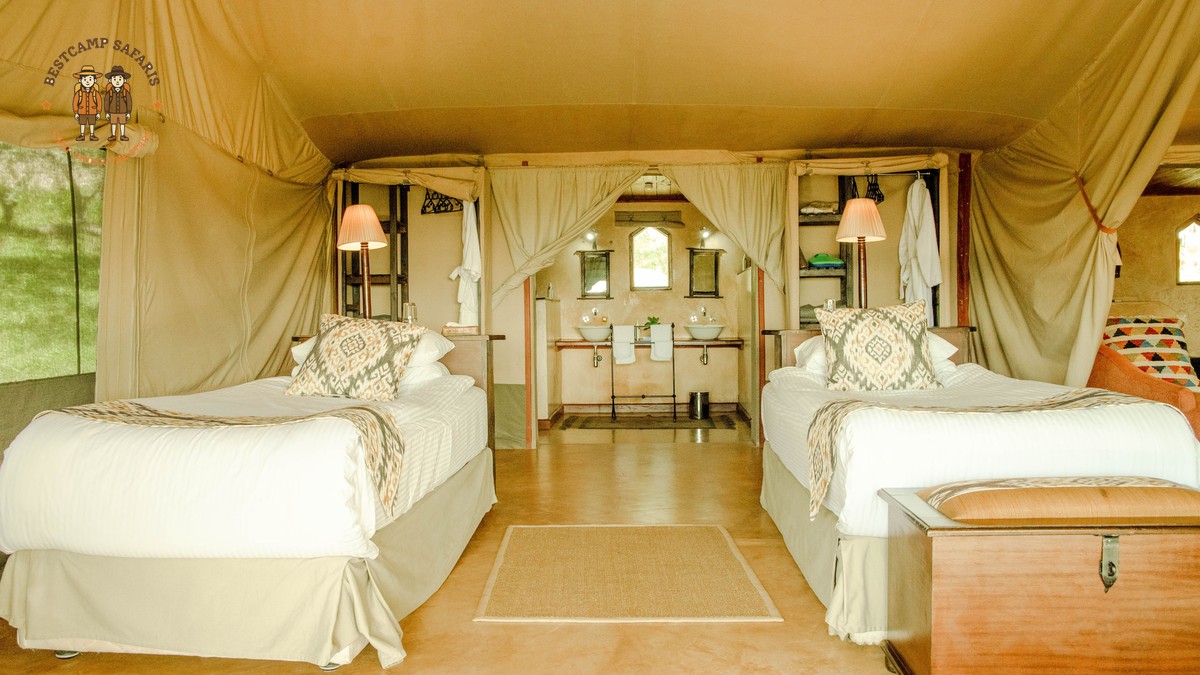
Fly camps commonly prepare beds with thick duvets, blankets, and sometimes hot-water bottles; some permanent tented camps also use heaters or fireplaces. Mobile camps may have fewer heating facilities, so confirm what is included before booking. Warm bedding at night plus a fleece before dawn is the most reliable combination.
Ask these questions before you confirm any camping safari:
- Does the camp provide a hot-water bottle at turn-down? Many do, especially in Laikipia and the Mara in July and August.
- What is on the bed? A mattress, sheets, duvet, and two blankets is common. A cotton sheet alone will not do on a highland night.
- Are there extra blankets in the tent? If so, you will sleep better at the low end of the range.
- Is heating available? Permanent camps sometimes offer fireplaces or heaters. True fly camps rely on bedding and hot-water bottles instead.
BestCamp Safaris adds a floor mat under the sleeping area and dries every duvet during the day. These small details matter more than a heater on a camp that moves every few days.
What to Pack for Cold Kenya Fly-Camp Mornings
Pack a moisture-wicking base layer, fleece or light down jacket, windproof outer layer, long trousers, warm socks, and a compact hat or buff. Keep the warm layer beside the bed or in your day bag, since departures often happen around 5:30-6:00 a.m.
Follow this what-to-wear-on-safari packing list, then adjust for your destination:
- Choose a base layer that breathes. Merino wool or synthetic sports fabric works well; cotton stays damp and feels colder.
- Bring one fleece and one light puffer. These solve most cold mornings; a heavy winter coat is overkill.
- Add a windproof shell. It blocks the breeze from an open vehicle or a morning walk.
- Pack warm socks, a beanie, and a buff or scarf. Gloves help in highland camps from June to August.
- Keep the warm layer beside your bed so you are not digging through a duffel bag at 5:45 a.m.
- Use soft-sided luggage when flying between camps. It fits small Cessna holds and still leaves room for insulation.
- Review the full checklist before departure. Our 15 fly-camping essentials to pack covers fly camps, vehicle-based camps, and permanent lodges.
Your Next Step
Ask one specific question before you book. Confirm the bedding details for your exact fly camp, including the month, altitude, and whether hot-water bottles are provided.
That answer tells you what to pack: a fleece and puffer are enough if the camp sleeps you under a duvet with an extra blanket. If not, add a warm sleep layer and thicker socks. Send us your preferred region, from Laikipia to the Mara to Samburu, and we will match you with a mobile camping safari that fits your comfort level. Start planning on the BestCamp Safaris contact page.


