
 Wildlife Tours
The first night I slept in a canvas tent in Laikipia, I zipped the mesh door twice and checked it a third time by torchlight. That’s normal. Almost every first-time guest asks about snakes before they ask about anything else, including lions. This snakes safari camp kenya safety guide gives you the real answer, not the generic one.
Snakes Safari Camp Kenya Safety Guide: Do Camps Actually Have Snakes?
Yes, but rarely where you’d expect. Most camps sit inside conservancies full of rodents, birds, and cover, which is exactly what snakes like too. That said, actual guest encounters are uncommon. Staff at long-running Mara and Laikipia camps report seeing a snake inside a guest tent maybe a handful of times a season, out of hundreds of stays. You are far more likely to see one on a game drive or a bush walk than in your bed.
The anxiety travelers bring is usually bigger than the real risk. Forums like TripAdvisor and Fodor’s are full of worst-case tent stories, but the statistics don’t back up the fear. Camps have decades of practice keeping snakes out, and it works.
Common species you might encounter
Kenya has around 150 snake species. Only a small number are dangerous, and most snakes you’ll actually see are harmless.
Venomous species you might hear about:
- Puff adder – slow-moving, well camouflaged, responsible for more bites in East Africa than any other species because people step on it without seeing it.
- Black mamba – fast, alert, and rarely seen by guests. It avoids humans and prefers rocky, wooded areas away from camp.
- Boomslang – lives in trees, shy, bites are rare because it needs to hang on to inject venom.
- Egyptian cobra – found near water and rocky ground, will usually flee rather than confront.
Non-venomous species you’re more likely to actually spot:
- African rock python – large but not a threat to adults, sometimes seen near waterholes.
- Brown house snake – common around camp structures, harmless, eats rodents.
- Sand snakes – fast-moving, diurnal, and completely harmless to people.
Guides can usually identify a snake by sight, so if you see one, ask before assuming the worst.
Why and when snakes come near camp
Snakes aren’t hunting people. They’re hunting rodents, and rodents go where there’s food and shelter, which sometimes means kitchen tents and storage areas. This is why camps take rodent control seriously, not just snake control.
Timing matters. Snakes are most active in Kenya during the warmer, wetter months, roughly October through December and again March through May, when prey is abundant and the ground is soft enough for burrowing prey species to be active. Dawn and dusk are peak movement times, which lines up with when camps run their game drives and when guests walk between tents and the mess area.
How camps are built and staffed to prevent encounters
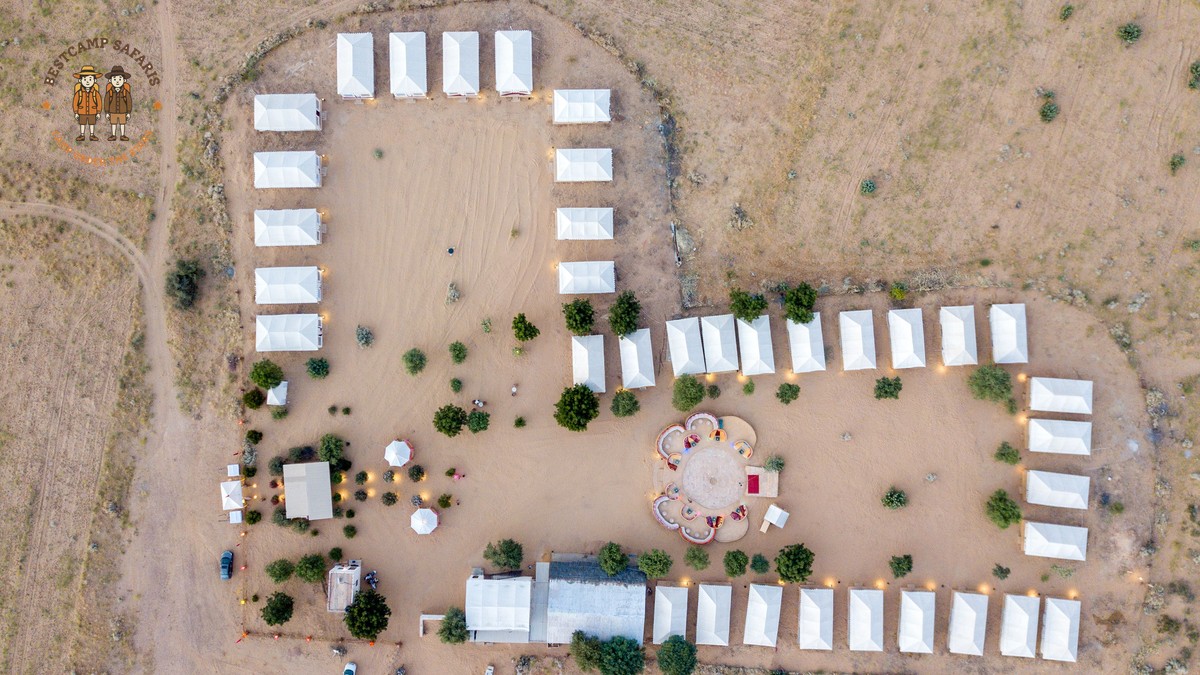
This is where the details actually matter, and where most guides go vague. At well-run mobile camps in places like the bush camping in Laikipia’s wildest conservancy circuit, tents sit on raised canvas groundsheets with sealed edges, not directly on bare earth. Zips run the full perimeter of the tent, including the floor seam, and staff check them each afternoon during turndown.
Nightly torch-escort is standard. A staff member walks you from the mess tent to your own tent after dark, sweeping the path with a torch. This isn’t ceremony. It’s a genuine check for anything on the ground, snake or otherwise. You should never walk camp paths alone at night, not because it’s especially dangerous, but because it’s an easy risk to remove entirely.
Camps also clear brush and long grass in a perimeter around the tent lines, since that’s where snakes feel safest moving. Kitchen and food storage areas get extra attention, since that’s where rodents, and therefore snakes, are most likely to turn up. If you want to see how this all fits together before you arrive, it helps to understand how mobile safari tents are actually set up.
What to do if you see a snake in your tent or on a walk
Stay still first. Most bites happen when someone tries to move a snake or corners it by accident. Back away slowly if there’s room, and call for a staff member rather than handling it yourself. Camp staff are trained to safely relocate snakes away from tent lines, usually with a snake hook, not to kill them.
On a walking safari, your guide will always be ahead of you and watching the ground. If they stop and put a hand up, stop immediately and stay quiet. Do not walk around them to look.
Snakebite first aid and what not to do
Bites on safari are rare, but knowing the basics matters more than knowing snake species names.
Do this:
- Keep the person calm and still. Movement speeds venom through the body.
- Remove rings, watches, or anything tight near the bite before swelling starts.
- Immobilize the limb, keeping it below heart level if possible.
- Get to medical help immediately. Camps carry a satellite phone or radio for exactly this.
Do not do this:
- Do not cut the wound.
- Do not try to suck out venom.
- Do not apply a tight tourniquet.
- Do not apply ice.
These old remedies do more harm than good and delay real treatment.
Evacuation and medical or antivenom access
This is the part most blogs skip entirely, so here’s the real chain. Camps in the Mara and Laikipia work with AMREF Flying Doctors, based at Wilson Airport in Nairobi, for emergency air evacuation. Response time to a Mara airstrip typically runs 45 minutes to just over an hour once a plane is dispatched, weather permitting.
| Region | Nearest referral hospital | Approx. distance / response time | Non-resident park or conservancy fee (2026) |
|---|---|---|---|
| Masai Mara (mobile camps) | Tenwek Hospital, Bomet | ~60-90 km by road; AMREF air response ~45-75 min | USD 100/day (Jan-Jun), USD 200/day (Jul-Dec) |
| Naboisho / Mara North Conservancy | Tenwek Hospital, Bomet | ~50-80 km by road; air response similar to above | USD 80-150/person/night (bundled) |
| Laikipia Plateau | Nanyuki Cottage Hospital | ~40-60 km by road, 1-1.5 hrs | Indicative range: USD 60-100/person/night, conservancy dependent |
| Nairobi-based camps | Aga Khan University Hospital / Nairobi Hospital | Under 30 km, 30-60 min by road | USD 80/day (Nairobi National Park) |
Regional hospitals in these areas stock antivenom for locally relevant species, and camps confirm current stock as part of their standard medical protocol before each season. This is a fair question to ask your operator directly when booking.
Mobile tented camps vs permanent lodges: does tent type change the risk
This is the honest comparison most sites avoid, because the answer is nuanced.
| Factor | Mobile canvas tent | Permanent lodge room |
|---|---|---|
| Ground contact | Raised groundsheet, sealed edges | Solid concrete or wood floor |
| Entry points | Zipped mesh and canvas doors | Hard doors and windows with screens |
| Nightly staff checks | Standard at reputable operators | Standard, often less frequent |
| Vegetation clearance | Done fresh at each site | Established over years |
| Guest perception | Feels more exposed | Feels more secure |
| Actual entry risk | Low, with sealed zips and checks | Low, similar overall |
The real difference is psychological more than physical. A well-maintained canvas tent with sealed zips is not meaningfully easier for a snake to enter than a lodge room, but it feels less secure because you can hear the outside. Older or budget tents without sealed groundsheets are the real risk factor, not canvas itself.
Snake safety for kids on safari
Kids are naturally curious and lower to the ground, which means camps with children on site add extra precautions. Staff brief kids specifically not to reach under beds, luggage, or camp furniture, and family tents get an additional zip and floor check at turndown. If you’re planning a family trip, ask your operator whether the specific camp runs a children’s safety briefing on arrival, since not all do.
Do snake repellents or deterrents actually work?
Rope repellents, sonic devices, and commercial sprays are popular online, but there’s no solid evidence they reliably keep snakes away. Snakes don’t have ears the way mammals do, so sonic devices have little effect on them. The measures that actually work are the boring ones: sealed tent floors, cleared vegetation, rodent control, and staff who check paths and tents every single day. If an operator leans on a repellent product instead of these basics, that’s worth asking about.
The BestCamp Safaris Difference
We don’t treat snake safety as a footnote. Every mobile camp we run has sealed-floor tents, a nightly torch-escort policy for every guest after dark, and a documented antivenom check with the nearest referral hospital before the season starts. Our guides carry satellite communication on every walk and drive, not just at fixed camps. If you want to understand the bigger picture of what’s real and what’s overstated about safari risk, our piece on common Kenya safari myths covers more than just snakes.
Plan your trip with confidence
Snakes are part of the ecosystem you’re coming to see, not a reason to stay home. If you want a camp that takes the details seriously, from tent zips to evacuation planning, get in touch through our contact page and we’ll help you plan a trip that matches your comfort level.


