
 Adventure Tours
Three years ago, the only WiFi at our fly-camps was a joke someone told over dinner. Now our crew sets up a Starlink Mini before the guides even finish staking the mess tent. In short, Starlink internet safari camps Kenya wide are becoming the norm, and that changes more than just Instagram uploads.
I have watched this happen from the inside. BestCamp Safaris runs mobile tented camps across the Mara ecosystem and down toward the Chyulu Hills. Satellite internet has rewired how we operate, not just how guests check email. This post is about what actually happens when a dish goes up in the bush, what it costs, and where it still falls short.
Starlink Internet Safari Camps Kenya: How Guests Get Online in the Bush
There used to be three options in remote Kenya: no signal, weak Safaricom signal near a park gate, or an expensive, slow VSAT dish that only a handful of high-end lodges could afford. Starlink added a fourth option, and it is the one guests notice first.
Mobile signal still matters. Safaricom and Airtel towers reach many park boundaries and gate towns, so a local SIM or eSIM gets you basic data near Sekenani Gate or Amboseli’s Kimana entrance. But drive twenty minutes into the conservancy and that bar drops to nothing.
Camp WiFi through Starlink works differently. It does not depend on a cell tower at all. It talks to a satellite constellation overhead instead. That means a permanent camp in Naboisho Conservancy or a walk-in site deep in Mara North can get a real connection where no tower ever reached.
For guests who want the genuine bush experience, that raises a question worth asking honestly: do you actually want it? More on that below. First, here is where the signal actually holds up.
Park-by-Park: What Connectivity Really Looks Like
Signal strength changes fast depending on where you are and how the camp is set up. Here is what we see on the ground, not marketing copy from a retailer.
| Park / Reserve | Distance from Nairobi | Non-resident park fee | Mobile signal | Starlink availability |
|---|---|---|---|---|
| Masai Mara National Reserve | Roughly 270 km | USD 100/day (Jan-Jun), USD 200/day (Jul-Dec) | Weak to none away from gates | Common at permanent camps, growing at fly-camps |
| Naboisho / Mara North Conservancy | Roughly 280 km | USD 80-150/person/night, bundled into camp rate | Almost none | Standard at most tented camps now |
| Amboseli National Park | Roughly 240 km | USD 90/day | Fair near Kimana Gate | Widespread at lodges and camps |
| Tsavo East / Tsavo West | Roughly 230-330 km | USD 80/day | Patchy | Growing, still uneven site to site |
| Chyulu Hills National Park | Roughly 250 km | USD 40/day | Very limited | Portable Starlink Mini at fly-camps only |
These are approximate driving distances by road. Flying in cuts most of them to 35-45 minutes from Wilson Airport. Fees are current 2026 non-resident rates. The Mara reserve fee is set by Narok County Government, not KWS, which trips up a lot of first-time visitors comparing it to national park pricing.
Starlink vs the Old VSAT Dishes
Before Starlink, a handful of top-end camps ran VSAT satellite systems. They worked, but they were slow and expensive to run. Think dial-up speeds for a whole camp sharing one connection, with monthly bills that could run into the hundreds of thousands of shillings.
Starlink flipped that. A standard kit downloads at 50 to 200 Mbps in good conditions, shared across the whole camp. That is enough for video calls, not just email. The hardware itself now costs a fraction of what VSAT gear did, and setup takes minutes instead of a technician’s day trip.
The trade-off is bandwidth sharing. When six tents are all on a call at once, speed drops fast. We have learned to be upfront with guests about that instead of overpromising.
Fly-Camp Setups: What It Actually Takes
This is where it gets interesting for anyone who prefers fly camps over a fixed lodge. A Starlink Mini is small enough to strap to a roof rack next to the water jerricans. It weighs about 1.1 kg and folds down to the size of a laptop bag.
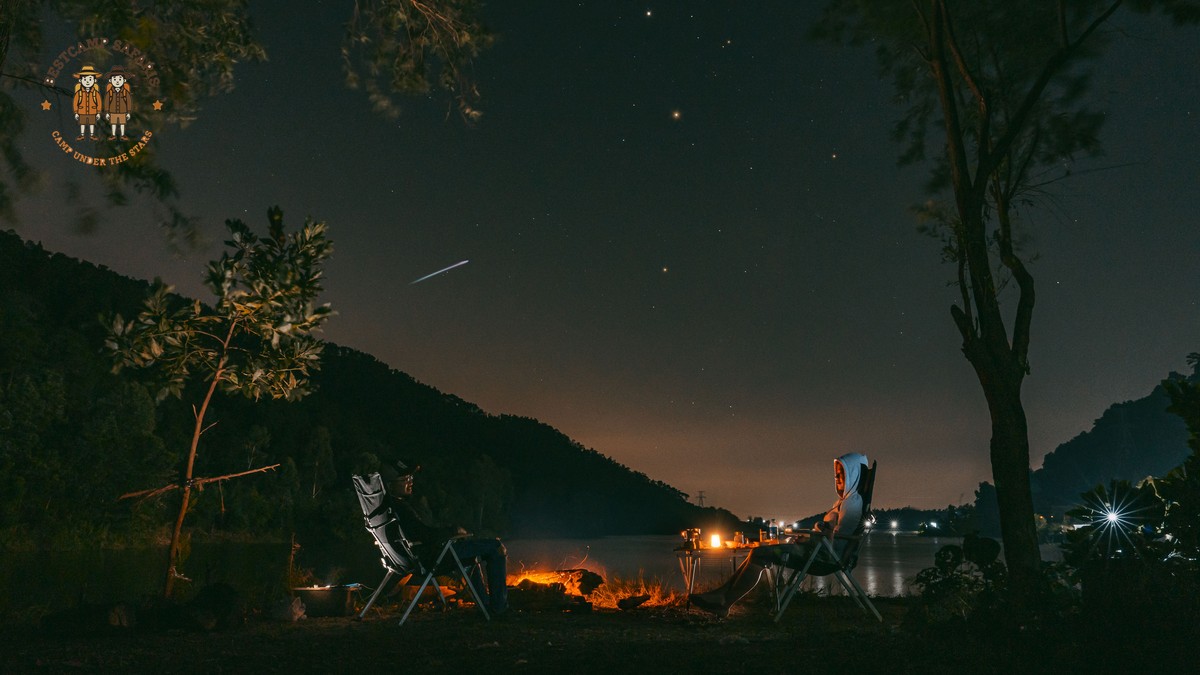
Here is our actual routine for fly-camping in the Chyulu Hills. The advance team drives in with the mess tent, camp chairs, and gear a few hours ahead of guests. Someone stakes the Mini on a flat patch clear of tree cover and points it skyward using the app. Then it gets plugged into a small portable power station charged off a solar panel. From unpacking the case to a working connection usually takes under ten minutes, sometimes less if the sky is clear.
It is not flawless. Thick canopy near riverine forest blocks the signal, and a camp tucked into a valley for wind cover can lose the satellite line entirely. Guides pick campsite spots that balance a good view, shelter from wind, and a clear patch of sky. Some nights that means the dish goes up on a small rise fifty meters from the tents.
Charging, Power, and Solar in Remote Camps
None of this works without power, and power is the part guests rarely think about. Permanent camps usually run a bank of solar panels feeding deep-cycle batteries. That keeps the Starlink router, camp lighting, and phone charging stations running overnight.
Fly-camps run leaner. A single 100-watt folding solar panel paired with a 500Wh power station can run a Starlink Mini for a full day. It also charges a couple of camera batteries and phones on the side. On cloudy days we carry a backup battery pack as insurance. Guests can usually charge devices at a central charging point near the mess tent, though we ask people not to expect an outlet inside every sleeping tent.
Pricing: What Starlink Actually Costs to Run
Costs vary by kit and current promotion, so treat these as indicative ranges rather than fixed prices.
| Item | Indicative cost |
|---|---|
| Starlink Mini hardware | KES 45,000-65,000 |
| Standard kit (permanent camps) | KES 65,000-90,000 |
| Roam monthly plan (portable, unlimited data) | KES 12,000-15,000 |
| Residential/Standard monthly plan (fixed camps) | KES 6,500-10,000 |
Compare that to old VSAT contracts, which regularly ran camps KES 100,000 or more a month for a fraction of the speed. That drop in cost is the real reason connectivity spread so fast across small camps that could never have justified a VSAT install.
Is It Worth Bringing Your Own SIM?
Yes, honestly. Camp WiFi covers you at camp, but not on a game drive. It will not help during a river crossing at the Mara or a long bush drive through Tsavo. A local Safaricom SIM or an eSIM gives you a fallback near towns and gates, even if it drops out completely once you are deep in the bush. We tell guests to treat camp WiFi as the main connection and a SIM as backup for transit days.
Does Having Internet Ruin the Safari?
This is the honest question, and I will not dodge it. Something changes when a camp has fast WiFi. The old ritual of walking back into camp after a night game drive still happens the same way, guided only by a guard’s torch and the fire glow ahead. But now half the group checks their phone before dinner instead of after.
We do not police that. What we do is build the schedule so connectivity does not creep into the parts of the day meant to be unplugged. Game drives stay phone-down time by default. Star-bed nights still happen without a screen in sight, because there is no signal reaching that ridge anyway. That is not an accident.
If you are choosing between luxury safari camps with full-time WiFi and a stripped-down fly-camp, think about which trade-off you actually want. Full connectivity is available almost everywhere permanent camps operate. True disconnection still exists too, if you go looking for it.
The BestCamp Safaris Difference
We do not treat Starlink as a marketing bullet point. Every fly-camp itinerary we run states plainly whether WiFi will be available that night, and where the dead zones are likely to fall. Our guides carry portable kits themselves and know how to get a dish live fast. A guest checking on a sick kid back home should not have to wait an hour for it.
We also protect the parts of the trip that should stay unplugged. Star-bed nights, walking safaris, and dawn game drives run without a push toward screens. Connectivity is a tool we offer, not a feature we force into every hour of the day.
FAQ
Does Starlink work in the Masai Mara? Yes, at most permanent camps and a growing number of fly-camps in Naboisho and Mara North. Signal strength depends on tree cover and how the dish is positioned.
How fast is Starlink at safari camps? Typically 50 to 200 Mbps shared across the whole camp, though speed drops when many guests are online at once, especially during peak evening hours.
Is there phone signal in Amboseli or Tsavo? Fair signal near main gates and lodges, patchy to nonexistent once you are well into the park interior.
Can you get WiFi at a fly-camp? Yes, through a portable Starlink Mini running on solar and battery power, usually live within ten minutes of setup.
Will Starlink work during a power outage? Yes, as long as the connected battery bank has charge. Camps size their solar setup to cover overnight use even without sun.
Plan Your Trip
If you want a trip that mixes real bush camping with the connectivity you actually need, we can build it around you, star-bed nights, fly-camps, and all. Visit our contact page to start planning your Kenya safari with BestCamp Safaris.


