
 Adventure Tours
I stood at the tent door at 5am, coffee in hand, listening to the camp come alive. The canvas flapped. A bush breakfast was being packed in the mess tent. That first safari feeling is the same for every traveler. For Hausa-speaking guests, though, one question comes before the excitement: will someone explain what I am seeing in my own language?
This Kenya Safari Hausa Speakers guide gives you the honest answer. Most Kenya safari guides work in English and Kiswahili. Hausa is not a standard safari language. So a Kenya safari for Hausa speakers needs a clear plan: a confirmed Hausa-speaking guide, or a professional interpreter beside an experienced English-speaking guide. This post gives you that plan, the current seven-day route, and the real costs for 2026.
Kenya Safari Hausa Speakers: The Honest Picture on Language Support
Yes, you can take a Kenya safari with a Hausa-speaking guide, but you must arrange it in advance. Kenya’s safari industry mainly operates in English and Swahili. Hausa is primarily a West African language. The reliable setup is a confirmed Hausa-speaking driver-guide or a professional Hausa interpreter traveling with an experienced English-speaking guide.
That is not a polite warning. It is how you avoid an uncomfortable game drive. I have watched guests lean over the seat while the guide replied in English and the translation came too late. Confirm the language arrangement in writing before you book. Do not assume the camp will find a speaker on arrival.
Kenya Safari Hausa Speakers: Guide or Interpreter Options
Ask for one of two arrangements in writing: a fluent Hausa-speaking driver-guide, or a Hausa interpreter paired with a senior English-speaking guide. The interpreter should cover airport transfers, camp check-ins, game drives, safety briefings, and cultural visits. Also request a backup plan if the named language professional becomes unavailable.
The backup plan matters more than people think. One night at a mobile tented camp in the Mara, the interpreter told our group which night sounds meant elephant and which meant nothing. That is comfort, not just translation. The interpreter translates rules by lamplight, negotiates your bush breakfast order, and explains why camp goes quiet after dark. For a similar structure in another language group, read our Kenya safari with interpreter support guide.
Kenya Safari Hausa Speakers: The 7-Day Itinerary
A practical seven-day route is one night in Nairobi, two nights in Amboseli, and three nights in the Masai Mara, with the final night near Nairobi or at the Mara depending on departure time. This combines elephants, Mount Kilimanjaro views, and Big Five wildlife while keeping language support on one private vehicle.
| Night | Place | What you get | Non-resident fee | Road time |
|---|---|---|---|---|
| 1 | Nairobi | Rest after the flight, city breakfast | Nairobi National Park USD 80/day if added | Airport to hotel, about 30 minutes |
| 2-3 | Amboseli National Park | Elephants and Mount Kilimanjaro views | USD 90/adult/day | Nairobi to Amboseli, about 240 km and 4 hours |
| 4-6 | Masai Mara National Reserve | Big Five and July-December river crossings | USD 100 Jan-Jun, USD 200 Jul-Dec | Amboseli to Mara, about 400 km and 7 hours, or a 1-hour flight |
| 7 | Nairobi or the Mara | Departure buffer or a final game-drive morning | Covered in the day fees above | Mara to Nairobi, about 270 km and 5-6 hours |
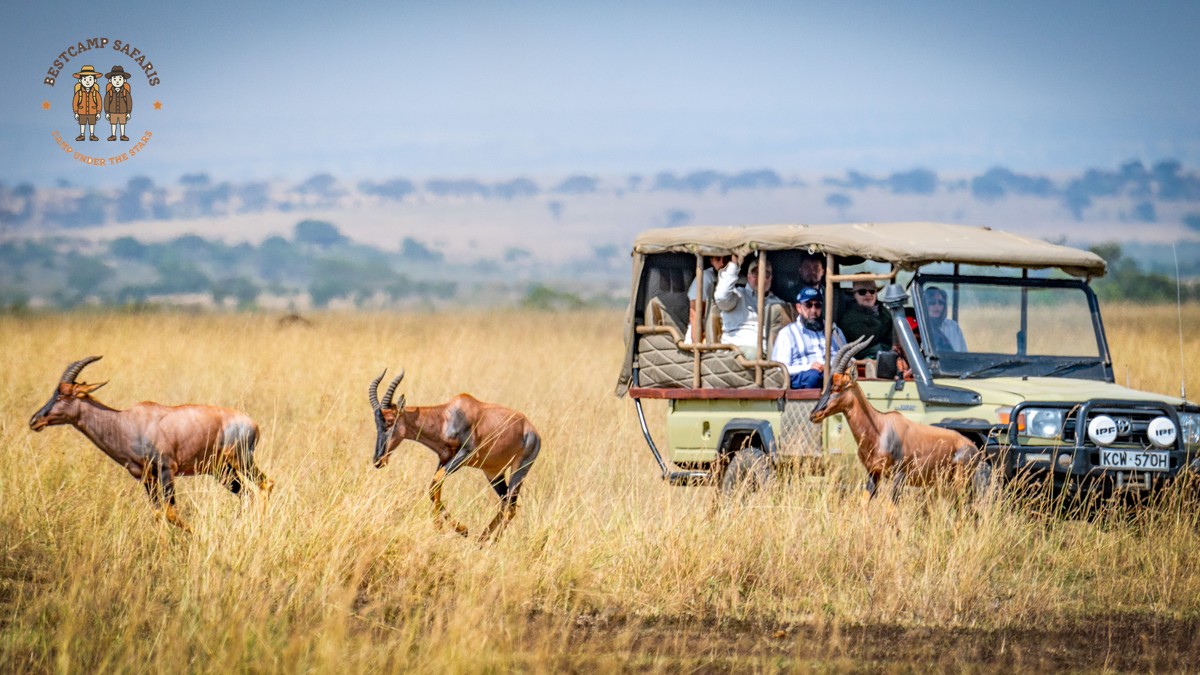
This route keeps the same driver, guide, and interpreter with you all week. That continuity matters. You do not re-explain your needs at each new camp. On a camping safari near the Talek River, the routine is steady: wake at 5am, game drive at dawn, bush breakfast, rest in the heat, then an evening drive. In the Mara, mobile tented camps relocate near the river crossings during peak season, following the herds.
Kenya Safari Hausa Speakers: Cost per Person and Language Supplements
Budget approximately USD 2,100 to 3,500 per person for a seven-night mid-range safari before international flights. The final figure depends on season, camps, park fees, vehicle type, and group size. A separate interpreter supplement may apply. The quote should list that fee, the camp details, transport, meals, and park charges individually.
Here is why the range is wide. Park fees move a lot. The Kenya Wildlife Service raised national park fees in October 2025. Amboseli National Park is now USD 90 per adult per day. The Masai Mara is a county-run reserve, not a KWS park, so it follows Narok County rates: USD 100 from January to June, USD 200 from July to December. Private conservancies such as Naboisho and Mara North bundle fees into lodge rates at roughly USD 80 to 150 per person per night. The interpreter supplement usually adds USD 30 to 60 per day. Get that line item in writing. A mobile camping safari with simple tents can sit at the low end. A full-board lodge with a private vehicle and interpreter sits at the high end.
Kenya Safari Hausa Speakers: Kenya eTA and Arrival Requirements
Nigerian travelers generally need an approved Kenya Electronic Travel Authorization before departure. You also need a passport valid for at least six months, accommodation details, and onward or return travel evidence. Nigeria is a yellow fever risk country, so carry a valid yellow fever certificate and verify current entry requirements before flying.
The eTA is online and usually takes a few days. Apply before you book internal flights. On arrival at Jomo Kenyatta International Airport, the officer may ask where you are staying. The letter from your safari operator covers that. Keep a printed copy of your eTA and your itinerary in your hand luggage.
Kenya Safari Hausa Speakers: Confirm Your Guide and Camps Before Booking
Before paying a deposit, obtain the assigned guide’s name, language level, and backup arrangement in writing. The itinerary should identify every camp, vehicle type, park and conservancy fee, meals, airport transfers, internal flights, interpreter charges, cancellation terms, and whether the service is direct guiding or interpretation.
This is where good operators earn trust. At BestCamp Safaris, the booking confirmation names the guide, the language arrangement, and the camp for each night. You are not paying for a vague promise. Read the confirmation twice. If the interpreter is not listed, ask why. If a camp detail is missing, ask for it. Also read our responsible safari planning in Kenya post before you choose a camp, so you know what each place does for the land and communities around it.
Plan Your Kenya Safari Hausa Speakers Trip
The best moment to ask about a Hausa-speaking guide is now, before you book. Once you have the written plan, the rest is routine: dawn drives, bush breakfasts, and evenings by lamplight. For travelers comparing options in other languages, the Kenya safari for Arabic-speaking travelers guide follows the same route. When your dates are set, plan the trip with BestCamp Safaris and we will confirm the language arrangement in writing. Start with our seven-night Masai Mara and Amboseli camping safari page, or reach us through the contact page. Then the only question left is simple: which night do you want under canvas?


