 Adventure Tours
I’ve watched wildebeest queue at Sand River in orange dawn light, breath fogging above the herd. That kind of morning only happens if you pick the right month. For photographers chasing a camping safari with real river-crossing chances, July through October are the best Masai Mara camping migration months to book.
Best Masai Mara camping migration months
The best Masai Mara camping migration months are late July through September, with August offering the strongest odds of dramatic Mara River crossings. July suits early arrivals and thinner crowds. September often balances continued migration activity with slightly lighter camps. October can still work, but the herds are more likely to be moving south by then.
For a photographer, timing shapes more than sightings. It shapes light. Early dry-season mornings in July carry less dust haze than August, so the low sun cuts cleaner across the plains. By September, grass has thinned from grazing, which opens sightlines from a mobile camp’s breakfast table straight onto the Mara Triangle.
Masai Mara migration month-by-month camping calendar
July marks the migration’s arrival and the start of crossing attempts. August usually brings the largest herds and busiest camps. September combines strong wildlife viewing with gradually easing crowds. October offers lingering herds, lower demand, and occasional rain. Exact timing shifts every year, since rainfall controls where the herds move.
- July. Herds start crossing from the Serengeti near Sand River and Kogatende. Camps in the Mara Triangle and near Oloololo Escarpment sit closest to early action. Mornings are cool, often under 10°C, so pack a proper fleece for the 5:30am wake-up call.
- August. This is peak month. Camps around Musiara Marsh, Talek, and Mara North Conservancy fill fast. River crossings happen most days somewhere along the Mara or Talek. Dust from vehicle traffic is heaviest. A camp with private conservancy access, like those bordering Naboisho Conservancy or Ol Kinyei, gives more room to work a clean frame.
- September. Herds often stay concentrated around the central Mara and northern conservancies. Crowds thin slightly from August’s peak. Light stays golden and warm through most mornings, with fewer vehicles crowding a single crossing point.
- October. Some herds linger near Sekenani and Talek, others begin drifting south toward the Serengeti border. Short rains sometimes arrive by late October, which softens dust and can produce dramatic storm-light skies over camp. Demand drops, and camps have more flexibility on site placement.
When are the Mara River crossings most likely?
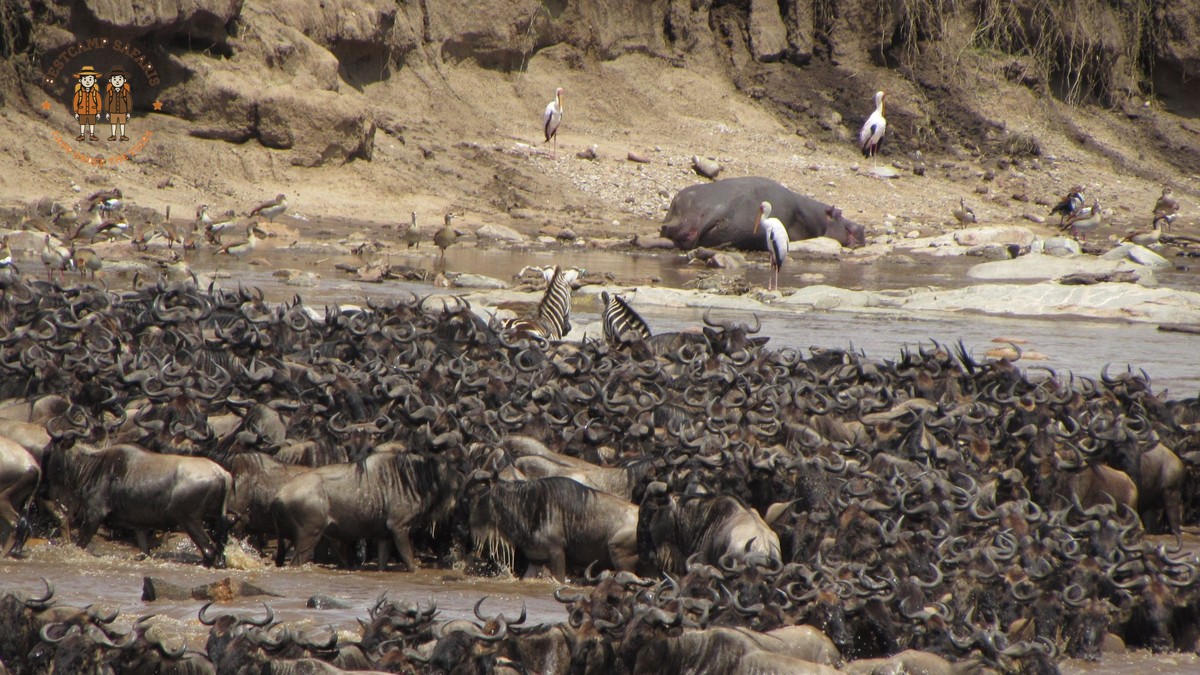
Mara River crossings are most likely from late July through September, especially in August and early September. They’re never guaranteed on a single day. Wildebeest may gather at the bank for hours, turn back, cross somewhere else entirely, or move after dark. A longer stay and a camp near an active crossing zone both improve your practical chances.
I’ve sat with a herd at the Serena crossing point for four hours before they finally moved. It was an hour before sunset, when the light was already turning copper. Camps that can adjust game drive timing around herd behavior, rather than a fixed morning-and-afternoon schedule, catch more of these moments.
Camping weather, crowds, and prices by month
August normally brings the highest demand, the most vehicles, and the highest camping prices. July and September can offer better value depending on availability. October is often quieter and cheaper, though short rains may begin. Nights stay cool through the whole season, so pack warm layers and rain protection regardless of month.
| Month | Crossing likelihood | Camp crowding | Mobile camp price band (indicative, USD/person/night) |
|---|---|---|---|
| July | Moderate, building | Light to moderate | 180-280 |
| August | High | Heavy | 250-450 |
| September | High | Moderate | 220-380 |
| October | Moderate, declining | Light | 160-260 |
These are indicative ranges, not fixed rates. Actual Masai Mara camping safari prices depend on camp location, conservancy fees, and group size. Reserve entrance itself adds to the bill. The Masai Mara National Reserve is run by Narok County Government, not Kenya Wildlife Service. It charges USD 200 per adult per day for non-residents from July through December, the peak migration period. Private conservancies such as Naboisho and Mara North bundle their own fees into lodge or camp rates. Expect USD 80 to 150 per person per night on top of accommodation.
How to choose a camp location during migration season
Choose a camp based on where the herds are likely to be and how close it sits to the reserve or a conservancy. Factor in driving distance to potential crossing areas too, rather than trusting one guaranteed viewpoint. The Mara Triangle, the Talek area, and the northern conservancies each work well at different points in the season. The right choice shifts as herds and roads change.
A mobile tented camp has an edge across the Masai Mara migration season, since it isn’t locked to one plot of land. BestCamp Safaris repositions its migration camps through the season. Camps shift from the Mara Triangle in July toward Talek and the conservancies as August and September unfold. That kind of flexibility matters more to a photographer than a fancy dining tent. Being 20 minutes from a crossing point beats being 90 minutes away with the best view of camp itself.
Walking into camp after dark, guided by a paraffin lamp and the sound of a generator winding down, is part of the rhythm too. Good camp placement means shorter drives back after a late crossing, and more time by the fire before the next 5am start. For a full breakdown of what makes a site work, see our guide to the best Masai Mara migration camping locations.
Rain is the other variable worth planning around, especially if your trip stretches toward late October. Short showers can turn tracks slippery and change how camps operate day to day. Our notes on Masai Mara camping during the rainy season cover what to expect if your dates land near that shift.
Plan your migration camping safari
Every migration season plays out a little differently, and no camp can promise a crossing on a fixed date. What BestCamp Safaris can offer is a mobile camp positioned close to where the herds are actually moving. The crew reads the plains daily through July, August, September, and October. Ready to build a camping safari around this year’s migration? Get in touch with BestCamp Safaris to start planning your dates and camp location.