 Wildlife Tours
If you search “Kenya safari migration crowds avoid,” you probably already know the tension. You want the Great Migration. You do not want 10 vehicles fighting for one view. The fix is not to skip the Mara. It is to choose the right months, the right side of the reserve, and a camp that gets you moving before sunrise. This checklist turns those choices into a plan.
Kenya safari migration crowds avoid: best time for the Great Migration
For migration sightings with fewer vehicles, choose late September, October, or early November; October is the strongest overall compromise because herds may remain in the Mara while school-holiday demand eases. June can also be quiet, but it offers less certainty for Mara River crossings. August and September maximize crossing chances but bring the most traffic.
The Maasai Mara migration follows grass and rain, not a fixed hotel calendar. Still, the crowd pattern is consistent. The current non-resident fee for the Maasai Mara Reserve is USD 200 per adult per day from July through December and USD 100 from January through June.
| Timing | Crowd level | River-crossing odds | What changes |
|---|---|---|---|
| September | Heavy | Highest | School holidays, full camps, radio-chase mornings |
| Late September | Medium | High | Holidays ease, herds often still north |
| October | Low to medium | Moderate | Quiet camps, herds may remain |
| Early November | Low | Moderate to low | Herds drift south, near-private views |
Checklist for this decision:
- Book September only if a river crossing is your first priority, then add a private conservancy to lower vehicle pressure.
- Choose October when you want strong wildlife and room to breathe.
- Pick early November when you are willing to trade drama for silence.
Mara Triangle or private conservancies for quieter game drives
Stay in the Mara Triangle or a private conservancy such as Naboisho, Mara North, or Olare Motorogi to reduce vehicle congestion. Conservancies generally limit bed numbers and vehicles, but they do not provide Mara River crossings inside their boundaries. The practical compromise is a conservancy stay plus a planned reserve or Triangle outing.
The Maasai Mara migration happens inside a larger ecosystem. The county-run Maasai Mara Reserve is the busiest stage. The Mara Triangle is the western wedge across the river, with fewer lodges. Private conservancies sit on the northern edges. Each choice changes how many cars you will meet.
Private conservancy fees run roughly USD 80 to 150 per person per night, usually bundled into your camp rate. The Mara Reserve ticket is separate. If you also want elephants, add an Amboseli to Masai Mara itinerary before your conservancy nights.
Checklist for where to sleep:
- Use a conservancy as your main base for morning and evening photography.
- Plan one or two days inside the reserve or Mara Triangle specifically for crossing chances.
- Accept the extra transfer time as payment for fewer vehicles.
How to avoid vehicle queues at Mara River crossings
River crossings cannot be guaranteed, and peak crossing points may attract more than 100 vehicles. Improve the odds of a quieter sighting by staying nearby, leaving before dawn, using a full-day drive with a packed lunch, and asking an experienced guide to wait at less-used crossing points instead of chasing radio calls.
Vehicle count at a crossing depends more on the morning gossip network than on total visitors. One radio call brings a line of vans. A good guide knows when to avoid that habit.
Checklist for crossing days:
- Stay close enough to reach your chosen river sector before first light.
- Leave camp while the stars are still out. That usually means a 6am gate exit, sometimes earlier.
- Ask for a full-day drive. Crossings can happen at 4pm, not only at dawn.
- Let your guide pick a quieter bend. Say yes when the fresh tracks support the choice.
Treat a crossing as a bonus, not a ticket. The quieter sightings are often better for photography anyway.
Small, mobile camps and better morning light
Choose a small tented or mobile camp close to the area where herds are moving rather than a large lodge far from the action. A well-positioned camp reduces driving time and lets guests reach wildlife before busy vehicles arrive. Mobile camps can follow seasonal movement, but they may offer fewer fixed facilities and less predictable availability.
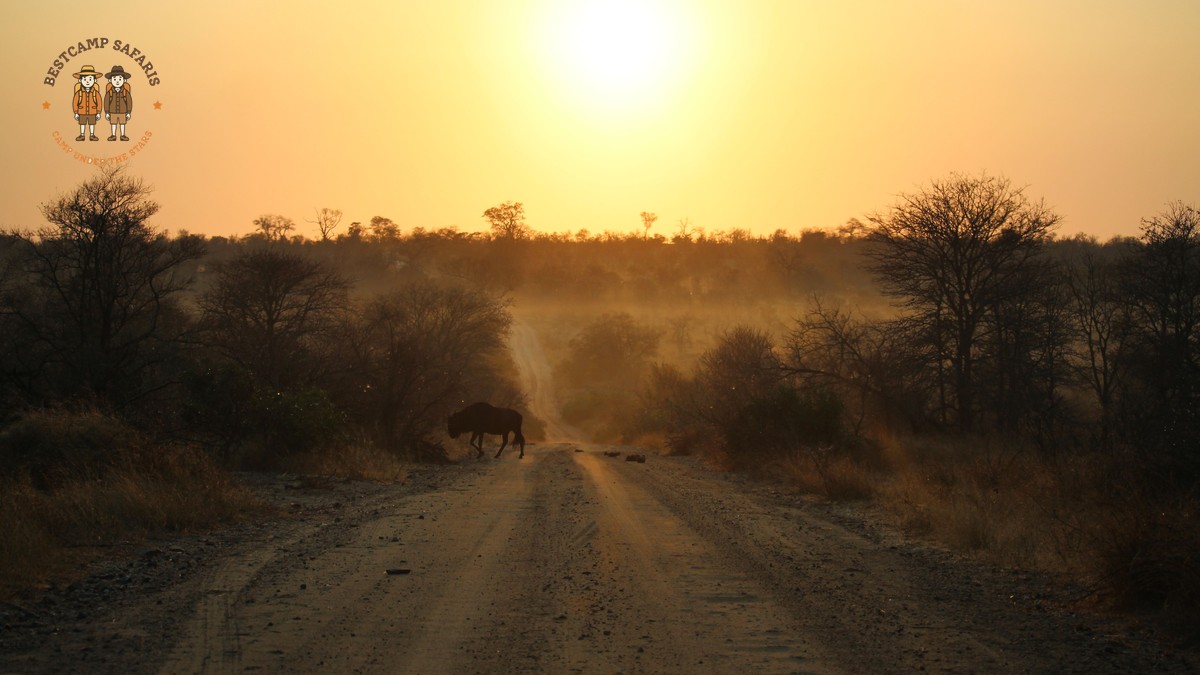
This is where a camping safari earns its keep. At 5am, the canvas walls are wet with dew. You hear the kettle start and the zipper of your guide’s tent. Breakfast goes into a metal box while the first grey light touches the grass. You are on the road before the lodge convoys move.
Checklist for camp selection:
- Look for camps with 6 to 12 tents. Smaller bed counts mean fewer vehicles per morning.
- Ask whether the camp can move with the herds. October grass is often short, so position matters more than amenities.
- If you are new to tented nights, read how safari camp security works overnight so you feel settled.
BestCamp Safaris places its mobile camping safaris near the migration front. A canvas tent in the right spot beats a stone lodge an hour away.
Private vehicles, early starts, and full-day safari logistics
A private vehicle gives the guide freedom to leave early, change areas when sightings become crowded, and stay out through the midday period when group vehicles return to camp. Full-day drives are especially useful for crossings because the event may occur at any time. The trade-off is a higher per-person cost than sharing a vehicle.
For most visitors, the rule is simple: a shared vehicle follows the group vote. A private vehicle means no vote. For a wildlife photographer, that freedom is worth the cost, especially when the low morning light is perfect and no one wants to leave.
Checklist for logistics:
- Book a private vehicle for at least the Mara portion of your trip.
- Start at 6am, not 8am. The first two hours give the best light and the fewest other vehicles.
- Pack a full-day box with water, fruit, and simple food. You want the option to stay out until dusk.
- Before you finalize dates, review Kenya safari planning and eTA details so entry requirements do not slow you down.
A BestCamp Safaris private-vehicle camping safari can split time between Naboisho Conservancy and the Mara Triangle. That combination gives you quiet mornings and realistic crossing opportunities.
Ready to book the quiet version? Your next concrete action is to ask BestCamp Safaris for a camp-by-camp October itinerary with a private vehicle. Start that conversation on the contact page.