
 Adventure Tours
You wake up to canvas flapping softly above your head. The ground under your sleeping mat is hard, but you knew that when you chose it. Outside, a camp cook is already coaxing a charcoal stove to life. That smell of woodsmoke and Kenyan coffee is your alarm clock.
This is a mobile camping safari. It is not a lodge stay with all the extras polished like hotel glass. It is the raw, moving version of a Kenyan safari, set up for a few nights, packed down, and moved to the next wild spot. Bislama speaking travelers mobile camping in Kenya face a serious distance from home, but the trip rewards the effort. This guide tells you what it really costs, what the tents are like, and how to plan it from Port Vila.
Bislama Speaking Travelers Mobile Camping: What It Actually Means
A mobile camp is a temporary camp that moves with you. Unlike a permanent tented camp with fixed platforms and plumbing, a mobile camp gets built from scratch when you arrive and taken down when you leave. The idea is old. Early safaris in East Africa worked this way, moving camp to follow the animals.
Today the style is split. Small operators run lightweight fly-camps with basic dome tents and long-drop toilets. Luxury operators run full-service mobile camps with heavyweight canvas tents, proper beds, camp showers, and a dining tent. Both give you the same thing: a night that puts you inside the bush, not on the edge of it.
Your ground sheet will be dust or grass. You will hear hyenas call from somewhere beyond the lantern light. That is the point.
Types of Mobile Camps: Budget Dome-Tent vs Luxury Canvas
The gap between budget and luxury is wide. Here is what you actually get at each tier.
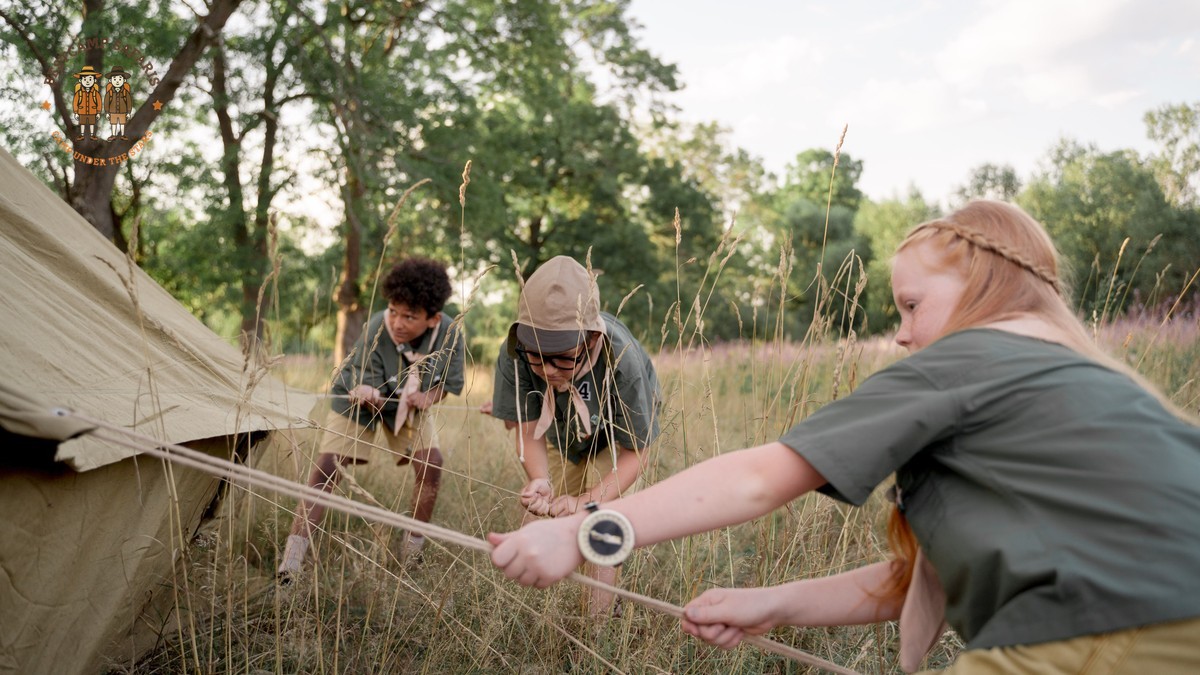
Budget mobile camps are built for movement. Tents are two-person dome tents, the kind you might use at a beach campsite in Vanuatu. Mats go straight on the ground. Toilets are chemical or long-drop. Showers are a bucket with a hose and a canvas privacy screen. You carry your own kit, or a support vehicle carries it for you.
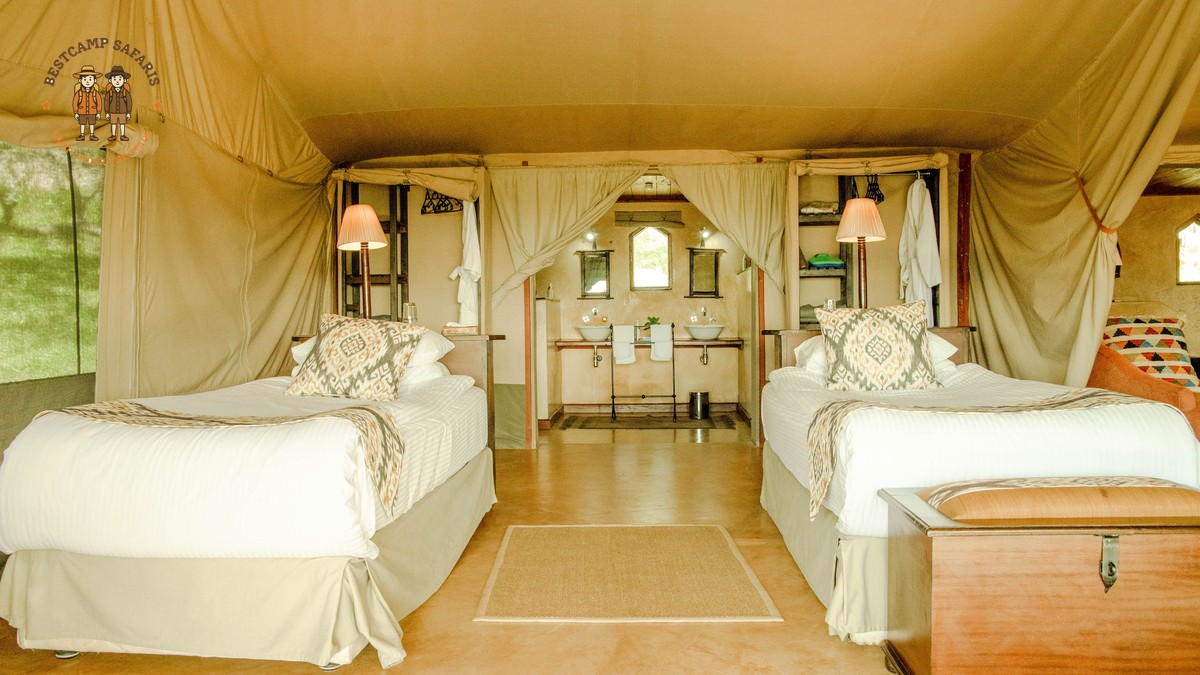
Luxury mobile camps are much heavier. Tents are walk-in canvas with a wooden or rubber floor. You get a real bed with proper linen, bedside tables, and a veranda with a chair. The bathroom is a separate canvas quarter with a bucket shower and a flush toilet. A crew of about eight people runs the camp: cook, waiters, camp staff, askaris for night watch.
| Feature | Budget Mobile Camp | Luxury Mobile Camp |
|---|---|---|
| Tent type | Two-person dome tent | Walk-in canvas tent, 3×3 meters |
| Bedding | Sleeping mat and bag | Raised bed with linen and pillows |
| Toilet | Chemical or long-drop | Private flush toilet |
| Shower | Bucket and privacy screen | Hot bucket shower, en-suite |
| Staff per camp | 3 to 4 | 8 to 12 |
| Nightly cost (indicative) | USD 150 to 300 per person | USD 450 to 900 per person |
| Example operators | Big Five overland trucks, budget fly-cam operators | Porini, Governors, Basecamp Explorer |
Prices above are indicative ranges. Confirm exact figures before booking.
Popular Mobile Camping Routes and Distances
You cannot do everything in one short trip. Kenya is large. The best mobile camping routes focus on two or three areas with real drive times between them.
The Maasai Mara and the Rift Valley is the classic route. Fly into Nairobi, then drive to Lake Nakuru for a night, then on to the Mara for three nights. The drive from Nairobi to Lake Nakuru takes about 2.5 hours, roughly 160 kilometers. From Lake Nakuru to the Mara gate at Sekenani is around 300 kilometers and takes 5 hours. A mobile camp sits inside the Mara, usually in a private conservancy like Naboisho or Mara North, not in the crowded reserve itself.
Samburu and Meru is a drier, wilder route. From Nairobi to Samburu National Reserve is about 340 kilometers, a 5 hour drive. Samburu is home to the reticulated giraffe and Grevy’s zebra, species you will not see in the Mara. From Samburu down to Meru National Park is another 200 kilometers and 4 hours of driving. Meru is remote. You will see few other vehicles, which many campers say is its biggest draw.
Amboseli and Tsavo works well for a shorter trip. Amboseli National Park sits at the foot of Mount Kilimanjaro, 240 kilometers southeast of Nairobi, about 4 hours by road. From Amboseli to Tsavo West is 130 kilometers and 2.5 hours. Both parks have mobile camping sites inside their borders.
What Is Included in the Price
A standard mobile camping safari price covers almost everything.
Your game drives are included, with a dedicated safari vehicle and a driver-guide. Meals are cooked by a camp chef and served in the mess tent or outside under the stars. Tea, coffee, and drinking water are included. Camp staff set up and take down all tents. Park and conservancy entrance fees are usually listed separately and paid on top of the tour price.
What is not included is alcohol, tips for staff, international flights, and personal insurance.
The one thing you should know is the fee structure. Masai Mara National Reserve is run by Narok County, not by Kenya Wildlife Service. It costs USD 200 per adult per day from July to December. From January to June it drops to USD 100. Amboseli and Lake Nakuru, both run by KWS, cost USD 90 per adult per day. Samburu costs USD 80 per day. Private conservancies like Naboisho bundle their fees into the lodge or camp rate, roughly USD 80 to 150 per person per night extra.
A Sample Itinerary: Six Nights in the Mara
Here is what a real mobile camping itinerary looks like, moving camp between the Mara and a private conservancy.
Day 1: Arrive at Jomo Kenyatta International Airport in Nairobi. Your driver meets you and you drive 5 hours to Sekenani Gate. You enter the Mara and meet your camp staff, who have already set up camp. Dinner is served by lantern light.
Day 2: Full day in the Mara. Early wake at 5am, tea and biscuits, then out for sunrise game drive. Track the wildebeest herds if it is migration season. Return to camp for brunch. Rest through the heat. Afternoon drive focuses on big cats.
Day 3: Pack down camp after breakfast. Drive 2 hours north to Naboisho Conservancy, a private area next to the Mara. Camp is set up fresh. This is a walking safari zone. You can leave the vehicle on foot with armed guides, which you cannot do in the reserve.
Day 4: Morning walk safari. A ranger shows you tracks, plants, and insects. The big game stays further off here, but the experience is more personal. Afternoon game drive in the conservancy.
Day 5: Full day in the conservancy. Spend the night on a star bed, a raised platform with just a mattress and mosquito net, no tent roof. The sky is enormous. Sleep is short but unforgettable.
Day 6: Pack down and drive back through the Mara to Sekenani. Overnight at a lodge near the gate or fly back to Nairobi from the local airstrip.
Day 7: Fly or drive to Nairobi for your onward flight.
What It Costs in Full
A realistic budget for a luxury mobile camping safari runs USD 3,000 to 5,000 per person for six nights, excluding international flights. Budget dome-tent versions run about half that. The biggest cost drivers are season and conservancy fees.
| Cost Item | Budget Estimate | Luxury Estimate |
|---|---|---|
| Six nights mobile camp | USD 900 to 1,800 | USD 2,700 to 5,400 |
| Park and conservancy fees, six days | USD 500 to 1,200 | USD 500 to 1,200 |
| Vehicle and guide, six days | included | included |
| Internal flights if used | USD 150 to 250 one way | USD 150 to 250 one way |
| TOTAL per person | USD 1,500 to 3,200 | USD 3,500 to 6,800 |
All figures are indicative ranges. Ask your operator for a quote with the exact dates and camps.
Getting to Kenya from Vanuatu
This is the part nobody talks about enough in generic safari guides.
You cannot fly direct from Port Vila to Nairobi. Realistic routing takes you through Australia or Singapore. A typical route is Port Vila to Brisbane, then Brisbane to Doha or Dubai, then on to Nairobi. Total flying time is around 28 to 35 hours, excluding layovers. Add a day for connections and you are looking at two full days of travel each way.
The time zone shift is significant. Vanuatu runs on UTC+11. Kenya is UTC+3. You will be eight hours behind. Jet lag is real on this route, so build a buffer day into your itinerary.
Language on the Ground: Be Honest About English
There are no Bislama speaking safari guides in Kenya. You will find guides fluent in English, and many who speak German, French, Spanish, or Italian. Bislama is not in the mix.
This matters for you. If you read and speak English well, you will do fine. The guides use clear, simple English and are patient with questions. If your English is limited, bring a friend who translates or book a private guide so you control the conversation.
You can also ask your operator to brief the guide that you speak Bislama, so they speak slower and use simpler words. This works better than they are given credit for.
For context, we wrote parallel guides for other language groups. See our Romansh-speaking travelers’ mobile camping guide and our Kenya safari guide for Luo-speaking travelers, plus the Tulu-speaking travelers’ Kenya safari guide.
What to Pack
Pack for dust, sun, and cool nights.
- A sleeping bag liner, even in luxury camps
- A headlamp, because camp lights are low
- Warm fleece for 5am game drives, it gets cold
- A buff or scarf to cover your mouth on dusty roads
- Binoculars, do not rely on your phone camera
- A power bank. Camps charge via solar, but sockets are limited
- Sandals for camp, boots for the bush
- Insect repellent with DEET
Do not pack khaki camouflage. It is illegal for civilians in Kenya.
Safety, Health, and Wildlife Etiquette
Sleeping in a tent with lions nearby sounds scary. It is also completely routine here.
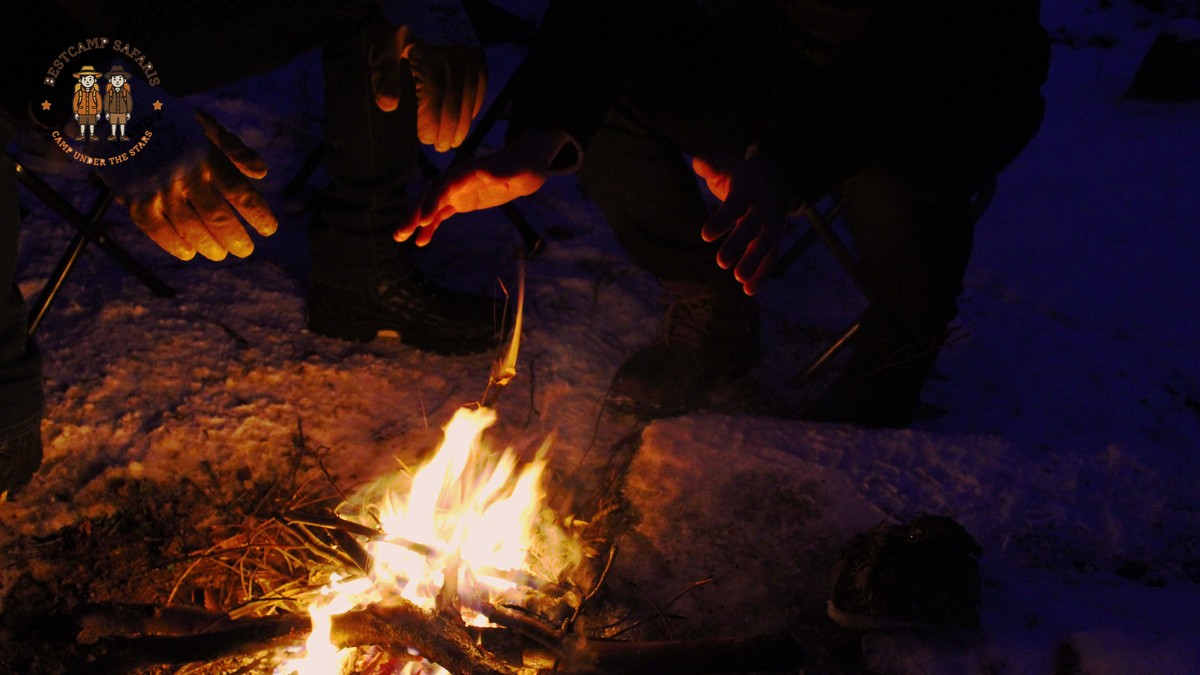
Camp staff post an askari to stay awake all night. They keep a fire burning and use lamps to make the camp visible. Wild animals do not want to walk through a noisy, lit, human-smelling area. The risk is low, but it is real. Follow the rules: do not walk outside the camp perimeter after dark, do not keep food in your tent, and call for an askari escort if you need the toilet at 2am.
Malaria is present in Kenya. Talk to your doctor in Vanuatu about prophylactics before you fly. Yellow fever vaccination is required if you have been in a yellow fever zone, and Vanuatu is currently clear, but the certificate may still be checked at entry.
The BestCamp Safaris Difference
We run mobile camps with a simple rule: the camp exists for your viewing experience, not the other way around.
We choose sites inside private conservancies like Naboisho and Mara North so you get walking safaris and night drives, both forbidden inside the national reserve. Our camp crew numbers about ten people for a luxury setup, and every one of them knows their job is to make the canvas vanish from your mind once the sundowner gin arrives.
We have hosted guests from over twenty countries, and we know how to handle long-haul travelers who are tired, jet-lagged, and a little overwhelmed. We build a rest day into every itinerary that comes from Oceania or the Pacific. You will not be flung into a game drive six hours after landing.
We are also honest, which matters here. Mobile camping is not for everyone. If you need hot showers on demand, a spa, or reliable WiFi, you will be happier in a permanent lodge. We will tell you that before you book.
If mobile camping is for you, we will make it the best stretch of canvas you have ever slept in. Plan the trip with BestCamp Safaris and let us build a mobile camping itinerary that fits your dates and your budget. Tell us you read this guide in Bislama translated from English, and we will know exactly how to prepare your guide and your camp crew.


