
 Adventure Tours
I have woken up in a mobile tented camp at 5am more times than I can count. The canvas is cold and damp with dew. Somewhere close, a hyena is testing its voice. Before I even unzip the tent, I know an askari is standing outside with a lamp, because that is the routine every night.
That routine sits at the center of self-drive vs guided safari safety in Kenya. It is not about who sees more lions. It is about who is managing the risk while you sleep, drive, and stop for that photo a little too close to a buffalo.
This post breaks down the safety picture with real numbers, not general advice copied from a Kruger or Tanzania blog. Kenya has its own rules, its own guide certification system, and its own patch of ground that can trap a 4×4 in minutes.
What Self-Drive and Guided Mobile Camping Actually Mean
A self-drive safari means you rent a vehicle, plan your own route, and manage your own camp or lodge bookings. You are the driver, the navigator, and the decision-maker if a lion walks in front of the car.
A guided mobile camping safari means a professional driver-guide handles the vehicle and the route. A separate camp crew moves your tents ahead of you between sites, sets up the bush kitchen, and breaks camp again the next morning. You still sleep under canvas and hear the same night sounds. You just are not the one deciding whether to reverse away from an elephant.
Self-Drive vs Guided Safari Safety: Risk Comparison
The core risks are the same for both: getting stuck, wildlife encounters at close range, breakdowns far from help, and navigating unmarked tracks. What changes is who is trained to handle them.
A guided mobile camping safari puts a certified guide between you and most of that risk. Guides read animal behavior for a living. They know when a lion is settled and when it is agitated. They stay in radio contact with other vehicles and camp management, so help is usually a call away, not a long walk.
Self-drive travelers carry that judgment themselves. Many manage it fine with preparation. Some do not, especially on a first Kenya trip, because reserve roads are not signposted like a highway and animals do not read your itinerary.
Where You Can Even Self-Drive
This is the part most articles skip. Not every part of Kenya’s safari country is open to self-drive vehicles.
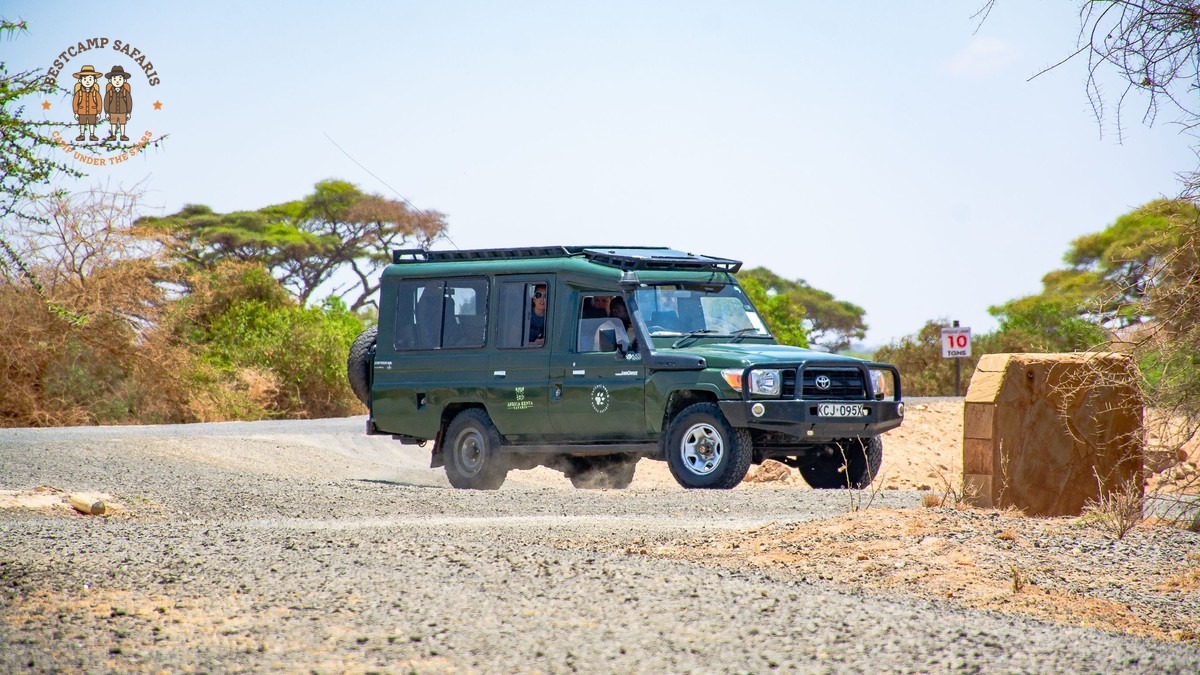
The Masai Mara National Reserve, run by the Narok County Government and not by Kenya Wildlife Service, does allow self-drive on its public roads. Narok County requires 4×4 vehicles only inside the reserve, a rule aimed directly at travelers who try to enter in a saloon car during the rains.
Private conservancies bordering the Mara, like Naboisho and Mara North, work differently. They do not allow self-drive at all. Only guided vehicles from partner camps are permitted inside. That is what changes between a conservancy and a national reserve, and it catches a lot of first-time self-drivers off guard.
Amboseli, Tsavo East, Tsavo West, and Lake Nakuru, all run by KWS, permit self-drive with a valid park entry permit. Off-road driving is banned in all of them, and every visitor must exit before the gates close at dusk.
Guide Certification: What KPSGA Actually Means
Kenya’s guides are certified through the Kenya Professional Safari Guides Association, known as KPSGA. It has three tiers: Bronze, Silver, and Gold, each requiring a written exam, a field test, and years of logged experience for the higher levels.
A Gold-level guide has typically spent over a decade in the field and passed one of the toughest wildlife exams on the continent. That is not a marketing line. It is a real, checkable qualification, and it is worth asking any operator which tier their guides hold before you book.
Night Safety in Camp
Sleeping in a tent sounds like the riskiest part of a mobile camping safari. In practice, it is one of the most controlled parts of the trip.
A proper mobile camp posts an askari, a trained night guard, who walks guests to and from their tents after dark with a lamp. Camps are laid out with a clear central fire area, and guests are briefed not to leave their tent alone at night for any reason. That is how camps keep guests safe from lions after dark, and it is a routine, not an afterthought.
Night game drives are a separate question. They are illegal inside Kenya’s national parks and reserves, including the Masai Mara, under county and KWS rules. Some private conservancies do allow them after 6:30pm with a licensed guide, which is where night game drives are actually legal in Kenya. Self-drive visitors cannot do this legally anywhere, since only licensed operators hold the permits.
Vehicle and Gear Requirements for Self-Drive
A 4×4 is not optional in most of Kenya’s parks, and Narok County makes it a legal requirement in the Mara. You also want high ground clearance, two spare tires, a tow rope, sand ladders, and a satellite phone or two-way radio, since mobile signal drops out completely in large sections of Tsavo and the Mara.
Black cotton soil is the hazard nobody mentions until it is too late. It covers large parts of the Mara plains and swells into a thick, slick trap when wet. A vehicle can sink to its axles in minutes, and pulling it out often takes another vehicle and a couple of hours you did not plan for.
Cost Comparison
| Destination | Self-drive allowed? | Non-resident park fee | Distance/time from Nairobi | Guide requirement |
|---|---|---|---|---|
| Masai Mara National Reserve (Narok County) | Yes, 4×4 only | USD 100/day (Jan-Jun), USD 200/day (Jul-Dec) | 270 km, about 5-6 hrs by road, or 45 min flight to Keekorok airstrip | None legally required, though a 4×4 is mandatory |
| Naboisho Conservancy | No, guided only | roughly USD 80-150/person/night (indicative, bundled into camp rate) | 280 km, about 6 hrs by road, or 40 min flight to Naboisho airstrip | KPSGA-certified guide mandatory |
| Amboseli National Park (KWS) | Yes | USD 90/day | 240 km, about 4 hrs by road | None required |
| Tsavo East National Park (KWS) | Yes | USD 80/day | About 233 km, roughly 4 hrs by road | None required |
Self-drive costs are lower on paper. A 4×4 rental runs roughly USD 70-130 a day, indicative, plus fuel, park fees, and public campsite fees of about USD 20-30 a night. A guided mobile camping safari typically runs USD 300-500 per person per day, indicative, all-inclusive of camp, meals, guide, and park fees. The gap is real, and so is what it buys you.
Backup and Emergency Support
Guided operators keep a second vehicle on standby and stay linked by radio to other camps and KWS rangers in the area. Many also hold membership with an air evacuation service, so a serious medical issue can mean a flight out within hours rather than a long drive on rough roads.
Self-drive travelers are on their own for recovery. In remote sections of Tsavo, a breakdown can mean a wait of several hours before another vehicle passes, and towing has to be arranged privately.
Which Option Is Right for You
Self-drive suits confident 4×4 drivers who want full control of pace and a lower price tag, and who are comfortable managing their own risk decisions in the bush. It works well in KWS parks like Amboseli or Tsavo, where roads are more established.
A guided mobile camping safari suits anyone who wants the real bush experience, walk-in camps, fly-camps, star-bed nights, without carrying all of that risk alone. It is also the only legal way into most conservancies and the only way to do a night game drive.
The BestCamp Safaris Difference
Every guide we send into the field holds KPSGA certification, most at Silver or Gold level. Our vehicles run in radio contact with camp management and nearby operators at all times, so a stuck axle or a change of plan gets handled fast, not alone.
Our camps run on a routine built from years of actual nights in the bush. Tents go up before you arrive at a new site. An askari walks the perimeter after dark. Breakfast gets packed away by lamplight before the 5:30am game drive, the same way it has for every trip we have run. That is not a brochure line. It is what our crew does every single night.
Frequently Asked Questions
Is it safer to go on a guided safari or a self-drive safari? A guided mobile camping safari is generally safer, because a trained guide manages wildlife encounters, navigation, and emergencies for you.
Can you self-drive in the Masai Mara? Yes, on the reserve’s public roads, but Narok County requires a 4×4 vehicle. Bordering private conservancies do not allow self-drive at all.
What happens if your vehicle breaks down on a self-drive safari? You arrange your own recovery, which can take hours in remote areas with no phone signal, especially in Tsavo.
Do you need a 4×4 to self-drive in Kenya? Yes. It is legally required in the Masai Mara and strongly recommended everywhere else, especially near black cotton soil.
Are safari guides in Kenya certified? Yes, through KPSGA, with Bronze, Silver, and Gold tiers based on exams, field tests, and years of experience.
Is it safe to sleep in a tent on a mobile camping safari at night? Yes, when the camp follows proper protocol, including an askari escort and a clear rule against leaving your tent alone after dark.
Plan Your Mobile Camping Safari
If the idea of a real tented camp, run by a KPSGA-certified crew who know these parks firsthand, sounds like your kind of trip, we would love to help you plan it. Visit our contact page to start the conversation.
More safari planning resources
- Kenya national parks map from SafariPure
- Masai Mara Great Migration guide from Trunktrails Safaris
- Nairobi to Maasai Mara route guide from Valley Safaris
- Is Kenya safe to visit? on Touring Insights
Related guides: Elephant Warning Signs Safari Safety Guide.


