
 Wildlife Tours
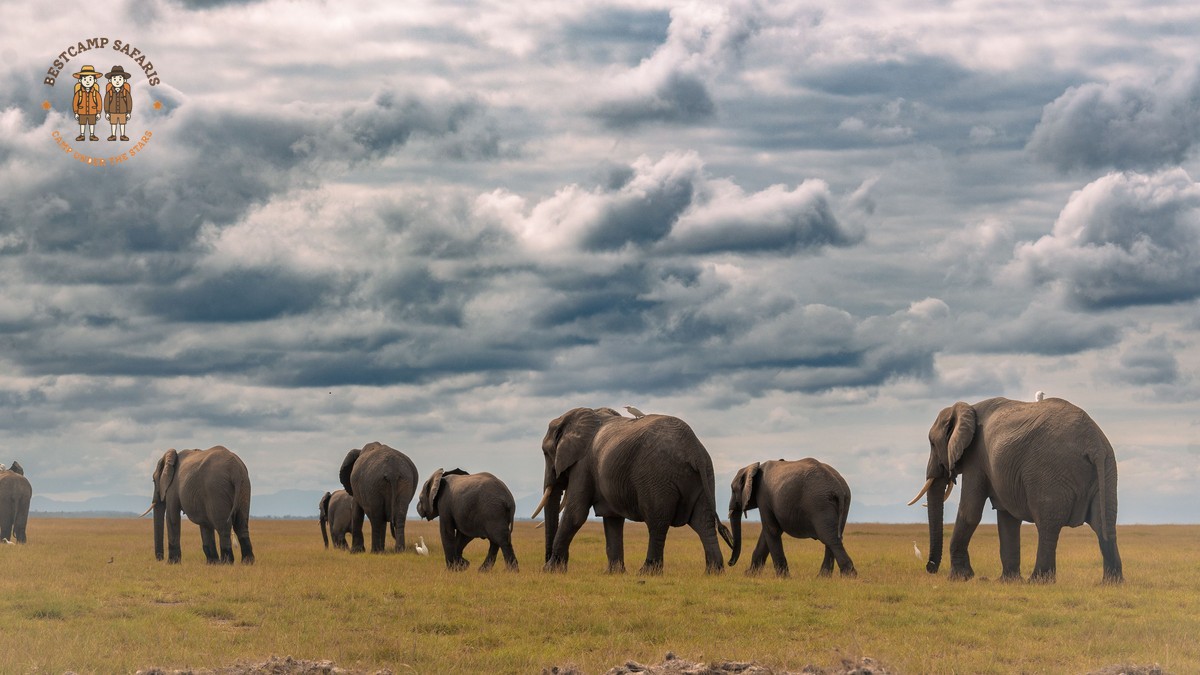
I woke at 4:45am in our mobile camp on the Ntiakitiak River in the Masai Mara to the sound of something breathing outside my tent. Not a lion cough. Not a hyena whoop. A long, slow exhale, close enough that the canvas moved. An elephant was grazing past camp on her way to the river. She never touched a guy rope. She didn’t need to.
That is the thing about elephants on safari. Most encounters look exactly like that one, quiet and unremarkable. But every guide who has spent real nights under canvas can also tell you about the other kind, the mock charge that gets a little too close, the ear-flap that means back off now. This guide covers the elephant warning signs safari safety depends on, what they actually mean, and what BestCamp Safaris does about them in the vehicle, on foot, and in camp after dark.
Elephant warning signs safari safety guides watch for
A relaxed elephant feeds with loose, swinging ears and a trunk that dangles or curls around grass. It ignores your vehicle almost completely. That is your baseline, and it is worth watching for before you worry about anything else.
Stress builds in stages. First the head lifts and the ears spread out to the sides, making the elephant look bigger. Then comes a test: a shake of the head, a foot stamping the ground, or a trunk raised to smell the air for your scent. Dust-kicking and swaying from side to side often follow. None of these mean an attack is coming. They mean the elephant wants space, and giving it space right away is almost always enough.
Our guides watch for one more marker beginners miss: silence. A calm herd rumbles and chirps constantly. When that chatter stops and ears go rigid, something has changed.
Mock charge vs. real charge
This is the question every first-time guest asks after their first close encounter, and it deserves a clear answer.
A mock charge is loud. Ears spread wide, the elephant trumpets, kicks dust, and runs at you fast, then stops short, often within 10 to 15 meters. It is a bluff meant to test you, and it works on most predators. Our guides see several mock charges a season, mostly from mothers with young calves near Ol Kinyei and along the Talek River.
A real charge looks and sounds different. Ears pin back flat against the neck. The trunk tucks underneath, out of the way. There is no trumpeting, just a fast, silent, low run with the head down. A real charge does not stop short. Our senior guide in the Mara has been through one real charge in eleven years of driving, and what saved the vehicle was distance already built in before the elephant moved, not a fast reaction after.
Bulls in musth
Musth is a hormonal state that hits mature bulls, usually once a year, and it makes them far less predictable. Look for a dark, wet streak running from the gland between the eye and ear down the side of the face. A musth bull also dribbles urine constantly and often sways his head while walking with a stiff, deliberate gait.
Amboseli is one of the best places in Kenya to see mature bulls, and reading up on spotting Amboseli’s big tuskers is a great trip primer. But a musth bull is not a photo opportunity in the same way. Our guides give musth bulls at least double the usual distance and will reroute a game drive entirely rather than push past one on a narrow track.
Cows with calves
Breeding herds with young calves account for most charges guides see, mock or otherwise. A mother elephant reads any vehicle that stops moving as a threat to her calf, and she will often charge to reinforce a boundary rather than because she plans to make contact.
The fix is simple and it works almost every time: never drive between a cow and her calf, and never let a vehicle linger directly in a herd’s path of travel. Our drivers plan routes around herds, not through them, especially near water in the afternoon when calves cluster close to their mothers.
What to do if an elephant charges your vehicle
Stay in the vehicle and stay seated. Elephants read a moving vehicle as retreating, which is what you want. Our guides reverse slowly and steadily, without gunning the engine, since a sudden rev can read as a second threat rather than a retreat.
Never rev the engine to seem intimidating, and never grab your phone or camera at the moment ears go back. Trust your guide’s hands on the wheel. If a mock charge is happening, staying calm and still often ends it faster than any evasive move.
What to do if you’re on foot
Walking safaris follow a different rulebook, and it starts before you leave camp. An armed ranger walks with every group and briefs guests on formation and hand signals.
If an elephant shows warning signs on foot, the group bunches together to look larger, moves back slowly at an angle rather than straight backward, and never runs. Elephants can reach speeds of around 25 to 30 km/h over short distances, well beyond what any human can outrun, so distance built up early matters far more than speed later.
Safe viewing distances and guide protocols
| Location | Typical Elephant Density | Recommended Viewing Distance | Non-Resident Park Fee (per day) |
|---|---|---|---|
| Amboseli National Park (KWS) | High, especially near the swamps | 25-30m from vehicle | USD 90 |
| Masai Mara National Reserve (Narok County) | High along rivers, Jan-Jun peak | 25-30m from vehicle | USD 100 (Jan-Jun) / USD 200 (Jul-Dec) |
| Tsavo East National Park (KWS) | Moderate to high, red-dust herds | 30-40m in dense bush | USD 80 |
| Walking safari, any location | Varies by herd and season | 100m minimum, more for musth bulls | N/A |
These are starting points, not guarantees. Wind direction, terrain, and an individual elephant’s mood all shift the right distance on any given morning, which is exactly why the person driving or walking with you matters more than the number on a chart.
What to do if elephants approach your camp at night
Mobile camps in the Mara and Amboseli are usually unfenced, which means wildlife passes through most nights. Elephants moving toward water or a favorite feeding patch will sometimes walk straight past guest tents, as mine did on the Ntiakitiak.
The camp routine handles this on purpose. Guests stay inside their tents once the fire is out, a guide or askari stays on night watch, and nobody uses a torch or phone light toward an animal outside, since a sudden beam can startle it. If you need to leave your tent after dark, you call out for an escort rather than walking alone, the same rule we cover in more depth in wildlife safety at a tented camp after dark. Most nights end exactly like that 4:45am elephant, a big animal passing quietly a few meters from thin canvas, gone before breakfast.
The BestCamp Safaris Difference
Here is the honest version most operators skip. Mock charges are common, and the vast majority resolve on their own within seconds. No guide, including ours, can promise zero risk around a wild animal that weighs up to 6,000 kilograms. What we can promise is training, distance, and a driver or ranger who has read hundreds of these situations before.
Every BestCamp Safaris guide completes ongoing bush safety refreshers, radios ahead to other vehicles when a musth bull or agitated herd is nearby, and builds routes that avoid pinch points between elephants and water. That is a meaningfully different risk profile than a self-drive rental with no radio network and no local read on the herd’s mood that week. If you are weighing safety questions beyond elephants too, our guide to common safari safety concerns in Kenya covers the rest of what first-time travelers ask us.
Plan your trip
Elephant encounters are one of the best reasons to come on safari, not a reason to stay home. With the right distance and a guide who reads the signs early, most mornings look like a herd grazing past at sunrise, not a close call. Get in touch through our contact page and we will help you plan a trip that puts you close to elephants safely, in Amboseli, the Mara, or wherever the migration takes us next.


