
 Adventure Tours
The first thing you notice on a Borana Conservancy rhino tracking safari isn’t the rhino. It’s how quiet everyone gets. Boots stop crunching, radios go on mute, and the head scout starts reading dung, tracks, and broken acacia branches like a page of text. You’re on foot, on the ground the rhino is standing on, and there’s no metal door between you and it.
Borana sits on the Laikipia Plateau in central Kenya, north of Mount Kenya and just west of Nanyuki. It shares an unfenced boundary with Lewa Wildlife Conservancy, forming what conservationists call the Lewa-Borana landscape, one of the most important black rhino strongholds in East Africa. Together the two conservancies hold more than 250 rhino, and Borana has recorded zero poaching incidents for nine straight years.
Where Borana Conservancy Is and How You Get There
Borana covers roughly 32,000 acres of rolling grassland, forest, and rocky ridgeline, at an elevation between 1,700 and 2,200 meters. Most visitors fly into Nanyuki or Lewa Downs airstrip from Nairobi’s Wilson Airport, a scheduled flight of about 45 minutes.
From Nanyuki town, it’s a drive of roughly 30 km to the Borana gate, close to an hour on murram road once you leave the tarmac. From Lewa Downs airstrip, the transfer runs about 25 km and 40 minutes through the shared conservancy corridor. If you’d rather drive the whole way from Nairobi, it’s around 200 km to Nanyuki, a solid three hours, plus the conservancy transfer.
| Route | Distance | Typical Time | Notes |
|---|---|---|---|
| Nairobi (Wilson) to Nanyuki, by air | ~180 km | 45 min | Most common approach |
| Nairobi to Nanyuki, by road | ~200 km | 3 hrs | Tarmac most of the way |
| Nanyuki to Borana gate | ~30 km | 45-60 min | Final stretch is murram |
| Lewa Downs airstrip to Borana | ~25 km | 40 min | Crosses shared conservancy land |
The Rhino Story: Lewa-Borana and the Numbers Behind It
Black rhino were nearly wiped out of Laikipia by the 1980s. Borana started rebuilding its population by joining forces with neighboring Lewa and pulling down the fence between them in 2013. That single decision doubled the roaming range for both black and white rhino and made monitoring far more effective.
Every rhino on the conservancy carries a unique combination of notches cut into its ears, done under veterinary supervision, so rangers can identify individuals from a distance without ever needing to dart or handle the animal again. Scout teams patrol on foot and by vehicle every single day, logging each sighting against that ear-notch ID system. That daily record is what makes it possible to plan a tracking walk at all. Rangers usually know, roughly, which valley a given rhino was in the evening before.
What the Rhino Tracking Walk Actually Involves
You don’t wander into the bush hoping. A Borana rhino tracking safari starts with your guide radioing the scout team already out looking for fresh sign. Once they’ve got a general location, you join two armed rangers on foot and move in as a small group, usually four to six guests plus guide.
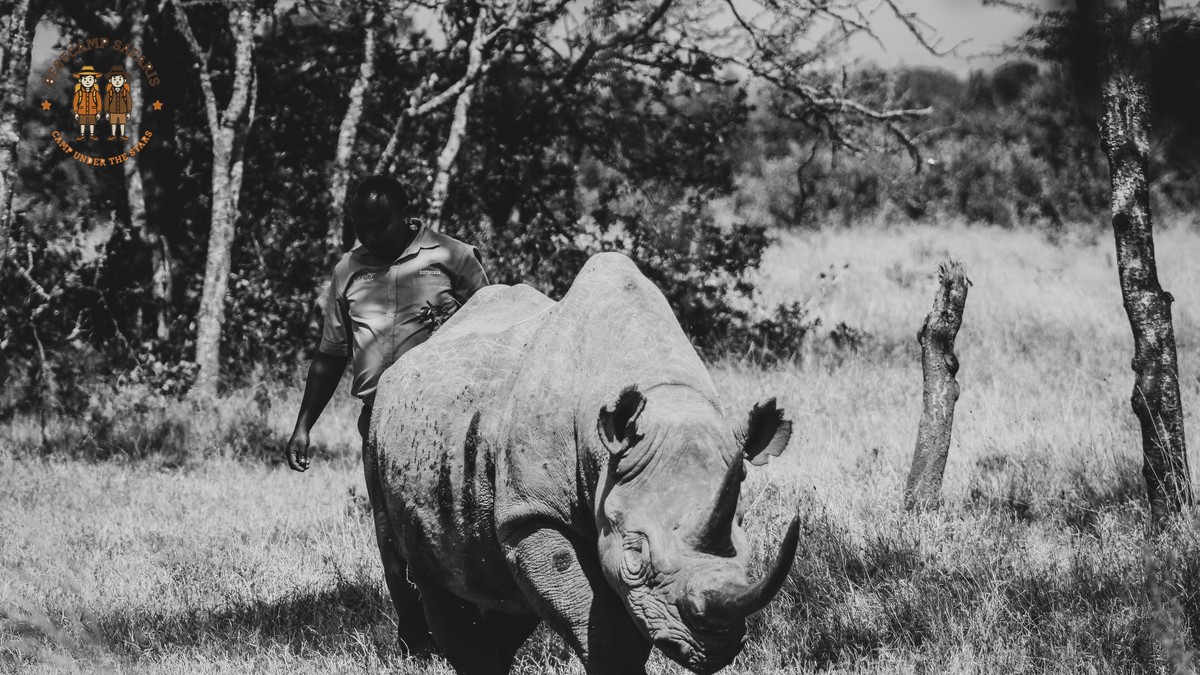
The pace is slow and deliberate. You stop often, read wind direction, and circle wide rather than walk straight at cover. Rangers watch the rhino’s ears and tail for warning signs and will pull the group back well before getting close enough to spook it. On a good morning, you end up standing 30 to 50 meters from a wild black or white rhino, close enough to hear it breathe, far enough to leave calmly if it turns your way.
Duration, Fitness, and What to Actually Expect
Most operators quote the walk at 1.5 to 2 hours, and that’s about right in practice, though a morning with an elusive rhino can run longer. The terrain is uneven, with loose rock, thorn scrub, and short uphill stretches. You don’t need to be an athlete, but you should be able to walk briskly on rough ground for two hours without stopping every five minutes.
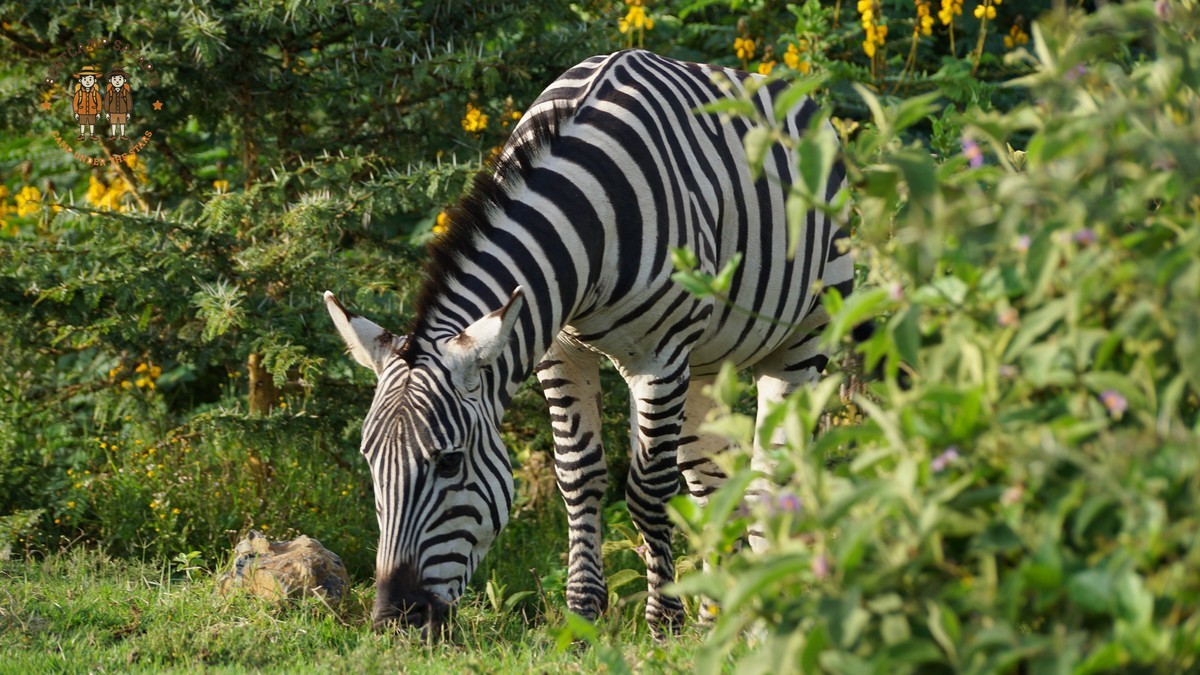
Sightings aren’t guaranteed. Rhino move, and some mornings the scouts simply haven’t relocated one by the time your walk window closes. Good camps build in a backup, either a second attempt later that day or a consolation game drive that still turns up elephant, reticulated giraffe, and Grevy’s zebra, both rare outside this part of Kenya. If a guide promises a rhino every time, be skeptical. The honest ones tell you upfront it’s a good chance, not a certainty.
How Borana Compares to Ol Pejeta and Lewa
Borana markets itself as the only place in Kenya to track rhino purely on foot, and that’s broadly true among the well-known rhino sanctuaries. Ol Pejeta and Lewa both run rhino tracking, but from a vehicle, with guests staying inside the car for the close approach.
| Conservancy | Tracking Method | Approx. Fee (non-resident) | Rhino Population | Foot Access |
|---|---|---|---|---|
| Borana Conservancy | On foot with armed scouts | Indicative USD 85-100/person/day, bundled into most lodge rates | 250+ (shared with Lewa) | Yes |
| Lewa Wildlife Conservancy | Vehicle-based tracking | Indicative USD 100-135/person/day | Shared population with Borana | No, vehicle only |
| Ol Pejeta Conservancy | Vehicle-based tracking | Indicative USD 85-100/person/day | 160+ | No, vehicle only |
Those conservancy fees are indicative ranges, not published rack rates, since most camps fold them into the nightly price rather than billing separately. Ask your operator to itemize it. It’s one of several conservancy fees your quote might not show until you push for a full breakdown.
If you’ve already done a vehicle-based rhino encounter at Ol Pejeta or on a Mara day trip, Borana is a genuinely different experience, not a repeat. Walking in changes how alert you feel and how much you notice, from dung beetles rolling balls across the path to the alarm call of a startled dik-dik.
Where to Stay in Borana
Accommodation inside the conservancy is limited by design, which keeps the bush feeling uncrowded. Borana Lodge is the original property, a stone-and-thatch main lodge with 8 rooms overlooking a waterhole. Lengishu is a private six-bedroom house best suited to a family or group buyout. Laragai House and Sirai House offer similar exclusive-use setups with their own staff and vehicle. Arijiju, on the conservancy’s northern edge, leans further into design and privacy for smaller groups.
Rates across these properties run roughly USD 700 to 1,400 per person per night in high season, all-inclusive of meals, most activities, and the conservancy fee. Exact pricing depends heavily on season, exclusivity, and group size, so treat that as a planning range rather than a quote.
Beyond the Rhino: Other Activities in Borana
Rhino tracking is the headline, but Borana runs a full activity list. Game drives cover open plains and rocky kopjes where lion, leopard, and African wild dog move through. Horseback safaris let experienced riders get close to plains game at a walk or canter. Mountain biking follows conservancy tracks with a scout escort. Fly camping moves you out to a remote spot for a night under canvas, with a proper bucket shower and a fire that’s still smoldering when you wake up. Helicopter safaris, bookable through the lodge, add a Mount Kenya flyover to the trip.
Borana also works well as one stop on a longer Laikipia route. Combine it with Laikipia’s wider conservancy circuit for a mix of walking, riding, and vehicle days across different landscapes, or look at combining Borana with a Mount Kenya trek if you want altitude and forest on the same trip.
Best Time of Year to Visit
Borana works year-round since rhino tracking isn’t tied to migration patterns. The dry months, January to March and June to September, give firmer ground and easier walking. The long rains, April and May, thin out visitor numbers and turn the plateau green, though tracking on foot can mean muddier going. November’s short rains are usually light enough not to disrupt activities.
The BestCamp Safaris Difference
Most pages selling this experience stop at “track rhino on foot in Kenya’s most successful rhino sanctuary” and leave it there. We’d rather tell you what the walk actually feels like on your legs, what it costs beyond the headline lodge rate, and what happens on the mornings the rhino don’t cooperate. We build Laikipia itineraries that pair Borana with the right neighboring camps and the right pace, not a rushed one-night stop between two other conservancies. If a rhino sighting isn’t locked in that morning, we make sure your day still has somewhere good to go.
Plan Your Borana Conservancy Rhino Tracking Safari
A borana conservancy rhino tracking safari rewards travelers who’ve already done the classic Mara game drive and want something quieter and more physical. Get in touch through our contact page and we’ll build a Laikipia itinerary around Borana, real prices included, no guesswork about what’s bundled and what isn’t.


