
 Adventure Tours
The first time I heard “your shower’s ready” called through canvas at dusk, I had no idea what to do with that sentence. No taps had turned on. No pipes had rattled. Somewhere behind my tent, a camp assistant had just hauled a bag of hot water up a pole on a rope. That is a bucket shower mobile safari camp bathroom in one sentence, and it works better than it sounds.
If you’re the kind of traveler who wants a walk-in camp over a lodge with a swimming pool, you’ve probably already asked the practical question: how do bathrooms actually function out there? Not the romantic version. The real one, with litres and timing and what happens when the fire dies down.
What Is a Bucket Shower Mobile Safari Camp Setup?
A bucket shower is a portable shower bag, usually 10 to 20 litres, filled with hot water and hoisted above a private shower cubicle attached to your tent. Gravity does the rest. There’s no boiler, no plumbing, no electric pump. Just a bag, a pulley or a hook, and a simple on-off valve at the bottom.
Most mobile camps in Kenya and Tanzania use this system because it needs no fixed infrastructure. A camp can be built in the morning on open ground near the Mara River or a Tsavo West drainage line and be fully operational by afternoon, showers included. That portability is the whole point of a mobile safari, and it shapes what a mobile camping safari involves far more than most people expect before their first trip.
How the Pulley, Bag, and Tap Mechanism Works
The setup is simpler than it looks from inside the tent. Camp staff heat water over an open fire or a gas burner near the mess tent kitchen. Once it’s hot, they pour it into a canvas or rubber shower bag fitted with a shower head and a valve. That bag gets hoisted on a rope through a pulley mounted on a pole above your private shower cubicle, usually screened off from the main tent by a canvas partition or zip panel.
You get a valve you can open and close yourself. Wet down, shut the valve, soap up, open it again to rinse. That’s the whole skill. It’s the same logic as a solar camp shower you might already use overlanding, just with someone else doing the fire-building and hauling.
Height matters for pressure. Staff hang the bag about two to three metres up, which gives you a gentle gravity flow, not a proper showerhead blast. Don’t expect lodge water pressure. Expect something closer to a garden hose on low.
Water Volume and How Long the Hot Water Lasts
Most camps fill the bag with 10 to 20 litres per shower. That’s an indicative range, since it varies by camp and by how much water the site has hauled in that day. On a two-person tent, some camps offer 20 to 30 litres split across both showers if requested together.
Ten litres sounds tight, but it’s enough for a full rinse if you’re not standing under running water the whole time. Wet, shut off, soap, rinse, done, usually in three to five minutes. Hot water holds its heat for roughly 10 to 15 minutes in a canvas bag before it starts cooling toward lukewarm, faster if there’s any evening wind.
This is the part competitors rarely admit: if you’re the last person to shower after everyone else, and the kitchen fire has already died down for the night, your water may arrive noticeably cooler. Camps that manage this well stagger shower times across the group and keep a second pot warming as backup.
How and When to Request Your Shower
You don’t get automatic hot water on demand. You ask for it, and it gets prepared, usually with 15 to 20 minutes notice built into the camp’s daily schedule. The common rhythm looks like this: guests return from the afternoon game drive around 6pm, request showers for a set time, and staff start heating water immediately so it’s ready before dinner.
On a typical evening, you’ll tell your camp attendant a rough time, they relay it to the kitchen, and the bag goes up shortly before you’re ready. If you want a second shower, say after a dusty walking safari, most camps will do it, but it adds to the fire and staff workload, so asking earlier in the day helps.
Toilets: Long-Drop or Bucket-Flush
Bathrooms in a mobile camp are more than the shower. Toilets fall into two main types.
A long-drop is a deep pit toilet with a proper seat fitted over it, housed in its own canvas cubicle next to the shower. It doesn’t smell the way you’d expect if the camp maintains it properly with ash or lime treatment after use.
A bucket-flush toilet uses a small bucket of water kept beside the seat. You pour it down after use to clear the bowl, similar to using a jug in a rural home bathroom. Some higher-spec mobile camps run a simple chemical toilet instead, closer to what you’d find on an overland truck.
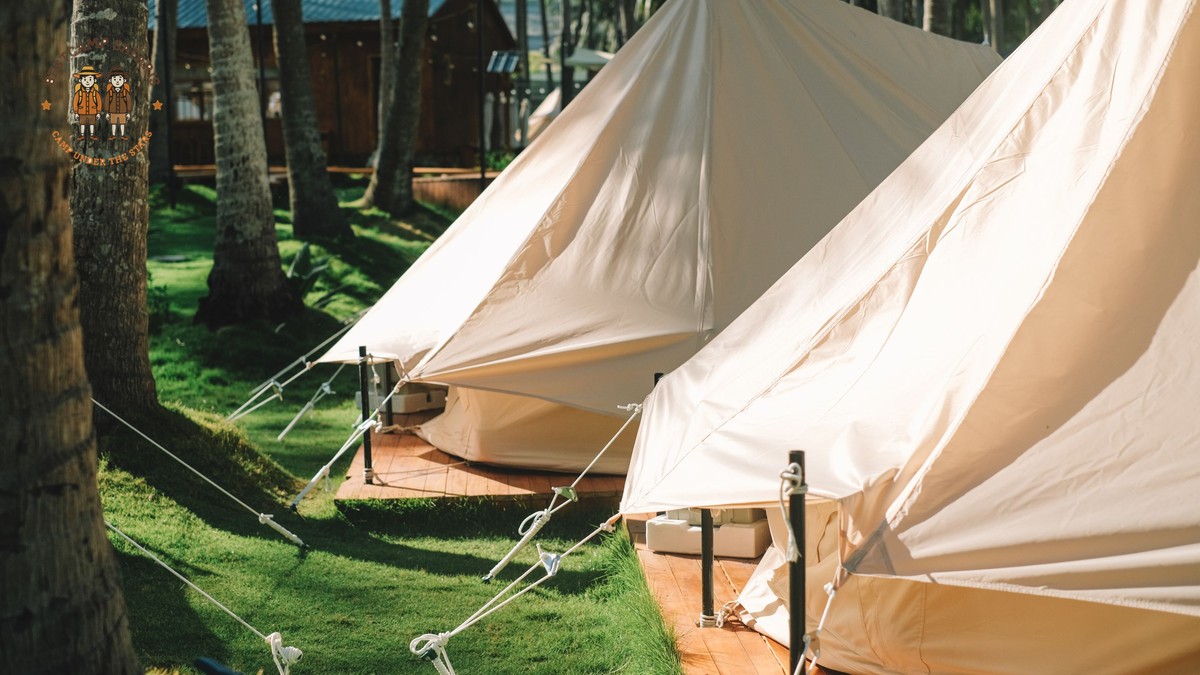
Both setups sit inside your private en-suite canvas structure, attached to your sleeping tent by a short zipped corridor. For the full layout, including where the wash basin and mirror go, it helps to see how the en-suite tent and bathroom are actually set up before you arrive.
Privacy, Night Trips, and the Askari Escort
Privacy is better than most first-timers expect. The shower and toilet cubicles are fully enclosed canvas rooms, zipped shut, with no gaps at eye level. You’re not exposed to camp or bush.
Night trips are the real logistics question. Mobile camps sit in unfenced wildlife areas, so walking to your own en-suite toilet at 2am isn’t like walking down a lodge corridor. Most camps issue a torch and a whistle or horn at your tent. If you need an escort, you call out or use the signal, and an askari, a night guard stationed around camp, walks you the short distance and waits outside. This is standard practice at reputable mobile camps across the Mara ecosystem and Amboseli, not an optional extra.
Tips for Using a Bucket Shower Well
A few habits make the system work better for you:
- Shower early in your requested slot, not late, since water cools fast.
- Keep it short. Wet, valve off, soap, valve on, rinse.
- Pack a quick-dry travel towel. Canvas cubicles don’t have heated rails.
- Bring biodegradable soap and shampoo, since grey water usually drains straight into the ground.
- Request your shower time as soon as you’re back from a drive, not after you’ve already changed.
Which Camps and Regions Use This System
Bucket showers are standard across most walk-in and fly-camp operations in East Africa’s classic reserves, not just a Kenya quirk.
| Region / Reserve | Typical Distance from Nairobi | Non-Resident Park/Conservancy Fee (2026) | Bucket Shower Common? |
|---|---|---|---|
| Masai Mara National Reserve (Narok County) | approx. 270 km, 5 to 6 hrs drive | USD 200/adult/day (Jul-Dec peak) | Yes, standard in tented and fly camps |
| Mara North Conservancy | approx. 280 km, 6 hrs drive | approx. USD 80-150/person/night (bundled) | Yes |
| Naboisho Conservancy | approx. 275 km, 6 hrs drive | approx. USD 80-150/person/night (bundled) | Yes |
| Amboseli National Park | approx. 240 km, 4 to 5 hrs drive | USD 90/adult/day | Yes, in mobile and seasonal camps |
| Tsavo West National Park | approx. 240 km, 4 hrs drive | USD 80/adult/day | Yes, common in fly camps |
Drive times are indicative and depend on road conditions and your exact starting point.
Do You Have to Use One?
Not always. Some fixed mobile camps with longer-stay sites near a water source install a raised tank and simple gravity-fed plumbing instead, giving something closer to a permanent lodge shower. But most true fly-camps, the kind pitched for one or two nights deep in a conservancy, run entirely on bucket systems because there’s nothing else to plumb into.
If you want a guaranteed hot-water tap, ask your operator directly which specific camp uses which system, since it varies site to site even within the same conservancy.
What Happens on Camp-Move Days
Move days change the routine. When camp relocates to a new site, usually every three to five nights on a classic mobile itinerary, the whole bathroom setup gets dismantled, packed, and rebuilt from scratch. Shower bags, poles, canvas cubicles, and the long-drop screening all travel by truck ahead of the guests.
On these days, expect a slightly later shower time in the evening, since staff are rebuilding the entire camp, not just refilling a bag. It’s a fair trade for waking up somewhere completely new the next morning.
Environmental Reasoning Behind the System
Bucket showers use a fraction of the water a plumbed lodge shower uses per guest, often under 20 litres against 60 to 100 litres for a standard pressurized shower. In remote conservancies where water gets trucked or drawn from a limited local source, that difference matters. It also means camps leave a lighter footprint on ground they’ll vacate within days.
The BestCamp Safaris Difference
We build our bucket shower system around timing, not just water. Every camp runs a staggered evening schedule so the first guest back from a drive and the last one both get properly hot water, not whoever showers first getting the good bag. Our staff heat a reserve pot specifically for second requests, so a dusty walking safari doesn’t mean a lukewarm rinse an hour later.
Every en-suite bathroom, shower and toilet both, gets set up fresh at each site by the same team that broke it down the morning before, so nothing feels improvised even on a move day. And every tent gets a torch, a signal, and an askari on call through the night, because we’d rather you sleep and use the bathroom without worrying about it.
Plan Your Own Mobile Camp Experience
If a real bucket shower under a canvas sky sounds better than another hotel bathroom, we’d like to help you plan it properly, camp by camp, region by region. Get in touch through our contact page and we’ll walk you through which camps fit the trip you actually want.


