 Wildlife Tours
Swahili Phrases for Safari Trip Basics: Why Bother When Your Guide Speaks English?
This guide covers the swahili phrases for safari trip planning that actually matter, before you spend a flight learning ones you won’t need. Every BestCamp guide and driver speaks fluent English. You will not get stuck or misunderstood on a game drive in the Masai Mara or Amboseli because you don’t know Swahili.
So why learn any at all? Because it changes the trip. I have watched a tired camp cook light up when a guest says “asante sana” instead of just “thanks.” I have seen a guide switch from work mode to genuine grinning conversation over a simple “habari.” Swahili on safari is not about survival. It is about connection and respect.
Greetings and Basic Courtesies
Mornings at a mobile camp start early, often before 5am, with the canvas still damp and a lamp swinging outside your tent flap. The first Swahili you will hear is usually a greeting from camp staff bringing coffee to your tent door.
“Jambo” is the tourist-friendly greeting, simplified Swahili that almost every Kenyan working in tourism will use with a visitor. “Habari” is more natural, meaning roughly “what’s the news,” and is how Kenyans actually greet each other. Reply with “nzuri” (good) or “njema” (fine).
- Jambo – hello
- Habari – how are you / what’s the news
- Nzuri – good, fine (a common reply)
- Asante – thank you
- Asante sana – thank you very much
- Karibu – welcome, or “you’re welcome”
- Karibu sana – you’re very welcome
- Kwaheri – goodbye
- Tutaonana – see you later
The difference between Jambo and Habari matters more than most phrasebooks admit. Jambo is simplified for visitors and gets a simple “Jambo” or “Poa” back. Habari expects a real answer about how you actually are, and Kenyans use it with each other, not just with tourists.
Quick Pronunciation Notes
Swahili is genuinely one of the easier African languages for English speakers to pick up, mostly because it is spelled the way it sounds. There are no silent letters and no tonal shifts to worry about.
A few rules that help:
- Every vowel is pronounced, so “safari” is sa-FAH-ree, not “SAF-uh-ree.”
- Stress almost always falls on the second-to-last syllable.
- “W” often sounds closer to a soft “oo,” so “mzuri” comes out closer to “m-ZOO-ree.”
You will not sound fluent after one game drive. Getting close and trying is what lands.
Wildlife Names Your Guide Will Actually Use
This is where Swahili earns its keep on safari. Guides call out animals in Swahili on the radio constantly, and knowing a few names means you catch the excitement half a second before the vehicle turns.
| Swahili | English | Where you’ll likely hear it |
|---|---|---|
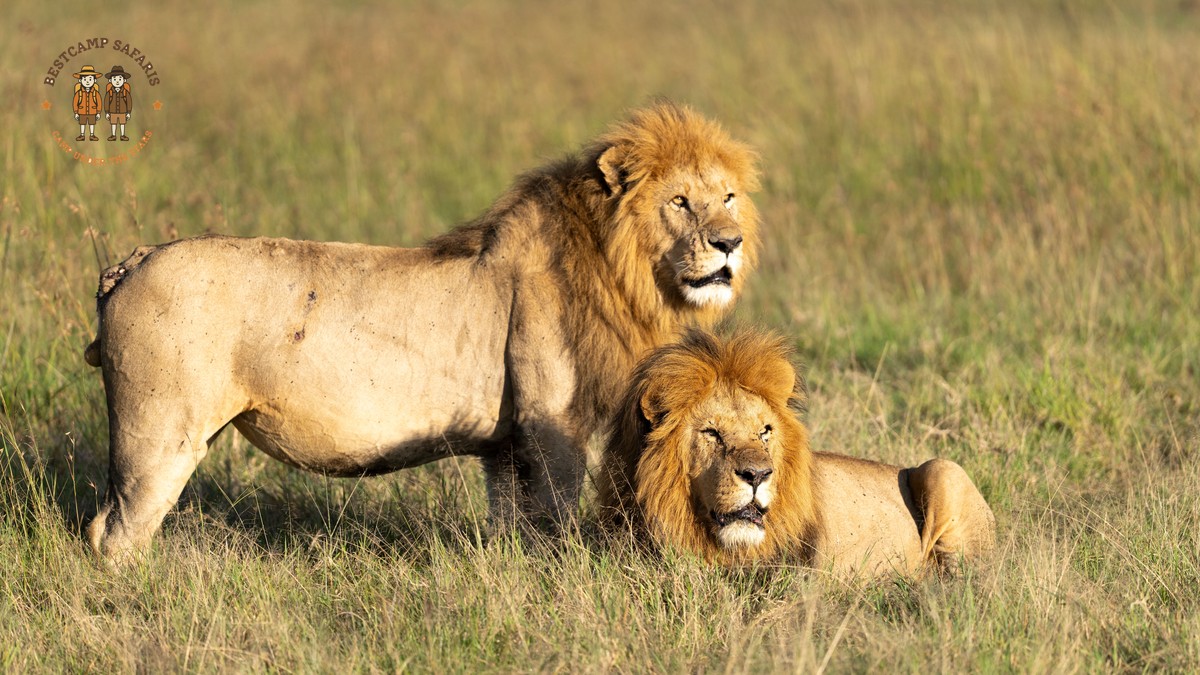
| Simba | Lion | Masai Mara, Amboseli |
| Tembo | Elephant | Amboseli (famous for its elephant herds) |
| Chui | Leopard | Masai Mara, Samburu |
| Kifaru | Rhino | Lake Nakuru National Park |
| Nyati | Buffalo | Masai Mara, Tsavo |
| Twiga | Giraffe | Amboseli, Tsavo East |
| Duma | Cheetah | Masai Mara |
| Swala | Gazelle or antelope | Amboseli, Tsavo |
If the Big Five has you covered but you want the full picture, it’s worth going further and learn the wildlife names beyond the Big Five that guides love pointing out once the big animals are ticked off.
Talking to Your Guide on a Game Drive
A few working phrases go a long way once you’re bouncing along a track at 6:30am, coffee thermos rattling in the door pocket.
- Twende – let’s go, often said as the vehicle pulls out of camp
- Simama, tafadhali – stop, please, useful if you spot something first
- Wapi? – where? as in “wapi simba?”, where’s the lion?
- Karibu sana – the guide’s most common answer when a sighting is close
- Pole pole – slowly, slowly, the phrase every Kenyan driver and walker lives by
- Haraka – hurry, rarely needed and rarely wanted on safari
“Pole pole” deserves its own mention. It means slowly, slowly, and it is less a phrase than a philosophy. Guides say it about driving, walking to a sundowner spot, and generally about life. It fits a trip built around watching, not rushing.
Food, Drink, and Numbers Around Camp
Bush breakfasts and dinners under canvas are where a little vocabulary pays off with the camp team.
- Chakula – food
- Maji – water
- Maji ya moto – hot water (handy when you want a bucket shower warmed up)
- Chai – tea
- Kahawa – coffee
- Nzuri sana – very good, the right thing to say about a bush breakfast
Numbers rarely come up beyond counting animals or tipping, but the basics are simple: moja (1), mbili (2), tatu (3), nne (4), tano (5).
Needs, Directions, and Safety Phrases
Most needs get handled with a raised eyebrow at a guide who has seen a thousand first-time travelers. Still, a few phrases help:
- Nasaidia – help (as in “I need help”)
- Choo kiko wapi? – where is the toilet
- Nataka kupumzika – I want to rest
- Hatari – danger, a word you may hear from a guide before a word of English does
Marketplace and Curio Shop Phrases
If your route includes a market stop, whether in Karen outside Nairobi or a curio shop near a lodge gate, a little Swahili shifts bargaining from transactional to friendly.
- Bei gani? – what is the price?
- Ghali sana – too expensive
- Punguza kidogo – reduce it a little
- Sawa – okay, agreed
Curio shop prices are usually set high for the first offer, so expect to negotiate down by a third or more. It is normal and often genuinely fun if you keep it light.
Cultural Etiquette and Respect
A few habits matter more than vocabulary. Greet before you ask anything, even a simple question about breakfast time. Use “Mzee” for an older man and “Mama” for an older woman, respectful terms of address common across Kenya. Ask before photographing camp staff or villagers, and expect a small fee at a Maasai manyatta.
At Il Ngwesi Community Conservancy, local language matters more than almost anywhere else on a Kenya itinerary. Greetings in Swahili or a few words of Maa go further here than elsewhere. The conservancy is run by the Il Ngwesi Maasai community itself, and the welcome you get often mirrors the effort you put in first.
Kenya Swahili vs Tanzania Swahili
If your trip crosses into Tanzania for the Serengeti or Ngorongoro, the Swahili spoken there is closer to the language’s Zanzibar roots, considered by many linguists the more “standard” form. Kenyan Swahili borrows more English and moves faster in casual talk. The core vocabulary above works in both countries.
Tipping and Saying Thank You Properly
Tipping in Kenya is typically done in cash, in KES or USD, and handed over with a proper “asante sana” rather than left silently on a table. General guidance for a mobile camp crew runs about USD 15 to 20 per guest per day. That amount is typically split between guides, camp staff, and drivers, though it varies by operator and group size. Saying thank you well, by name, with real eye contact, matters as much as the amount.
| Location | Approx. distance from Nairobi | Approx. drive time | Language you’ll hear most |
|---|---|---|---|
| Masai Mara National Reserve | ~270 km via Narok | 5 to 6 hours | Swahili and Maa, guides fluent in English |
| Amboseli National Park | ~240 km via Namanga road | 4 to 5 hours | Swahili and Maa |
| Il Ngwesi Community Conservancy | ~310 km, Laikipia | 5 to 6 hours | Swahili, Maa, community-led English |
| Lake Nakuru National Park | ~160 km via Nakuru | 2.5 to 3 hours | Swahili and Kikuyu |
| Tsavo East National Park | ~330 km via Voi gate | 4.5 to 5 hours | Swahili |
Figures above are approximate and depend on road conditions and your exact camp location within each park or conservancy.
The BestCamp Safaris Difference
Language apps teach words in isolation. We would rather hand you the phrases our own guides use on the exact drives you’ll be taking, tied to the parks on your itinerary. A word like “twiga” means more once you’ve heard it called over a Land Cruiser radio near Amboseli with Kilimanjaro behind it.
Our guides grew up speaking Swahili, many in the communities bordering the parks and conservancies we camp in. That is the difference between a phrasebook and a relationship with a place. We build itineraries where a little effort from you gets matched by real warmth from camp staff who notice when a guest tries.
Before you fly, it’s worth running through our final week safari prep checklist so language is one small, fun detail among many you’ve already handled.
Frequently Asked Questions
Is Swahili hard to learn for English speakers? No. It is spelled phonetically with no silent letters, which makes pronunciation more predictable than French or English itself.
Do I need to speak Swahili to go on safari in Kenya? No. Guides, drivers, and lodge staff on the main circuits all speak fluent English.
Do safari guides in Kenya speak English? Yes, nearly universally on established routes like the Masai Mara, Amboseli, and Tsavo.
What is the most important Swahili word to know on safari? Asante, meaning thank you. It gets used constantly and always lands well.
What does “pole pole” mean in Swahili? Slowly, slowly. It describes both a walking pace and a general attitude toward the day.
How do you say “have a safe journey” in Swahili? “Safari njema” is the common phrase, and it is where the English word “safari” itself comes from.
What is the difference between Jambo and Habari? Jambo is simplified for tourists. Habari is the real greeting Kenyans use with each other and expects a genuine answer.
How do you reply to Jambo? “Jambo” or “poa” (cool, fine) both work as a reply.
Is the Swahili spoken in Kenya the same as in Tanzania? Mostly the same core vocabulary, but Tanzanian Swahili is closer to standard form and Kenyan Swahili mixes in more English.
What does “safari” actually mean in Swahili? Journey or trip. It has nothing to do with animals specifically, it just means a journey of any kind.
How much Swahili do you actually need for a Kenya safari? A dozen words. Greetings, thank you, and a couple of animal names cover most of it.
What should you tip or say to your guide in Swahili? “Asante sana kwa yote,” thank you very much for everything, said while handing over a tip in cash.
Plan Your Trip With Us
If learning a few words of Swahili has you even more excited for the real thing, let’s talk about where you’ll actually use them. Browse our Kenya safari trips or reach out through our contact page and we’ll help you build an itinerary around the camps, guides, and conversations that make a safari feel personal.


