
 Wildlife Tours
You have seen the images. A lioness in golden light. A line of elephants crossing the Amboseli plains. The Great Migration rolling across the Mara River.
For a wildlife photographer, Kenya is the home base. But if you speak Cantonese as your first language, planning this trip brings extra questions. This photography safari Kenya Cantonese speakers guide answers them with real numbers, real distances, and honest advice about guides, flights, and money.
Why Kenya for a Photography Safari
Kenya delivers variety that few places can match. You get the Big Five in the Masai Mara. You get huge elephant herds with Mount Kilimanjaro behind them in Amboseli. You get rare species like the reticulated giraffe and Grevy’s zebra in Samburu.
The light is another reason. Near the equator, the sun rises and sets quickly. Golden hour feels short but intense. The low angle turns dust into gold and makes animals glow.
The Great Migration adds motion. From July to October, wildebeest and zebra cross the Mara River. This is not a quiet scene. It is chaos, dust, and water spray. Your camera needs to be ready.
Best Parks for Photography
Your itinerary should match your subject. Each park has a different feeling.
Masai Mara National Reserve is the top choice for predators and migration. It is a county-run reserve, not a KWS park. The entrance fee is USD 100 per adult per day from January to June. From July to December it jumps to USD 200 per day. That peak fee matches the migration season.
Amboseli National Park is run by Kenya Wildlife Service (KWS). It costs USD 90 per adult per day. The park is famous for large elephant families and views of Kilimanjaro. The early morning light from the observation hill is outstanding.
Lake Nakuru National Park costs USD 90 per adult per day. It offers rhinos, both black and white. The lake attracts flamingos when water levels are right. It is a smaller park, good for a focused one day shoot.
Samburu National Reserve sits in the north. The landscape is drier and more dramatic. You will find species unique to this region. Like the Masai Mara, Samburu is a county-run reserve, not a KWS park. The entry fee is roughly USD 80 per adult per day. Confirm exact rates when you book.
Tsavo East and Tsavo West are the largest parks. They cost USD 80 per adult per day each. The red elephants of Tsavo are a specialty. The park is vast, so you need a patient driver.
Private conservancies like Naboisho and Mara North sit next to the Mara. They are not KWS parks. Their fees are bundled into your lodge rate. Expect roughly USD 80 to 150 per person per night extra. The benefit is fewer vehicles and better wildlife density.
| Destination | Entry Fee (Non-Resident, per day) | Drive from Nairobi | Nearest Airstrip |
|---|---|---|---|
| Masai Mara Reserve (Jan-Jun) | USD 100 | 5-6 hours | Mara Serena or Kichwa Tembo |
| Masai Mara Reserve (Jul-Dec) | USD 200 | 5-6 hours | Mara Serena or Kichwa Tembo |
| Amboseli National Park | USD 90 | 4-5 hours | Amboseli Airstrip |
| Lake Nakuru National Park | USD 90 | 2.5-3 hours | Lake Nakuru Airstrip |
| Samburu National Reserve | ~USD 80 (confirm on booking) | 5-6 hours | Samburu Airstrip |
| Naboisho Conservancy | USD 80-150 (bundled in lodge rate) | 5-6 hours plus transfer | Naboisho Airstrip |
Best Time of Year for Photography
The best time depends on what you want to shoot.
For the migration river crossings, book from late July to October. The peak fee applies. The grass is short, which makes animals visible. The dust and light during this season are dramatic.
For dry season clarity, January and February work well. The fee is lower. Animals gather around water sources. Dry grass means easier spotting. The heat haze can be strong, so use early mornings.
For green season photography, consider November and December. The landscapes are lush. Baby animals appear. The sky fills with dramatic clouds. The trade off is more rain and thicker grass.
For any season, plan your game drives around the golden hours. Leave camp before 6am. Shoot until 9am. Rest during midday. Go out again at 4pm. Shoot until dark.
Camera Gear and Equipment Checklist
You do not need to buy new gear. You need to know what works.
A full frame body is ideal. A crop sensor body can work if your lens is fast. Bring two bodies if you can. Dust or a sudden rain shower can disable one.
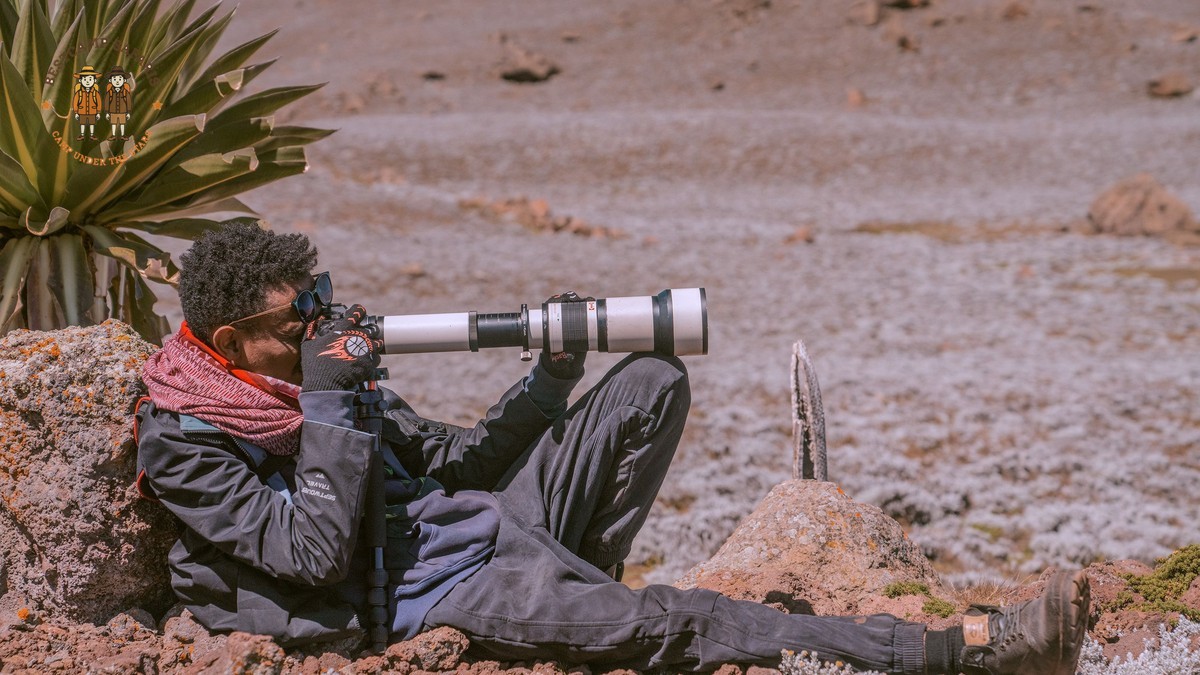
Lens length matters most. You need at least a 400mm equivalent. A 100-400mm zoom is versatile for most scenes. A 600mm prime is better for birds and distant predators. Do not expect to get close to animals. Your vehicle stays on the road.
Pack a beanbag. Most safari vehicles have them in the roof hatch. A beanbag is more practical than a tripod. The vehicle engine creates vibration, so use a fast shutter speed.
For shutter speed, start at 1/1000 for action. For static animals, 1/500 works. Use aperture priority if you want blurred backgrounds. Use manual mode if the light is changing fast.
Dust is your enemy. Carry a blower brush and lens cloths. Use a rain cover if the sky looks wet. Bring extra memory cards and batteries. Cold nights drain batteries faster than you expect.
Consider renting a long lens in Nairobi. Some hotels and gear shops offer this. Confirm the rental company before you fly. Do not try to carry a big lens without a padded case.
For more settings help, read our guide on best camera settings for safari photography.
Vehicle Setup and Guide Expertise
The vehicle is your tripod. BestCamp Safaris uses custom Land Cruisers with roof hatches. You stand inside the vehicle and shoot over the roof. The guide positions the car at the right angle for light.
Ask for a vehicle with only one or two photographers. A full seven seat safari truck makes it hard to move. An exclusive vehicle costs more but gives you freedom.
Your guide is more than a driver. A good guide reads the animals. He knows where the lions rest. He predicts where the herd will cross. This saves your trigger finger.
Photography Tips and Techniques
Patience is your main tool. The best shots come after long waits. You watch a leopard sleep for two hours. Then she wakes, stretches, and walks toward you. That is the moment.
Use continuous shooting in bursts. The action is fast. Do not hold the shutter down for long. You will fill your cards with repeated frames.
Focus on the eyes. An animal portrait works best when the eye is sharp. Use a single focus point on the eye. Let the rest of the frame fall where it may.
Check your histogram. The bright African sun can clip highlights. Expose for the subject, not the sky. You can recover shadows in post processing.
Use stabilizers when you are on a boat or in a moving vehicle. The Mara River boat rides are bumpy. A monopod with a small foot helps.
The BestCamp Safaris Difference
We do not sell generic photo tours. We build itineraries around your camera time.
Our mobile tented camps move with the seasons. We set up near key migration routes. You wake to the sound of canvas flapping, not an air conditioner. At 5am, the ground is cold under your boots. Coffee is ready. The Land Cruiser is warmed up.
We understand light. We talk about camp positions and morning angles. We place our camps so you drive into the golden hour, not away from it.
We also understand your logistics. Let us talk about the real travel details.
Flights from Hong Kong to Nairobi
There is no direct flight from Hong Kong to Nairobi. The simplest routing is through Dubai, Doha, or Addis Ababa.
Emirates flies from Hong Kong to Dubai, then to Nairobi. Qatar Airways flies via Doha. Ethiopian Airlines flies via Addis Ababa. The total travel time is about 14 to 18 hours, plus layover.
Try to land in the afternoon. Then you can rest and start fresh the next morning. A two day layover in Nairobi helps with jet lag.
eTA and Visa for HKSAR Passport Holders
Hong Kong Special Administrative Region (HKSAR) passport holders do not need a traditional visa. They need an online travel authorization, called a Kenya eTA.
Apply online at the official Kenyan eTA site. The process takes a few days. You need a passport valid for at least six months. The fee covers a single entry. Apply at least two weeks before departure to be safe.
Photography Safari Kenya Cantonese Speakers: Guide Language Options
Here is the honest part. Dedicated Cantonese speaking safari guides in Kenya are rare. Only a handful exist, and they are often booked months ahead. Most guiding is done in English or Swahili.
As a Cantonese speaker, do not let this stop you. Your English is often good enough for basic conversations. But photography feedback needs deeper language skill.
BestCamp Safaris solves this by pairing an English speaking specialist guide with pre translated briefing materials. You get a one page guide sheet in Cantonese covering daily plans, animal names, and photography terms. Your guide learns key phrases in Cantonese before the trip.
We also arrange a post drive recap with translations if you need it. The goal is clear communication, not perfect grammar.
Tipping and Currency
Kenya uses the Kenyan Shilling (KES). US Dollars are widely accepted at lodges and park gates. Bring crisp, new USD notes. Old or damaged notes are often rejected.
For tipping, the standard is USD 10 to 15 per person per day for a guide. A camp driver gets a similar amount. If you have a dedicated photo driver, tip USD 20 to 25 per day.
To relate in HKD, USD 10 is roughly HKD 78, so a guide tip runs about HKD 78 to 117 per day. Add a similar amount for your camp driver. For a 7 day safari, guide tips alone add up to roughly HKD 550 to 820. Plan this in cash.
Bring small USD bills for incidental tips. Read more about what currency to bring on a Kenya safari to plan precisely.
Pricing and Tour Options
A photography safari costs more than a regular tour. The reason is vehicle exclusivity and longer driving days.
For a 6 night private photography safari, expect to pay USD 4,500 to 7,500 per person sharing. That range includes park fees, private 4×4, guide, full board lodge or tented camp, and transfers. Flights to Nairobi are extra.
For a group itinerary with a dedicated photo vehicle, the price drops. Expect USD 3,200 to 4,500 per person for 6 nights. The exact amount depends on season and camp level.
Our pricing is transparent. There are no hidden fuel surcharges. We confirm all park fees at the time of booking.
FAQs
What is the best time of year for a photography safari in Kenya? July to October for the migration. January and February for dry scenes. November for green landscapes.
What camera and lens should I bring? Two bodies if possible. A 100-400mm lens minimum. A 600mm for wildlife portraits.
How much does a photography safari cost? USD 3,200 to 7,500 per person depending on group size. This covers 6 nights.
Are there Cantonese speaking guides? Rare. BestCamp provides English speaking specialists plus Cantonese briefing sheets.
Do I need a visa? HKSAR passport holders need an eTA. Apply online before you fly.
Is there a direct flight from Hong Kong? No. Fly via Dubai, Doha, or Addis Ababa.
How much do I tip? USD 10 to 20 per day per guide. Carry small USD bills.
Plan Your Trip
A photography safari in Kenya is a serious investment of time and money. It rewards preparation. You now have the logistics in hand.
Let BestCamp Safaris build a trip around your lens, not a generic sightseeing route. We will set the camp near the light, position the vehicle for the best angle, and translate the wildlife cues into a language you understand.
Start planning your photography safari with BestCamp Safaris today. Check our Kenya safari packages or visit our contact page to talk about dates.
For other travelers, see our trip planning guide for Korean speaking travelers for contrast. The logistics are similar, but each audience gets the details they need.


