
 Adventure Tours
The first thing you notice is not a lion. It is the quiet. No generator hum, no perimeter lights, no wall between your canvas and the dark. At our mobile camp on Loisaba Conservancy in Laikipia, that quiet is the whole point.
Most safari blogs describe unfenced camps in general terms. They tell you animals avoid humans and that you will get an escort after dark, then move on. That is true, but it is not the whole story. Here is what actually happens on a real night in a truly wild unfenced bush camp, based on how we run ours.
What “Unfenced” Actually Means
A fenced lodge sits behind a solar electric fence or a stone wall. Staff quarters, kitchens, and guest rooms are inside that boundary. Wildlife can pass close by, but a physical barrier keeps large animals out.
An unfenced bush camp has no such line. Tents, the mess area, and the fire pit sit directly in open bush. Elephants can walk between tents. Hyenas can trot through camp at 2am. There is nothing stopping them except distance, scent, and habit. That is what makes it feel genuinely wild, and it is why the routines around it matter so much.
If you want the fuller picture before you book, we cover what to expect at a Laikipia conservancy mobile camp in more detail, including how camp is set up and struck each time we move.
The First Night: What You Actually Hear and Do
Dinner ends around 8:30pm. The kitchen team packs down the folding table by paraffin lamp, and you hear pots clinking as they load the supply truck for the night. Then a guide walks you to your tent with a torch, checking the ground ahead for tracks.
Inside, you zip the tent fully, top to bottom, both sides. That zip sound becomes a habit fast. You keep a torch and a whistle by your pillow. No snacks stay in the tent, not even a biscuit wrapper, because scent is what draws hyenas and genets, not curiosity about people.
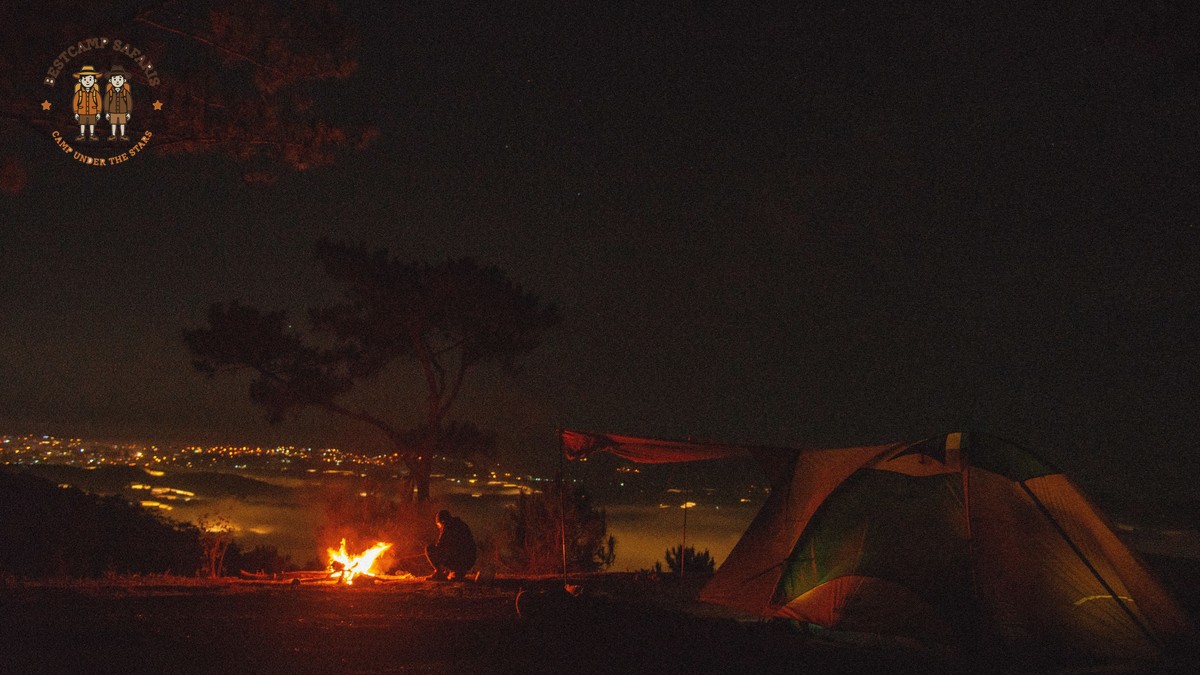
Around midnight on a typical night, you might hear a hippo grunting from a nearby water point 200 to 300 meters off, or a hyena’s whoop farther out. Lion calls carry for kilometers, so a roar that sounds close is often a kilometer or two away. None of it means an animal is in camp. It means you are sleeping inside a real ecosystem instead of next to one.
How Nighttime Safety Really Works
Every guest gets an escort to and from their tent after dark, full stop. No one walks alone, even for twenty meters. Staff carry torches and a handheld radio linked to a base set at the mess tent, and camp keeps a satellite phone for genuine emergencies since mobile signal in this part of Laikipia is patchy at best.
If you need to leave your tent at night, you do not go outside. You unzip the inner flap, shine your torch, and call out. A staff member on night watch responds within a minute or two and walks with you. This is standard across most well-run mobile camps in Kenya, and it is worth understanding fully before your first stay. We break down how lion safety actually works at a tented camp at night if you want the mechanics behind it, from spacing between tents to how guides read fresh tracks each morning before anyone walks to breakfast.
Has anyone been hurt at a well-run unfenced camp in Kenya? Serious incidents are rare enough that they make national news when they happen, precisely because the protocols work. The camps where problems occur are almost always the ones skipping escorts or letting guests wander after dark.
Why Animals Rarely Come Into Camp
Predators are built to avoid unfamiliar risk, and a camp full of human scent, lamp smoke, and voices reads as exactly that. Lions and hyenas have far easier prey than a zipped tent that smells like people and diesel. Elephants sometimes pass through browsing on trees at camp’s edge, but they are moving through, not investigating tents.
This is not a guarantee, and no honest operator will tell you it is one. It is a strong pattern backed by decades of camps operating this way across Laikipia, the Mara ecosystem, and Tuli in Botswana without regular incidents.
What the Tents and Camp Layout Are Built For
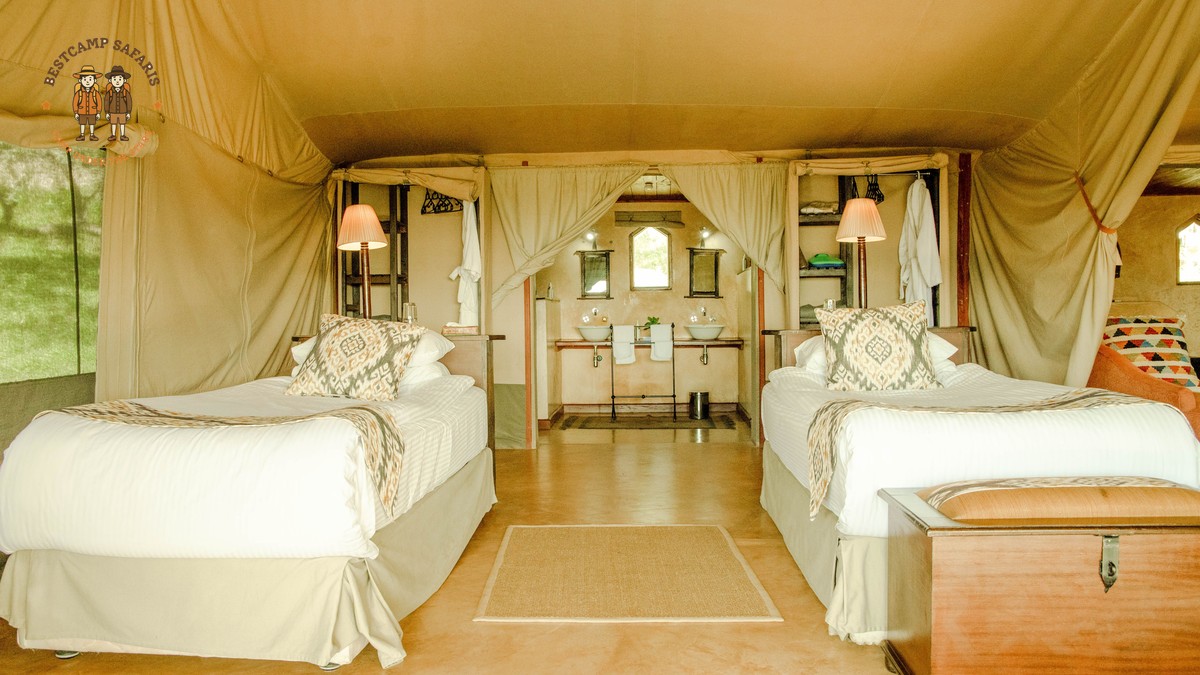
Our mobile tents use heavy canvas rated for wind and hard rain, pitched on raised ground where water will not pool. Zips are doubled and reinforced. Tents sit spaced 15 to 20 meters apart, close enough for a quick escort, far enough that each feels private.
The layout also matters for wildlife movement. Guides choose sites with a clear natural corridor, usually along a dry riverbed or open grassland, left free of tents so animals have an obvious route around camp rather than through it.
Rules Every Guest Follows
- No walking anywhere in camp alone after dark, even to the toilet tent a few meters away.
- Tents stay fully zipped, day and night, with nothing edible left inside.
- Torches stay off pointed at wildlife eyes; guides handle any lighting near an animal.
- No noise or sudden movement if something walks near camp. Freeze and let the guide assess.
- Follow the guide’s exact path in and out of camp. Shortcuts through bush are not permitted.
These rules shift depending on whether you are on a private conservancy or a national reserve, since conservancies like Loisaba set their own guest limits and walking-safari access while reserves follow county or KWS rules. We explain how camping rules differ between a conservancy and a reserve if you are planning a trip that combines both.
Is It Safe for Kids?
Most operators, including us, accept children from age eight in unfenced camps, sometimes younger case by case. The real test is not age but whether a child can follow the zip-and-escort routine without treating it as a game. A child who listens and stays close to a guide is generally fine. One who wanders is a bigger risk than any animal.
Fenced vs Unfenced: Quick Comparison
| Feature | Fenced Lodge | Unfenced Bush Camp (Laikipia mobile) |
|---|---|---|
| Physical barrier | Electric fence or wall | None, open bush |
| Night movement | Often unescorted within fence | Always staff-escorted |
| Typical price per night | USD 250-600 per person | USD 180-450 per person (indicative) |
| Sense of remoteness | Moderate | High |
| Wildlife sounds at night | Muffled, distant | Close, frequent |
| Conservancy/park fee | Bundled or separate, varies | Often bundled, roughly USD 50-100/person/night (indicative for Laikipia) |
| Good for first-time safari guests | Yes, easier adjustment | Better for repeat or adventurous travelers |
For context on fees elsewhere in Kenya, Masai Mara National Reserve now charges non-resident adults USD 100 per day from January to June and USD 200 per day from July to December, set by Narok County, not Kenya Wildlife Service. Amboseli and Lake Nakuru sit at USD 90 per day through KWS. Laikipia’s private conservancies, including Loisaba, typically bundle their access fee into the nightly camp rate rather than charging it separately.
The BestCamp Safaris Difference
We do not rotate between a dozen unfamiliar sites. Our Laikipia mobile camp uses the same handful of vetted locations season after season, so our guides know the water points, the resident lion prides, and the exact spots where elephants cross most evenings.
Every guide carries a radio linked to base camp, and every camp night includes a full safety briefing before dinner, not a rushed line at check-in. We keep guest numbers low, usually under twelve per camp, so escorts never feel rushed and staff know every tent by name, not number.
We also tell you the trade-offs upfront. There is no wifi, no phone charging in your tent, and no power after the generator shuts off around 9:30pm. Water points sometimes bring elephants or buffalo close to camp paths, and drives get rescheduled around that. If you want the polish of a fenced lodge, this is not that trip. If you want a real bush night, it is.
Plan Your Night in a Truly Wild Unfenced Bush Camp
If the idea of falling asleep to real bush sounds appeals more than a lodge with a swimming pool, our Laikipia mobile camp is worth a look. Visit our contact page to talk through dates, group size, and what a few nights under canvas in Laikipia would actually involve.
More safari planning resources
- Kenya national parks map from SafariPure
- Kenya wildlife tours from Trunktrails Safaris
- Ol Pejeta and Sweetwaters safari package from Valley Safaris
- Big Five safari parks guide on Touring Insights
Related guides: Wild Animals Near Camp at Night: What to Expect.


