
 Wildlife Tours
At 5am in a tented camp on the Mara, the canvas hums. The ground is cool and hard packed under my camp bed. A kettle starts hissing near the mess tent. This is the quiet Mara. The question arrives with morning coffee: does “masai mara is migration visible offseason” match what you will see? The honest answer is yes and no. Let me break it down month by month.
Masai Mara Is Migration Visible Offseason: The Short Answer
Usually not in its main Mara phase. The large wildebeest herds are generally in the Masai Mara from July through October, with occasional late-October or early-November movement. November through June is mostly the Serengeti phase of the annual circuit. The Mara still delivers excellent wildlife viewing because resident predators and herbivores remain year-round.
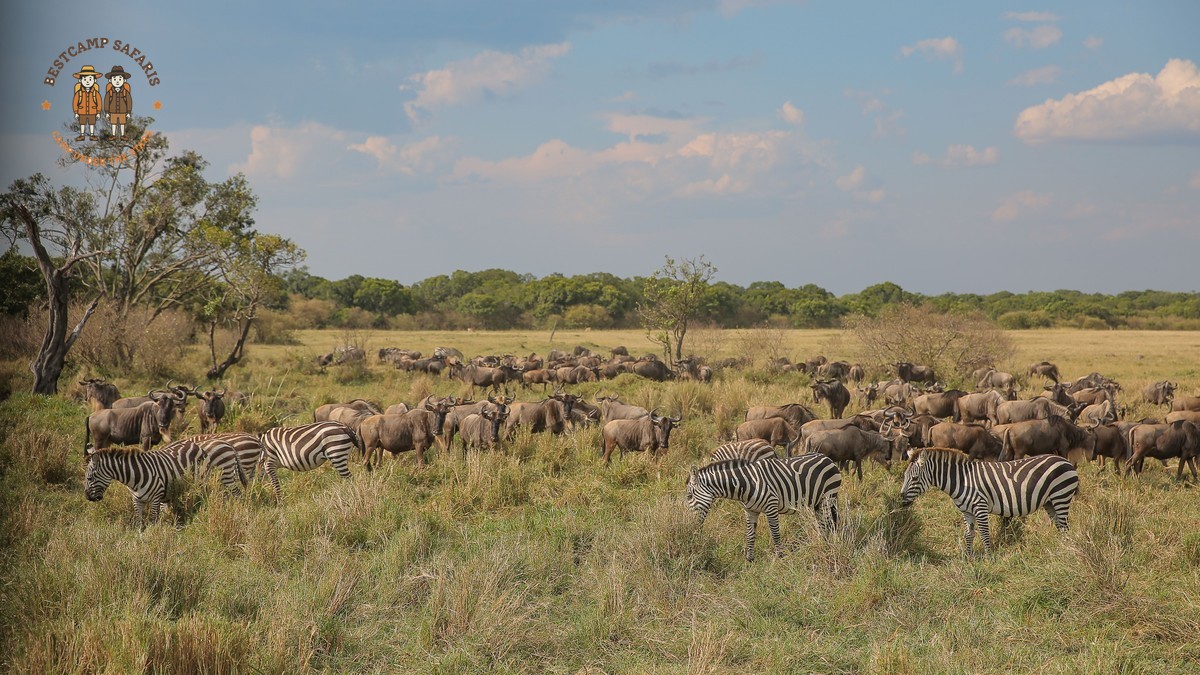
People often picture wall-to-wall wildebeest. That image is real, but seasonal. The migration is a loop. From December to March, calving happens in the southern Serengeti. In April and May, the herds push north. By June and July, they gather in the western corridor. By August, they spill into the Mara. By November, they leave for Tanzania. So if you want giant columns, July through October is the window. If you want the same ecosystem with fewer cars, other months still deliver.
What Wildlife Can You See Outside Migration Season?
Outside migration season, visitors can still see resident lions, leopards, cheetahs, elephants, buffalo, giraffes, hippos, crocodiles, hyenas, and abundant birdlife. January and February can be especially productive for predators because calving elsewhere in the ecosystem increases vulnerable young prey. Green-season months offer dramatic scenery and strong bird activity.
Masai Mara resident wildlife is not a consolation prize. The prides know every drainage line. I spent a slow February afternoon watching lions sleep, yawn, and occasionally look at a zebra. A leopard draped over a sausage tree is worth the flight. In green season, the plains turn soft gold, and migratory birds join the residents. Before you compare a February rate with a high-season lodge price, read our Kenya safari luxury camping prices breakdown.
Which Offseason Months Are Best for a Masai Mara Safari?
January, February, and June are the strongest practical offseason choices for most travelers: they combine relatively dry conditions, lower crowds, and good game viewing. November can be beautiful and quiet, but short rains may affect roads and reserve fees can remain high. April and May are the least convenient because long rains can make access difficult.
Best Time to Visit Masai Mara for Less Crowd and More Value
If your goal is fewer vehicles, the best time to visit Masai Mara is January, February, or June. The grass is short in January and February, so animals are easier to spot. June is a transition month. The first wildebeest columns appear in the southern Mara, and camps are still quiet.
Masai Mara January February Wildlife: Why Early Year Works
January and February are the quiet golden months. Days are dry, mornings are cool, big cats are visible. Calving happens in the southern Serengeti, just south of the border, and that pulse of young prey keeps the whole ecosystem alert. You will not see the main herd, but you will see predators hunting in the same landscape.
Here is the honest month-by-month breakdown I use when planning mobile tented trips:
| Month | Conditions | Crowd | Mara Reserve fee, non-resident adult/day | What to focus on |
|---|---|---|---|---|
| Jan | Dry after short rains | Low to moderate | USD 100 | Resident predators, cats, birdlife |
| Feb | Dry | Low to moderate | USD 100 | Resident wildlife, calving nearby in Serengeti |
| Mar | Dry then hot | Low | USD 100 | Elephants, resident game |
| Apr-May | Long rains | Very low | USD 100 | Green scenery, birds; some camps close |
| Jun | Dry | Low to moderate | USD 100 | Resident wildlife, herds arriving from the south |
| Jul-Aug | Dry, peak | High | USD 200 | Main wildebeest herds, Mara River crossings |
| Sep-Oct | Dry, peak | High | USD 200 | Main herds, crossings possible |
| Nov | Short rains | Low to moderate | USD 200 | Resident wildlife, departing herds, green plains |
| Dec | Short rains | Moderate | USD 200 | Resident wildlife, dispersed herds |
For most repeat visitors, January and February are the sweet spot. You trade the million-strong herds for empty plains and a front-row seat at a leopard kill. June is the compromise month, because the first herds arrive while the prices are still low. November is for photographers who love storm light. April and May are for the adventurous.
How Do Crowds, Prices, and Park Fees Change Offseason?
The biggest savings usually occur from January through June, when the cited non-resident reserve fee is USD 100 per adult per day, compared with USD 200 from July through December. Lower visitor numbers can also mean more relaxed sightings and less competition for guides and vehicles. November and December are not automatically cheap because they may still fall under the higher fee period.
Costs go beyond the gate. Camps often drop rates in April, May, and November. Flights may be cheaper. Guides have more room to pause at a leopard. But the reserve fee is fixed by season. For two adults on a five-day trip in August, reserve fees run about USD 2,000. The same five days in February run about USD 1,000. That difference can add Amboseli or a Chyulu Hills fly-camp.
The Masai Mara National Reserve is run by Narok County Government, not by Kenya Wildlife Service. KWS raised its own park fees in October 2025. These are the current rates as of August 2026:
| Park or reserve | Non-resident fee per adult per day |
|---|---|
| Masai Mara National Reserve (Narok County) | USD 100 Jan-Jun; USD 200 Jul-Dec |
| Amboseli National Park (KWS) | USD 90 |
| Lake Nakuru National Park (KWS) | USD 90 |
| Tsavo East and Tsavo West National Parks (KWS) | USD 80 |
| Chyulu Hills National Park (KWS) | USD 40 |
| Nairobi National Park (KWS) | USD 80 |
| Naboisho and Mara North Conservancies (private) | Usually bundled; roughly USD 80-150 per person/night, not lower |
What Are the Weather and Road Conditions in the Offseason?
January and February are generally the most dependable offseason months for dry-road access and concentrated wildlife. June is a useful transition month. November brings short rains that can green the plains and create dramatic skies. April and May require the most flexibility because long rains can make roads challenging and may affect camp operations.
Road conditions matter more in a mobile tented camp than in a lodge. In April and May, dirt tracks turn into black cotton mud. A good 4×4 can still pass, but you may face detours. Many camps close during the long rains. If you pair the Mara with a Chyulu Hills fly-camp, you need dry roads and open airstrips. Nairobi to Sekenani Gate is about 270 km, roughly 5 to 6 hours by road. A flight from Wilson Airport to Kichwa Tembo or Musiara Airstrip takes about 45 minutes. The final road from Sekenani to a camp near the Mara River can take another hour, depending on rain.
Can You See Wildebeest or River Crossings Outside July to October?
You may see the tail end of wildebeest movement in late October or early November, but a Mara River crossing is not a dependable offseason event. Even during peak season, herds can gather and leave without crossing. Travelers who specifically want crossings should target late July through September and allow at least four nights to improve their chances.
Crossings are not a show. The river is wide, the banks are steep, and the crocodiles are patient. A herd may stand on the edge for a day. I sat under an acacia while wildebeest did nothing. On the fourth morning, the column poured across and the whole world moved. That is why I tell people to allow at least four nights. It is also why I say not to book the entire trip around a crossing. Photographers should read how photographers claim vehicle space before choosing a shared vehicle.
The BestCamp Safaris Difference
We run mobile tented camps. The tent is thick canvas, the bed is raised, and the bucket shower comes hot at the end of the day. Some nights we roll a star-bed onto the deck. At first light, the team packs the bush breakfast into wooden crates while francolins call. We walk into camp after dark by lamplight.
We keep groups small and enjoy the offseason. It is not a second choice. It is a different safari. We can build a February trip that pairs the Mara with Naboisho, or a June trip that ends at a Chyulu Hills fly-camp. If you wonder about meals, what to expect from locally sourced safari camp food tells you how good a bush kitchen can be.
Frequently Asked Questions
Is it worth visiting the Masai Mara outside migration season?
Yes, if the priority is resident wildlife, lower crowds, and a more relaxed safari rather than massive wildebeest herds. Lions, leopards, elephants, buffalo, hippos, and crocodiles remain in the ecosystem year-round.
What months are the offseason in the Masai Mara?
The broad offseason is November through June, because the main migration phase is usually in the Mara from July through October. January-February and June are often the most practical lower-crowd months, while April-May are wetter and more challenging for road travel.
Can you see wildebeest in the Masai Mara in November?
You may see residual or returning movement in late October and early November, but the large herds are usually moving south toward Tanzania by then. November is better treated as a resident-wildlife and green-landscape month than as a guaranteed migration month.
Is the Masai Mara cheaper outside migration season?
Often, but not throughout the entire offseason. The cited reserve fee is about USD 100 per non-resident adult per day from January through June and USD 200 from July through December, so November and December can be quieter without being cheaper on park fees.
Can you see a Mara River crossing every day?
No. River crossings depend on rainfall, herd location, and the animals’ decision to enter the water, so no specific day can be guaranteed. Staying at least four nights and choosing a camp near the relevant migration area improves the odds but does not remove the uncertainty.
Plan Your Masai Mara Safari With BestCamp Safaris
Tell us which months you are thinking about. If you want the migration in full force, we will build a four-night crossing-focused trip for late July or August. If you want a quiet, resident-wildlife safari, we will aim for January, February, or June. We can pair the Mara with Samburu, Laikipia, Meru, or Chyulu Hills, depending on how many days you have. Start the conversation on our contact page, and we will send you a route, a camp-by-camp rundown, and a clear price.


