
 Wildlife Tours
You speak Maa at home. You grew up with stories of the Mara and Amboseli. Now you want to see those plains yourself, not as a tourist, but as someone who can greet the guides in their own language. This Maasai speaking travelers Kenya safari guide is for you.
Most safari content online is written for foreigners who have never met a Maasai person. It explains who we are, how we live, and what we eat. That is not what you need. You need practical answers about camps, costs, and how to find Maasai-run operations that welcome your language.
I have slept in mobile tents across the Mara and Samburu. I know what it feels like to wake at 5am to canvas flapping and cold ground under a camp bed. This guide covers the real logistics, so you can plan a trip that respects your heritage and fits your budget.
What Language Do the Maasai Speak? The Maa Language Explained
The Maasai speak Maa, a Nilotic language family that includes several dialects. The two main dialects are Keekonyokie and Purko, though many others exist. Maa is not a written language for most speakers. It lives in spoken form, through stories, songs, and daily conversation.
Maa is not Swahili. Swahili is a Bantu language, used across East Africa as a trade language. Many Maasai people speak Swahili as a second or third language. But at home, in the manyatta, Maa is the first language.
English is also common, especially among younger Maasai who attended school. Most guides in Kenya speak English and Swahili fluently. Some speak Maa natively.
For you, the good news is this: in the Mara and Amboseli, many guides and camp staff are Maasai. You can speak Maa all day and be understood.
Where Maa Is Spoken in Kenya
Maa-speaking communities live across a large region of Kenya and Tanzania. In Kenya, you will hear Maa in these key safari areas:
- Masai Mara National Reserve in Narok County. This is the heart of Maasai land.
- Amboseli National Park, near the Tanzanian border. The local Maasai community manages many group ranches here.
- Samburu region to the north. The Samburu people speak a dialect of Maa called Samburu. It is closely related but not identical. You can understand each other, though some words differ.
- Laikipia and the Chyulu Hills. These areas have Maasai communities and conservancies.
If you speak Keekonyokie, you will find the Mara easiest. If you speak Samburu, the Samburu National Reserve and the Namunyak Conservancy will feel like home.
Communicating on Safari: Guides Who Speak Maa, Swahili, and English
Here is a practical question: can you have a full safari conversation in Maa? Yes, but with limits.
Most Maasai guides know animal behavior and tracking in Maa. They have local Maa names for the animals, trees, birds, and weather patterns you will see on a drive. That is deep knowledge, built over generations, not something you find in a phrasebook.
But some technical terms come from English or Swahili. Words like “conservancy,” “camera,” “tire,” and “safari” are borrowed. You will both code-switch naturally. That is fine.
When booking, ask for a Maasai guide specifically. BestCamp Safaris can request this. It adds no extra cost but requires advance notice. Most camps in the Mara conservancies employ Maasai guides as a majority.
Authentic vs. Staged Maasai Village Visits
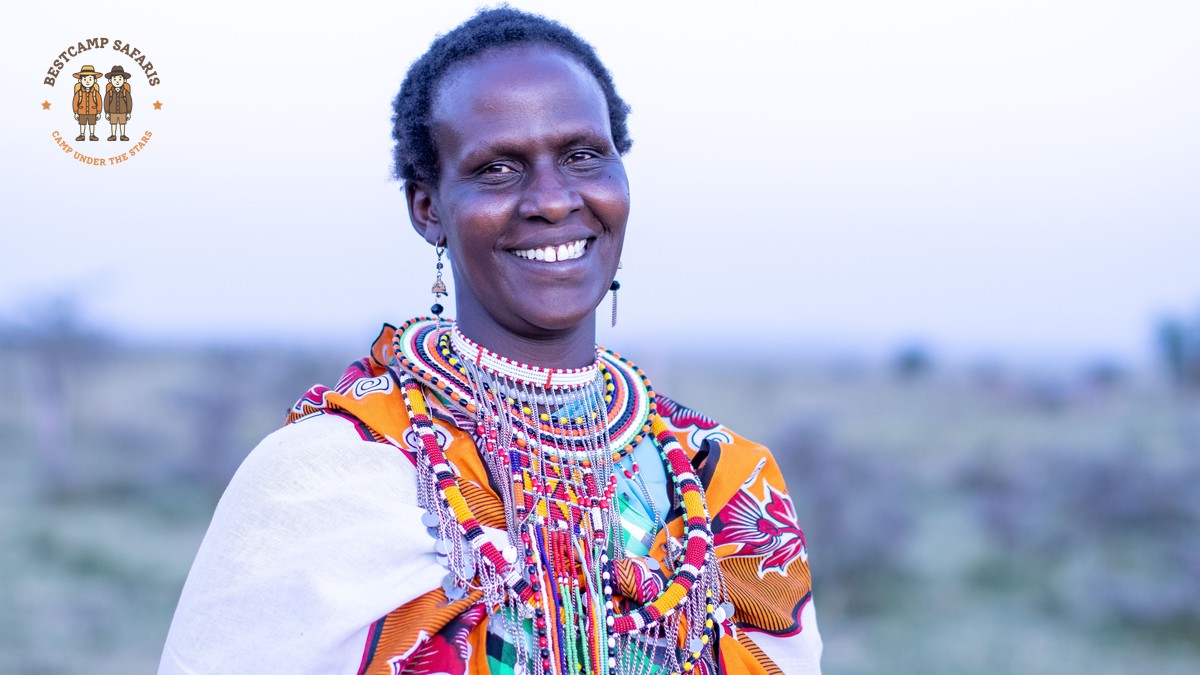
This is the biggest decision you will make. There are two types of village visits, and they are very different.
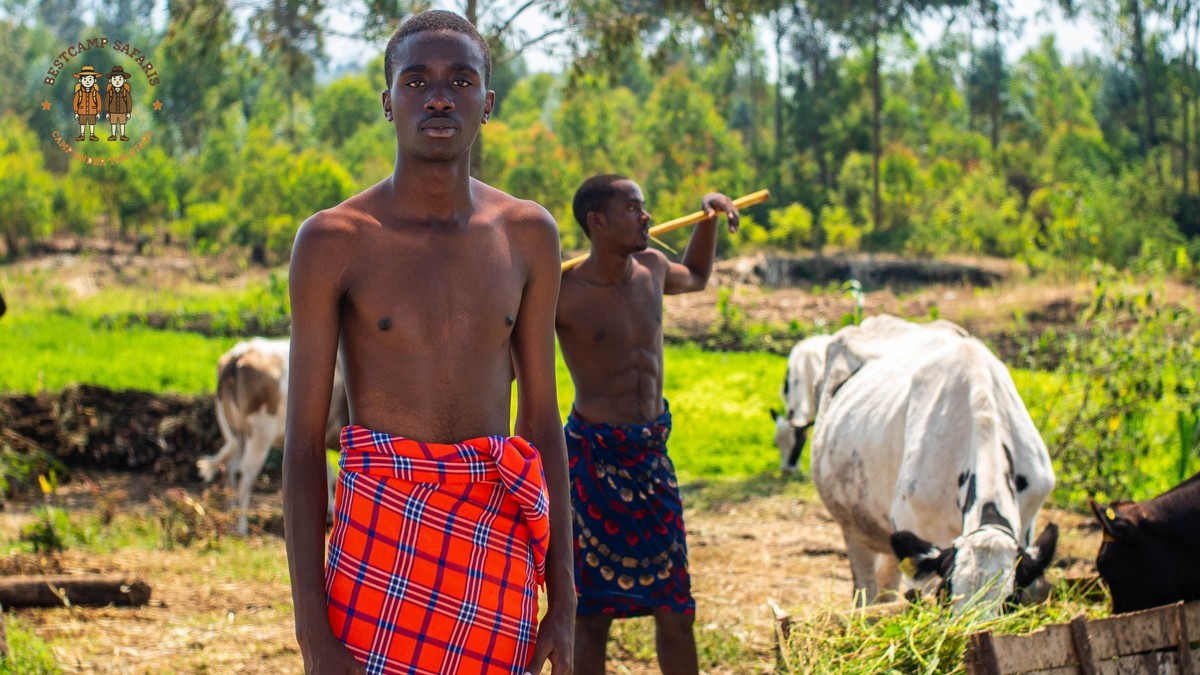
Staged visits happen at the main gates of the Masai Mara, especially at Sekenani and Talek gates. These villages sit close to the road. They are quick, cheap, and fast to reach. You will see a group of morans jump, a fire-making demo, and a market stall selling beads. The whole visit takes about 30 minutes. These visits are not bad, but they are performances for crowds.
Community-run visits happen inside the conservancies or on group ranches. You drive further, sometimes 30 to 60 minutes from the main reserve. These visits are slower. You sit with elders, share chai, and talk about cattle, weather, and local politics. The money goes directly to a Maasai trust or a specific community. These visits are more meaningful for someone who speaks the language.
Here is a table comparing the two:
| Feature | Staged Village (Sekenani Gate) | Community-Run Visit (Mara North or Naboisho) |
|---|---|---|
| Distance from main reserve gate | 0 to 2 km | 20 to 50 km inside conservancy |
| Drive time from camp | 15 minutes | 45 to 90 minutes |
| Visit duration | 30 minutes | 2 to 4 hours |
| Typical fee per adult | USD 20 to 30 | USD 50 to 80 |
| Who gets the money | A village committee, often less transparent | A registered Maasai community trust |
| Language | Mostly English and Swahili | Full Maa expected and welcomed |
| Authenticity | Staged dance and bead selling | Conversation, cattle viewing, real daily life |
For a Maasai-speaking traveler, the community-run visit is worth the extra drive. You will leave with deeper conversations, not just photos.
Maasai Speaking Travelers Kenya Safari: Best Camps and Conservancies
If you want Maasai staff and Maa-speaking guides, choose these areas:
- Mara North Conservancy: This is a private conservancy next to the Masai Mara. It has several member camps, including Karen Blixen Camp, Elephant Pepper Camp, Ngare Serian, and Kicheche Mara. Most employ Maasai rangers and guides. The conservancy fee is bundled into your lodge rate, roughly USD 80 to 150 per person per night. This is an indicative range, not a fixed price.
- Naboisho Conservancy: Adjacent to the Mara, this conservancy is co-managed by Maasai landowners. Camps like Basecamp Explorer and Naboisho Camp have strong Maasai staffing. Same fee structure: USD 80 to 150 per night bundled.
- Samburu National Reserve and Namunyak Conservancy: The Samburu people run these areas. Camps here use Samburu guides, which is a Maa dialect. Sarara Camp in Namunyak is famous for Maasai-run operations.
- Amboseli’s community ranches: Places like Olgulului and Kimana have Maasai-owned group ranches. Some camps here are Maasai-owned, including Porini Camps.
When you book, ask this question directly: “How many of your guides are native Maa speakers?” Any good camp will answer without hesitation.
Best Time to Visit: Dry Season and the Great Migration
The best time for a safari depends on what you want to see.
For the Great Migration, the wildebeest crossings in the Mara usually happen from July to October. This is peak season. Park fees are highest then. The Masai Mara National Reserve charges USD 200 per adult per day from July to December. From January to June, it drops to USD 100.
For dry weather and good game viewing, the dry season runs from June to October. The grass is short, so animals are easier to spot. The short dry season in January and February is also good, with lower fees.
Avoid the long rains from March to May. Many camps close in April. Roads turn to mud. It is quiet and cheap, but you may get stuck.
If you plan for September, you will see the migration and experience the land in dry, dusty gold. That is my favorite time. The ground is hard, and the stars are bright.
Costs and Pricing for Cultural Visits and Conservancies
Here is a breakdown of what you will pay as a non-resident traveler:
| Item | Cost (Non-Resident) | Notes |
|---|---|---|
| Masai Mara National Reserve | USD 100/day (Jan-Jun), USD 200/day (Jul-Dec) | Administered by Narok County, not KWS |
| Amboseli National Park | USD 90/day | Administered by KWS |
| Samburu National Reserve | USD 70 to 80/day | Indicative range, check current rate |
| Conservancy fee (Mara North, Naboisho) | USD 80 to 150/night | Bundled into lodge rate |
| Staged village visit | USD 20 to 30/person | Quick, near the gate |
| Community-run village visit | USD 50 to 80/person | Slower, more authentic |
| Park vehicle fee | USD 10 to 40 per day | Varies by park, indicative range |
These figures are current as of late 2025. Kenya Wildlife Service raised many park fees in October 2025. Always confirm with your tour operator before booking.
How Tips and Visit Fees Benefit the Local Maasai Community
This matters more than you think.
Staged village visits near the gate are run by a rotating committee. Sometimes the money spreads thin across many households. Sometimes a single family runs the whole show. There is little transparency.
Community-run visits, on the other hand, go through a registered trust. The trust has bylaws and audited accounts. Money pays for schools, water pumps, and livestock vaccinations. When you pay USD 60 for a visit in the Mara North Conservancy, most of that goes to the community fund, not a middleman.
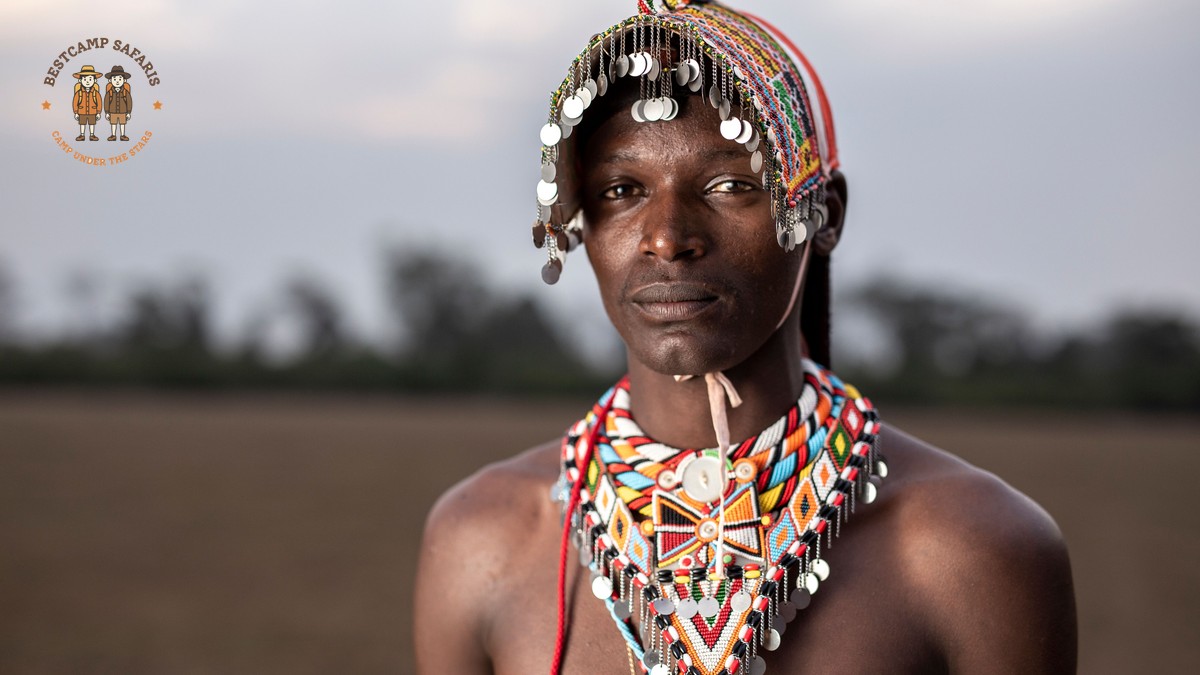
Tips for guides and camp staff also matter. A daily tip of USD 10 to 20 per guest goes directly to the Maasai staff. Many guides use this money to pay school fees for their children. Give cash directly, not through a central pool, if you want to be sure it reaches the individual.
What It Is Like at a Mobile Tented Camp: A Real Morning
Let me describe a typical morning so you know what to expect.
At 5am, the camp wakes you with a soft knock and a tray of hot chai. The canvas of your tent hums in the wind. The ground under your cot is hard red earth. You unzip the flap and step onto packed dirt. The air is cold enough to see your breath.
A Maasai askari walks you to the dining tent with a torch. The lantern light swings over the tables. Breakfast is laid out: fruit, eggs, toast, and more chai. You can hear a bush breakfast being packed into metal boxes in the kitchen tent. A guide briefs you on the morning plan while you finish your coffee.
By 6am, you are in the Land Cruiser. The engine idles. The driver turns off the headlights and waits for the sky to grey. You hear birds start, then a distant lion grunt. The canvas camp is behind you, invisible in the dark. That is the moment you realize why people do this.
This is what mobile camping means. Not roughing it, but living close to the land. Your bed is real. The shower is solar-heated. The food is excellent. But the boundary between you and the wild is thin canvas.
Sample Itinerary: 6 Days in the Mara and Amboseli
Here is a simple plan for a first-time safari focused on Maa-speaking regions.
Day 1: Arrive in Nairobi. Drive to the Masai Mara (about 5 hours, 280 km). Check into a camp in Mara North Conservancy.
Day 2: Full game drive in the Mara. Ask for a Maa-speaking guide in advance. See the Mara River and look for crossing herds.
Day 3: Morning game drive, then a community-run village visit in the conservancy. Spend 3 hours talking with elders over chai.
Day 4: Fly from the Mara to Amboseli, about 45 minutes by light aircraft. Driving this route takes 8 to 9 hours over roughly 470 km, so most operators recommend flying instead. Check into a camp on a community ranch. Afternoon drive to see elephants with Kilimanjaro behind.
Day 5: Morning game drive in Amboseli. Visit a Maasai group ranch school if your camp arranges it.
Day 6: Return to Nairobi (about 4 hours, 230 km). Fly out or extend your stay.
This pace is relaxed. You get real game viewing plus genuine cultural time.
FAQ
Is Maa the same as Swahili? No. Maa is a Nilotic language. Swahili is Bantu. They are completely different.
Do Maasai people speak English? Many do, especially younger people and guides. Older elders may prefer Maa and Swahili.
Can I communicate with Maasai guides in my own language? Yes, in most of the Mara, Amboseli, and Samburu. Ask your operator to request a Maa-speaking guide.
Is it disrespectful to visit a Maasai village? No, if you visit with respect. Plan to stay longer, ask questions, and pay the posted fee. Do not treat it as a zoo.
Do Maasai and Samburu speak the same language? They speak related dialects of Maa. Speakers can usually understand each other with some effort.
How do tips or visit fees benefit the local community? Tips go directly to staff. Visit fees go to a community trust or committee. Ask for transparency.
The BestCamp Safaris Difference
BestCamp Safaris is not a faceless booking engine. We are a team that has slept in the canvas, walked the conservancies, and worked with Maasai guides for decades.
We build itineraries around your language needs. We will ask if you want a Maa-speaking guide and a Maasai-run camp. We will recommend the Mara North or Naboisho Conservancy over a gate-side hotel if that fits your budget. We will help you choose between a staged village visit and a community-run one, with real prices for both.
Our mobile camps are simple and honest. You get a proper bed, hot showers, good food, and a guide who knows the land. We do not promise luxury or grand lobbies. We promise mornings on cold ground, the smell of coffee and dust, and the roar of a lion that sounds like home.
We also understand the ethics. You do not want to be a tourist trap. We will connect you with conservancies that publish their benefit-sharing. Your money will fund schools and clinics, not just photo props.
Plan Your Safari
Ready to walk the Mara and greet the guides in Maa? Start planning your Kenya safari with BestCamp Safaris. We will match you with a Maa-speaking guide, a conservancy that respects your heritage, and a camp that feels like a home away from the manyatta.
We keep groups small and bookings personal. Tell us your dates and your budget. We will send a sample itinerary within a few days.
Let us help you see your own land with new eyes.
Start planning your trip with BestCamp Safaris or view our Kenya safari tours.
More safari planning resources
- Kenya national parks map from SafariPure
- Samburu National Reserve guide from Trunktrails Safaris
- Map of Samburu from Valley Safaris
- Samburu National Reserve guide on Touring Insights
Related guides: Carnet de Passage Kenya Safari: Do You Actually Need One?, Tulu Speaking Travelers Kenya Safari: Photo Guide 2026.


