
 Adventure Tours
Planning a Kenya safari from Indonesia feels like a big step. You have flights to figure out, park fees to understand, and a packing list that looks nothing like a trip to Bali. I have stood at a remote airstrip in the Masai Mara at 5am, coffee in hand, watching the sky turn gold. I have also spent months helping travelers from Jakarta and Surabaya work through these exact questions.
This Kenya safari planning guide Indonesian speakers can trust answers the practical things first: the eTA, the flights, the money, the food, and what actually happens on a safari day. No fluff, just clarity.
By the end, you will know what a Kenya safari costs, how to book it, and what to pack. Let us start with the big question.
Kenya Safari Planning Guide Indonesian Speakers Can Follow
This guide covers timing, cost, visas, food, and packing in order, so you can plan your trip from Jakarta or Surabaya with confidence.
Best Time to Visit Kenya for Safari
Kenya has two dry seasons, best for wildlife viewing since animals gather at water sources.
- June to October: Dry season and peak of the Great Migration. Wildebeest cross the Mara River between July and September. Expect crowds and higher prices.
- January to February: A short dry season with excellent predator viewing and fewer crowds.
- March to May: Long rains. Camps are quiet and prices drop, though some roads get muddy.
- November to December: Short rains. The landscape turns green and many animals have newborns.
For the migration, July through September is the classic window. For fewer people and great game viewing, January and February are strong choices.
How Many Days Do You Need for a First Safari?
Plan for more than three days. You need time to adjust, travel between parks, and fit in four or five game drives.
A standard first safari runs 6 to 8 days. Here is a realistic sample:
| Itinerary | Nights | Parks | Focus |
|---|---|---|---|
| Short | 4 | Masai Mara only | Big cats, migration (Jul-Oct) |
| Classic | 7 | Amboseli + Masai Mara | Elephants, then big cats |
| Circuit | 9 | Amboseli, Lake Nakuru, Masai Mara | Variety and landscapes |
| Coastal Combo | 10-12 | Mara + Diani Beach | Safari then beach relaxation |
For Indonesian travelers, a 7-day itinerary works well. It gives you time to beat jet lag and still see the highlights.
Group Safari vs Private Safari vs Tour Operator
There are three main ways to book.
Group safari: You join a shared vehicle with up to 7 other travelers. This is the most budget-friendly option, and it works well for solo travelers or couples.
Private safari: You get your own vehicle and guide, with a flexible itinerary. It costs more but suits families and honeymooners.
Self-drive: Not recommended for first-timers. Reserve roads are rough, getting stuck is common, and close wildlife encounters need experience.
Tour operator: A local operator like BestCamp Safaris often gives better prices than an international agency, since it cuts out the middleman.
For first-timers, a private or small-group safari with a reputable local operator gives the best value and peace of mind.
What to Expect from Safari Accommodation
Safari lodging comes in three tiers.
Budget (USD 75-150 per person per night): Permanent tented camps or simple bandas, often with shared bathrooms. Clean, basic, and comfortable, with hearty meals.
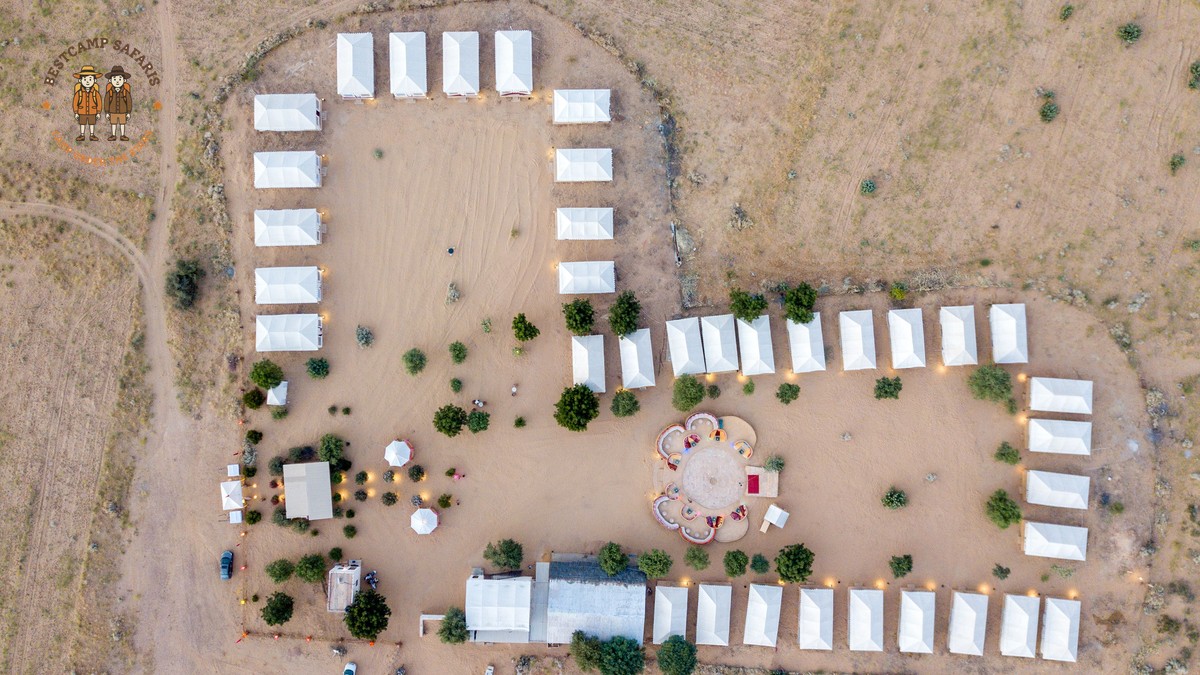
Mid-range (USD 150-300 per person per night): Tented camps with en-suite bathrooms and hot showers, sometimes a small pool. This is the sweet spot for most travelers. Naboisho Conservancy camps often fall here, with conservancy fees bundled into the rate.
Luxury (USD 300-800+ per person per night): High-end lodges with private plunge pools and gourmet dining. Many include all meals, drinks, and game drives.
Masai Mara National Reserve entry costs USD 200 per adult per day from July to December. This fee is separate from accommodation but usually bundled into your overall safari quote, so you rarely handle cash at the gate.
Typical Costs of a Kenya Safari
A Kenya safari is not cheap, but it is worth every shilling.
- Budget safari: USD 150-250 per person per day.
- Mid-range safari: USD 250-450 per person per day.
- Luxury safari: USD 500-1,200 per person per day.
These rates usually include park fees, accommodation, meals, game drives, and a guide. They exclude international flights, visas, insurance, drinks, and tips.
For a 7-day mid-range safari, plan on roughly USD 1,750 to 3,150 per person, plus flights and extras.
Packing List and Gear Essentials
Packing for safari differs from a beach trip.
Clothing: Neutral colors like khaki, olive, and beige. Long sleeves for evenings and mosquito protection, plus a light fleece for cold 5am drives.
Gear: Binoculars, a camera with a zoom lens (100-400mm is ideal), extra batteries, a power bank, and a reusable water bottle.
Health and documents: Sunscreen, insect repellent, basic medications, a passport valid for 6 months, a printed eTA approval, and travel insurance documents.
Do not overpack. Most camps offer laundry service for a small fee.
Combining Safari with the Kenyan Coast
Yes, this is safe and popular. After a week on safari, many travelers fly to Mombasa or Diani Beach for 3 or 4 days of relaxation.
There is no direct hop from the Masai Mara to Mombasa. Most safari airstrips route flights through Nairobi’s Wilson Airport first, and combined flying time runs roughly 2 to 2.5 hours on light aircraft like a Cessna Caravan. With the connection and layover, budget half a day door to door. Diani Beach has white sand and clear water, and fits easily into a longer itinerary.
A 10 to 12-day trip gives you 7 nights on safari and 3 nights on the coast, a solid combination for first-timers.
Visa and Entry Requirements for Indonesian Citizens
Indonesian citizens do not need a visa for Kenya. Instead, Kenya uses an electronic travel authorization, called an eTA.
Cost: The Kenya eTA costs USD 30. This is a flat government fee that applies to every nationality, including Indonesian passport holders.
Timing: Apply at least 2 weeks before departure, ideally as soon as you book flights. Processing usually takes 24 to 72 hours, though it can take longer.
Where: Apply only through the official Kenyan government eTA portal, not third-party sites that charge extra fees.
You will need a passport scan, a passport photo, your flight itinerary, and proof of accommodation or a letter from your operator.
Getting to Kenya from Indonesia
There is no direct flight from Jakarta to Nairobi, so you will transit once.
Flight time: Expect 15 to 20 hours total including your layover. Actual flying time runs about 13 to 15 hours.
Airlines: Qatar Airways via Doha and Emirates via Dubai are the two most common choices, both flying daily from Jakarta to Nairobi.
- Qatar Airways: Jakarta to Doha (about 9 hours), then Doha to Nairobi (about 5 hours), with a layover of 2 to 4 hours.
- Emirates: Jakarta to Dubai (about 8 hours), then Dubai to Nairobi (about 5 hours), with a similar layover.
A round-trip economy ticket from Jakarta to Nairobi typically costs USD 600 to 1,000 if booked early. Peak season runs June to October, so book 4 to 6 months ahead.
Time zone: Kenya is 4 hours behind Jakarta. When it is 8am in Jakarta, it is 4am in Nairobi.
Halal Food and Muslim-Traveler Considerations
Halal food is available in Kenya, but you must ask ahead.
In Nairobi and Mombasa, certified halal meat is easy to find, with many Muslim-owned restaurants and butchers. At safari camps, most staff can accommodate halal needs with advance notice.
At remote bush camps, certified halal meat may not be available daily. The chef can serve seafood, vegetables, eggs, and other non-meat options instead.
Most camps serve alcohol. If you prefer to avoid it, ask your operator to recommend more conservative camps or alcohol-free dining areas.
Kenya has a significant Muslim population, and towns have mosques. Camps do not, so you can pray in your tent or a quiet spot. Some camps offer a quiet room on request.
Currency, Cash, and Tipping
US dollars in cash are the easiest option for tips and small purchases. Bring newer bills, from 2013 or later. Many remote camps lack reliable card machines.
Kenyan shillings (KES) are useful for local markets. Withdraw from ATMs in Nairobi, or change Rupiah to USD first, since direct exchange is rarely available.
For a deeper breakdown of cash, cards, and tipping amounts, read our guide on what currency to bring on a Kenya safari.
Language and Communication with Guides
Safari guides speak English well, often with a British-influenced accent, so understanding them is rarely a problem. Guides are patient and use simple words, pointing out animals by name, so basic English is enough.
Some larger operators offer Indonesian-speaking guides on request, though this is rare. A translation app and a few written English phrases go a long way.
The BestCamp Safaris Difference
I have spent many nights in a mobile tented camp, listening to canvas flap in the wind. That is why I believe in small, intimate camps over big lodges.
At BestCamp Safaris, we keep groups small, with a dedicated vehicle for no more than 6 people. Your guide knows the conservancies by name and the wildlife by character. We work with camps that use professional cooks and trained staff, and we handle the eTA, park fees, and booking logistics.
We arrange halal meals at every camp and recommend camps with quiet spaces for prayer. We plan each day so you are back from evening drives before sunset, and we brief your guide on your preferences before you arrive.
For Indonesian guests, we make sure camp staff know your dietary needs in advance. It is the difference between a good trip and a seamless one.
Final Planning Checklist
- Apply for your eTA at least 2 weeks before departure.
- Book flights from Jakarta to Nairobi, ideally 4 to 6 months ahead.
- Choose your safari dates: July to October for the migration, January to February for quieter travel.
- Decide your itinerary length. A 7-day safari suits most first-timers.
- Pick your accommodation tier. Mid-range offers the best value.
- Request halal meal preferences through your operator.
- Pack neutral clothing, binoculars, and a good camera.
- Carry USD cash for tips and small purchases.
- Get travel insurance that covers medical evacuation.
- Confirm pick-up details with your operator a week before you leave.
If you want help planning this trip, we are here. We build full itineraries, handle the permits, and match you with camps that fit your travel style, across the Masai Mara, Amboseli, and the coast.
Start the conversation today. Send us your travel dates and questions, and we will build a Kenya safari plan just for you. For more on timing, see our guide on how many days you actually need for a Kenya safari, or reach out to our team through the contact page. Your Kenya adventure is closer than you think.
More safari planning resources
- Kenya safari packages from SafariPure
- Kenya wildlife tours from Trunktrails Safaris
- Kenya tour packages from Valley Safaris
- Kenya eTA and eVisa guide on Touring Insights
Related guides: Kenya Safari Planning Guide for Marathi Speakers | BestCamp.


