
 Wildlife Tours
You have watched the lions stalk through golden grass. You have seen elephants kick up red dust. The screen goes dark, and you are still sitting there, already planning.
That is the pull of a Kenya safari documentary. The footage is real, the places are real, and you can stand in them. This guide is your Kenya safari documentary inspiration turned into a practical plan: which parks match which films, how to get there, when to go, and what it actually costs.
Kenya Safari Documentary Inspiration: Best Films to Watch Before You Go
Start with these. They are the ones that show the landscapes you will recognize from the driver’s seat.
| Documentary | Main Location | What You Will See | Why It Helps Plan |
|---|---|---|---|
| Big Cat Diary | Maasai Mara | Lions, leopards, cheetahs | Shows the Mara’s open plains and river crossings |
| The Elephant Queen | Tsavo / Amboseli | Elephant family herds, drought | Highlights Tsavo’s elephant herds and Amboseli’s marshes |
| David Attenborough’s Africa | Multiple parks | Wide habitat range | Gives a survey of Kenya’s varied ecosystems |
| Disneynature’s African Cats | Maasai Mara | Lion and cheetah rivalries | Captures the Mara’s predator density |
| Wild Safari: A South African Adventure | Not Kenya, but useful | Generic savanna scenes | Shows the limits of filmed safaris versus real ones |
These documentaries share a bias. Most are shot in the Maasai Mara or the Tsavo-Amboseli ecosystem. That is good news for planners. Those parks are easy to reach and well run. The harder task is deciding which one fits your style.
Big Cat Diary Was Filmed Here: The Maasai Mara
The Mara is the star of most Kenya safari documentaries. The BBC filmed Big Cat Diary in the reserve and the neighboring private conservancies. The Marsh Pride, the Ridge Pride, the leopards of the Talek River. Those names come from real territories you can drive through.
The reserve itself is run by Narok County, not the national government. Entry for non-residents costs USD 100 per adult per day from January to June. From July to December, when the wildebeest migration peaks, it jumps to USD 200 per adult per day. That is the single biggest line item in your budget.
Drive times shape the experience. From Nairobi, the journey is roughly 270 kilometers. Plan for five to six hours on good days, longer after rain. Most first-time visitors fly. A 45-minute flight from Nairobi’s Wilson Airport lands at one of the Mara’s airstrips, and your guide meets you there.
The private conservancies beside the reserve, like Naboisho and Mara North, cost more. Lodge rates typically include park fees of roughly USD 80 to 150 per person per night. In exchange you get fewer vehicles and night drives, both of which are banned inside the reserve. If your documentary inspiration is the sight of lions hunting after sunset, a conservancy delivers that.
For a repeat visitor who has already done the lodge circuit, the Mara can feel busy. Peak season means 20 vehicles around a single cheetah. That is the honest trade-off. The wildlife density is unmatched, but you share it.
The Elephant Queen Country: Tsavo and Amboseli
The Elephant Queen follows Athena, a matriarch elephant, through a drought. Most of it was filmed in Tsavo East, within the greater Tsavo-Amboseli ecosystem, with Amboseli’s famous views of Mount Kilimanjaro appearing in several scenes. The park is 240 kilometers southeast of Nairobi, about a four-hour drive.
Amboseli National Park charges USD 90 per adult per day for non-residents. The marshlands attract elephants year-round. The observation hill gives you a panorama over the whole basin. On clear mornings, Kilimanjaro looms over the herds. That scene, the elephant with the mountain behind, is the one travelers try hardest to photograph.
Tsavo East and Tsavo West lie farther south and east. They are Kenya’s largest parks, and the fee is lower at USD 80 per adult per day. Tsavo is where the man-eating lions of the 1898 railway building were shot. The red-dust elephants, coated in the region’s iron-rich soil, are the visual signature here.
For a repeat visitor, Tsavo offers something the Mara does not: space. You can drive for an hour and see one other vehicle. The wildlife is different too. Less dense, but more relaxed. Elephants here are less habituated to crowds, which means more natural behavior.
The drive from Amboseli to Tsavo West takes about two hours on a decent road. That pairing works well on a six-night trip.
Samburu and Laikipia: The Documentary Underdogs
When a Kenya safari documentary wants something rare, it often turns to the north. Samburu National Reserve and the surrounding private ranches in Laikipia appear less often on screen, but the species list is unique.
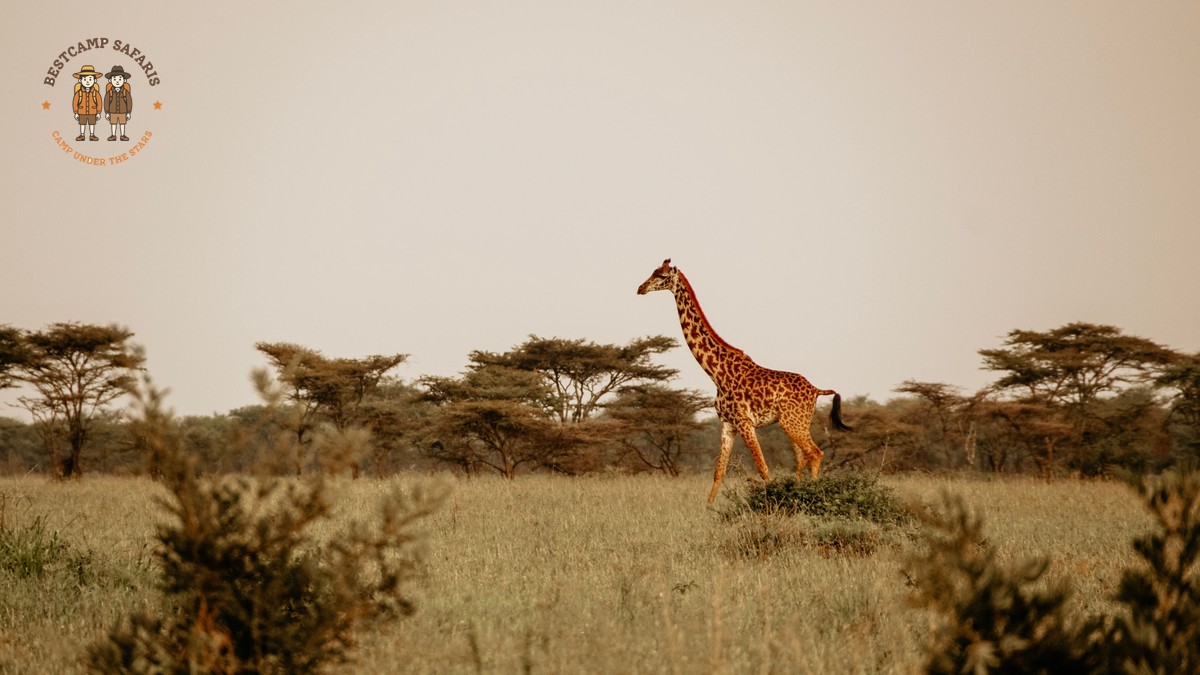
Samburu is 340 kilometers north of Nairobi. The drive takes five to six hours. The reserve runs along the Ewaso Ng’iro River, and the riverine forest attracts elephants and the big cats that follow them. But the stars here are the “Samburu Special Five”: the reticulated giraffe, the Grevy’s zebra, the beisa oryx, the Somali ostrich, and the gerenuk.
Fees vary by season and are not set by KWS. Expect a range of roughly USD 60 to 100 per adult per day. It is less crowded than the Mara, and the arid landscape looks nothing like the green savanna of the documentaries. That contrast is part of the appeal.
Laikipia, west of Samburu, is private land converted to conservation. Camps there tend to include park and conservancy fees in their per-night rates. Expect USD 150 to 250 per person per night at a mid-range camp. The payoff is exceptional guiding and zero crowds. This is where you go for the feeling of a private wilderness, not a checklist.
Lake Nakuru and Chyulu Hills: Short Stops With Big Impact
Lake Nakuru National Park sits 160 kilometers northwest of Nairobi, a two-and-a-half-hour drive. It is famous for flamingos, though their numbers vary with water levels. Rhinos are the more reliable draw. The park charges USD 90 per adult per day.
Chyulu Hills National Park lies between Amboseli and Tsavo West. It is smaller and quieter, charging USD 40 per adult per day. The hills are ancient volcanic cones covered in grass and forest. This is the landscape seen in the opening shots of many documentaries, though rarely named. It pairs perfectly with Amboseli on the same route.
The Best Time to Visit Kenya, Based on What You Want to See
Timing drives everything. The Great Migration in the Mara peaks between July and October. That is when river crossings happen and when the park is busiest and most expensive. The wildebeest are in the Mara from roughly August to October, then they drift south.
If you want the Mara without the crowds, go in January or February. The grass is shorter, the predators are easier to spot, and the reserve is quiet. The big herds are in Tanzania’s Serengeti then, but the resident lion and leopard populations stay put.
Amboseli and Tsavo are good year-round. The dry months of June to October offer clearer skies and better visibility. The wet months of November and December turn the parks green and the birdlife spectacular, but some roads become muddy.
For Samburu, the dry season from June to October concentrates animals along the river. That is the easiest time for photography.
How Many Days Do You Need for a Kenya Safari?
Seven to ten days is the sweet spot. A shorter trip works if you focus on one area. The Mara alone can be done in three nights. Amboseli and Tsavo West together need four to five nights to avoid rushing.
For the repeat visitor, nine to twelve days opens the door to the north. Add Samburu and Laikipia after the Mara, or pair them with a Masai Mara night and a coast extension. Most flights between parks are short, but the drives add up. Plan a buffer day for every three days of driving.
The BestCamp Safaris Difference
Watching a documentary is a one-way window. The footage shows the extraordinary moments, but it skips the routine. The 5 a.m. wake-up call. The canvas tent flap in the wind. The smell of coffee before dawn. The game drive that returns with nothing but a good story.
That routine is what a real safari is made of, and it never makes the final cut.
BestCamp Safaris builds itineraries for people who want that whole experience, not just the highlight reel. We pair the documentary locations with camps that match your pace. We know which camps have star beds for open-air nights. We know which conservancies allow night drives. We know when to push for an early start and when to sleep in.
We also handle the logistics that documentaries never show. Park fees, conservancy fees, internal flights, and the right guide for each region. A repeat visitor does not need a lecture on what a safari is. They need a partner who understands the difference between a lodge in the Mara and a fly-camp in Chyulu Hills.
For a closer look at the difference between the two, read our guide to mobile camping in Kenya for a closer-to-nature safari. If you want to plan around a special occasion, our romantic Kenya safari itinerary ideas cover the quiet corners of these same parks. And for travelers who want to go deeper than the lodge circuit, our Kenya safari experiences connected with Maasai culture pair the scenery with the people who call it home.
Is a Kenya Safari Documentary Realistic Compared With a Real Game Drive?
Partially. The animals are real and the locations are accurate. But the editing compresses time. A documentary shows a week of waiting as a single chase scene. A real game drive is quiet, patient, and often uneventful. That is not a flaw. It is the point.
The hours of stillness make the bursts of action matter. You will not see a hunt every day. You will see fresh tracks, a resting pride, a single elephant at a waterhole. The moment a lion lifts its head and looks at your vehicle is worth every quiet hour before it.
The other difference is the score. There is no dramatic music in the bush. There is wind, bird calls, and occasionally the rumble of a distant engine. That silence is the thing travelers mention most when they come home.
What a Documentary-Inspired Safari Costs
Here is a realistic planning range for a seven-night itinerary combining the Mara and Amboseli.
| Item | Cost Range (USD per person) |
|---|---|
| Park fees, 3 nights Mara (Jan-Jun) | USD 300 |
| Park fees, 3 nights Mara (Jul-Dec) | USD 600 |
| Park fees, 3 nights Amboseli | USD 270 |
| Mid-range lodge, full board, 7 nights | USD 2,100 to 3,500 |
| Internal flights (Nairobi to Mara, transfer to Amboseli) | USD 250 to 400 |
| Private guide and vehicle, 7 days | USD 1,000 to 1,500 |
| Conservancy stay (Naboisho or Mara North) | Add USD 80 to 150 per night |
For a repeat visitor, the biggest lever is season. The same Mara trip costs roughly half in January versus August. The wildlife is different but often easier to find. If your schedule is flexible, off-peak travel doubles the value.
Plan the Trip That the Documentary Started
The footage you watched was filmed somewhere real. You can go there. The Mara’s riverbanks, Amboseli’s marshes, the red plains of Tsavo, the quiet hills of Chyulu. Each has a season, a cost, and a camp that fits.
Let us build the itinerary around the scenes you want to stand in. We will handle the park fees, the flights, the camp bookings, and the guiding. You bring the list of shots you want to take.
Contact BestCamp Safaris to start planning your Kenya safari. Tell us which documentary scenes got you hooked, and we will map the route to match.


