
 Uncategorized
Planning a Kenya safari can feel like two trips at once. You are choosing a camp while also sorting out health forms. A clear Kenya safari vaccination checklist removes most of that stress. Use this guide to separate legal entry rules from medical advice, then book your travel-health visit. One caution first. This is planning information, not personal medical advice. Your doctor or travel nurse makes the final call.
What is on the Kenya safari vaccination checklist?
For most Kenya safaris, review routine vaccines first, then discuss hepatitis A, typhoid, and malaria prevention with a travel clinician. Yellow fever is an entry requirement when arriving from, or transiting for 12 hours or more through, a yellow-fever-risk country. Carry the original vaccination certificate, prescriptions, repellent, oral rehydration salts, and travel insurance details.
Here is the ten-step version we share with first-time safari travelers:
- Book a travel-health appointment 6 to 8 weeks before you fly.
- Confirm routine vaccines, including tetanus, measles, polio, and influenza.
- Ask about hepatitis A and typhoid.
- Check yellow fever certificate rules for your route, connections, and transit time.
- Decide whether you need malaria tablets.
- Review optional vaccines such as rabies, hepatitis B, and meningococcal disease.
- Collect original vaccination certificates and prescriptions.
- Buy repellent with 30 to 40 percent DEET.
- Pack a compact Kenya safari medical kit.
- Save travel insurance and emergency contact details on your phone and on paper.
Do not let the list scare you. Most of the thinking happens in one 30-minute appointment.
Is yellow fever vaccination required for Kenya?
Yellow fever proof is required for travelers aged one year or older arriving from a country with yellow-fever transmission risk, including qualifying long transits. It is generally not an entry requirement for a direct journey from countries such as the United States, Canada, the United Kingdom, or much of Europe, although health authorities may recommend vaccination for safari areas. Carry the original International Certificate of Vaccination.
| Travel route into Kenya | Certificate needed at entry? | Practical note |
|---|---|---|
| Direct flight from the United States, Canada, the United Kingdom, or most European countries | Usually no | Your clinician may still discuss yellow fever based on where your safari goes. |
| Arrival from any country with yellow fever transmission risk | Yes | You must show the original International Certificate of Vaccination. |
| Transit of 12 hours or more in a yellow-fever-risk country | Yes | A short connection may not trigger the rule, but confirm with your airline. |
| Overland arrival from a yellow-fever-risk country | Yes | Check current Kenya Port Health rules before adding Uganda, Rwanda, or similar border travel. |
The yellow fever certificate Kenya entry officials want is the original paper booklet, not a photo on your phone. Keep it with your passport, not buried in a duffel bag.
Which vaccines are recommended for a Kenya safari?
Hepatitis A and typhoid are the usual core travel vaccines for a Kenya safari, while routine protection against tetanus, diphtheria, pertussis, measles, polio, and influenza should be current. Hepatitis B, rabies, meningococcal disease, cholera, and additional boosters depend on medical history, trip length, season, rural exposure, animal contact, and access to healthcare.
Kenya travel vaccines are chosen from your route, not just the country name. Most first-time visitors need hepatitis A and typhoid. The bigger conversation happens with optional vaccines. If you plan walking safaris where you might meet a dog or another medium-size animal, ask about rabies. If you will spend nights in crowded transit accommodation or work in a clinic, hepatitis B moves up the list. If your trip falls during the dry meningitis belt season and your route includes certain rural areas, ask about the meningococcal shot.
Do I need malaria tablets for a Kenya safari?
Most lowland safari destinations, including Maasai Mara and Amboseli, carry malaria risk, so ask a clinician whether atovaquone-proguanil, doxycycline, mefloquine, or another option suits your health and itinerary. Medication does not replace bite prevention: use high-DEET repellent, wear long sleeves after dusk, sleep under a net, and follow the full prescribed schedule before and after travel.
When you ask about malaria prophylaxis, Kenya travel clinics usually start with these three options.
| Antimalarial option | Typical adult dose while traveling | Start before travel | Keep taking after return |
|---|---|---|---|
| Atovaquone-proguanil | One tablet daily | 1 to 2 days before | 7 more days |
| Doxycycline | One tablet daily | 1 to 2 days before | 4 more weeks |
| Mefloquine | One tablet weekly | At least 2 weeks before | 4 more weeks |
These are typical schedules, not a prescription. Your clinician will confirm the right choice for your age, pregnancy status, kidney function, and side-effect history.
Malaria tablets matter more on a lowland camping safari. You are close to the ground at dusk and after dark, when mosquitoes feed. Use repellent before dinner, not after the first bite.
When should I get Kenya safari vaccines?
Book a travel-health appointment six to eight weeks before departure because some vaccines require multiple doses and others need time to become effective. Yellow fever vaccination should normally be completed at least 10 days before arrival for certificate validity, while rabies and hepatitis B courses may need earlier planning. A last-minute consultation is still worthwhile because clinicians can prioritize urgent protection.
Work backward from your departure date. At six to eight weeks out, you have time for a complete course. At four weeks out, you can still handle the essential shots. At one week out, ask your clinician which protection gives immediate value. A shorter lead time does not mean you skip the appointment. It means you make different priorities.
What should I pack in a Kenya safari medical kit?
Pack prescription medicines in original containers, a copy of prescriptions, the yellow fever certificate if applicable, antimalarials, high-DEET repellent, sunscreen, plasters, basic wound care, antihistamines, pain relief, and oral rehydration salts. Add travel insurance with medical-evacuation cover because remote camps may have limited pharmacy access and long transfers to advanced care.
A good Kenya safari medical kit is small enough to carry in a daypack. Include these basics:
- Original medicine containers and a typed prescription list
- Insect repellent with 30 to 40 percent DEET
- Oral rehydration salts
- Paracetamol or ibuprofen
- Antihistamine for bites and mild reactions
- Plasters, antiseptic wipes, and blister care
- Sunscreen and lip balm
- Personal alarm or medical ID if your clinician recommends one
First-time travelers also ask about camp cleanliness. Our notes on how safari tents are cleaned show what the crew does between guests and why that matters for your health planning.
Does your itinerary change which Kenya travel vaccines you need?
Your itinerary changes the conversation: malaria prevention is especially relevant in lowland reserves and coastal areas, while a Nairobi-only stay has different yellow-fever and malaria considerations. Rabies becomes more worth discussing for remote bush walks or animal-handling activities, and meningococcal vaccination may be considered for some dry-season or regional itineraries. Ask a clinician to assess the complete route, not just the country name.
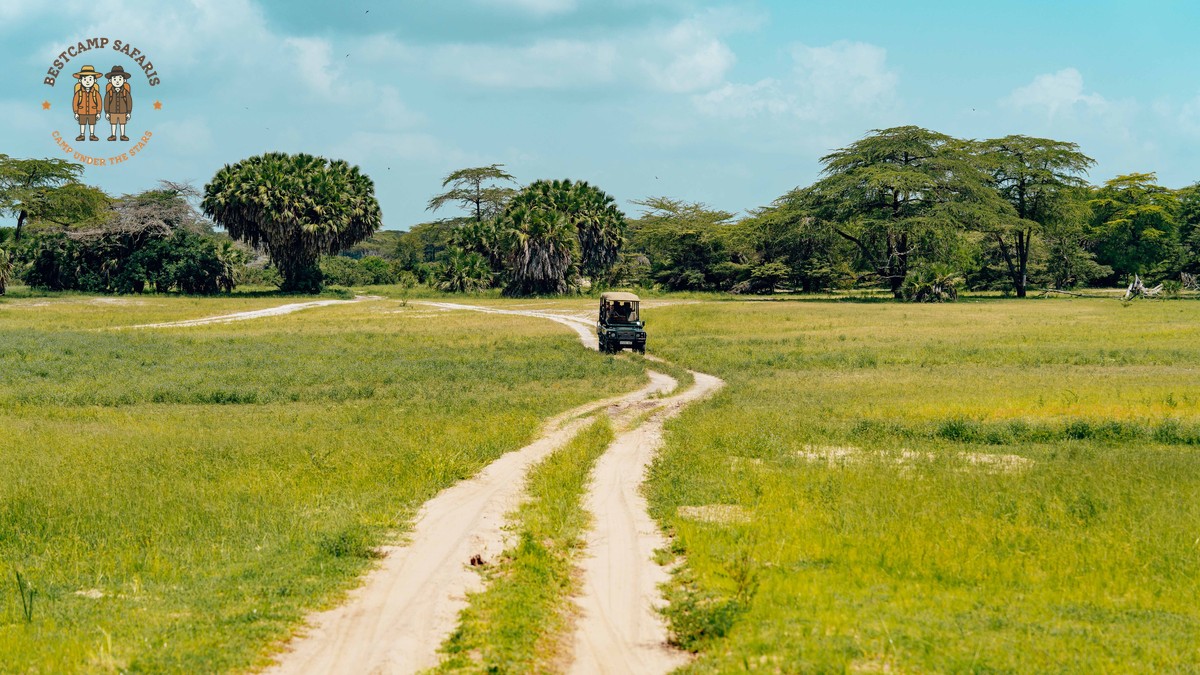
A classic first trip flies into Nairobi, then drives to Maasai Mara, Amboseli, or both. Those reserve floors put malaria prevention near the top. A safari that adds a coastal stop in Diani, Watamu, or Lamu stays in a lowland mosquito zone, so bite protection stays central. A Nairobi-only city trip is different. Nairobi sits at about 1,795 meters above sea level, and the malaria conversation may be shorter. You still need the standard travel vaccine conversation for hepatitis A and typhoid, especially if you plan day trips to parks or markets.
Tell the travel nurse every stop, including an overnight in a mobile tented camp. That detail changes the advice about repellent, sleeping arrangements, and water safety.
The BestCamp Safaris Difference
A vaccination checklist is only complete when you know what happens after you land. On a BestCamp Safaris mobile tented safari, the team sets up camp before you arrive, treats drinking water, and keeps food storage separate from sleeping areas. Screened tent windows and proper zips do more than keep canvas neat. They give you a cleaner boundary against insects.
On a BestCamp Safaris camping safari, your guide also carries a basic first aid kit, drinking water, and a communication plan. The camp routine feels calm because nobody rushes the health basics. If you are new to canvas, our note on how overnight camp safety works explains what happens after dark and who is on watch. For a first-time safari traveler, the difference is simple. You are not camping alone. The crew manages the logistics, so you can focus on the animals and the 5am coffee.
Which Kenya safari fits your vaccination plan best?
Here is a clear verdict from the comparisons above. If your trip follows the classic Nairobi to Maasai Mara and Amboseli camping route, put hepatitis A, typhoid, malaria prevention, and bite protection at the top of your plan. If you add a coastal extension or extra nights in Tsavo, keep the same core list and add more insect discipline. If your trip stays in Nairobi, spend more time with your clinician on city-specific malaria risk and routine boosters.
Once your medical appointment is booked, planning gets easier. BestCamp Safaris can match the route to your dates, energy level, and camp style. Before you compare sleeping options, read our breakdown of mobile camp versus lodge logistics. When you are ready to turn this Kenya safari vaccination checklist into a reservation, visit our contact page and tell us where you want to wake up.


