
 Adventure Tours
I once sat at a Mara river crossing with 43 vehicles parked around me, engines running, radios crackling. My photos from that morning are full of roof hatches and antennas. Since then, masai mara camping crowd avoidance is the first question I plan around: how many other vehicles will be at this sighting. Here is the checklist I actually use.
1. Time your camping dates for the quiet windows
January-February and late September to mid-October are the two crowd-avoidance windows for Masai Mara camping. January-February is the quiet green season with discounted rates and open plains, though afternoon rain is common. Late September to mid-October still catches migration wildlife, but after the July-August vehicle jams have thinned.
For photographers, January light is a bonus. Clear skies after rain bring dramatic clouds and soft color, without fighting for space at a sighting. Some camps close for a few weeks in April and May, so confirm dates first. For more on timing, see Masai Mara migration months.
2. Choose a private conservancy for masai mara camping crowd avoidance
Private conservancies like Mara North, Naboisho, and Olare Motorogi legally cap sightings at three to five vehicles, while the open-access national reserve has no real enforcement. River crossings in the reserve can draw 100-plus vehicles in peak season. Camping inside a conservancy, not the reserve, is the single biggest crowd-avoidance lever you have.
Six conservancies worth building a camping safari around:
- Mara North Conservancy – bordering the reserve’s northern edge, strong resident lion and leopard population.
- Naboisho Conservancy – one of the highest lion densities in Kenya, open plains for cheetah.
- Olare Motorogi Conservancy – smaller, quieter, good for big cats close to camp.
- Ol Kinyei Conservancy – one of the first conservancies formed here, less commercial traffic.
- Enonkishu Conservancy – community-run, fewer beds, good river frontage.
- Lemek Conservancy – further north, quieter still, good for walking safaris.
Entrance fees for the main reserve are set by the Narok County Government, not the Kenya Wildlife Service, since Masai Mara is a county-run reserve. Expect USD 100 per adult per day from January to June, rising to USD 200 per adult per day from July to December during peak migration season. Conservancy access is bundled into your nightly camp rate instead, typically USD 80 to 150 per person per night, not paid separately at a gate.
| Area | Access point | Vehicle cap per sighting | Approx. cost |
|---|---|---|---|
| Masai Mara National Reserve | Sekenani or Talek Gate | 5 on paper, rarely enforced | USD 100/day (Jan-Jun), USD 200/day (Jul-Dec) |
| Mara Triangle | Oloololo Gate | 5, enforced by a separate board | Same reserve fee structure |
| Mara North Conservancy | Private conservancy gate | 5, enforced | ~USD 80-150/person/night, bundled |
| Naboisho Conservancy | Private conservancy gate | 5, enforced | ~USD 80-150/person/night, bundled |
3. Check camp size before you book
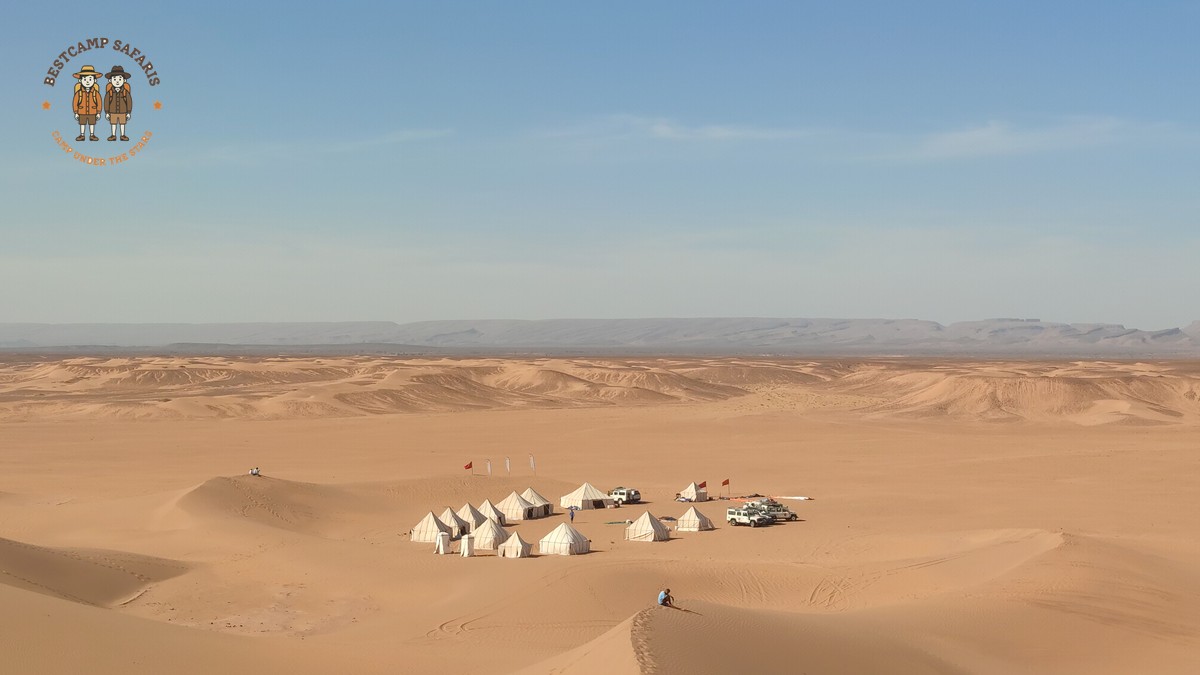
Choose camps that cap game drives at six guests per vehicle and hold under 20 beds total, rather than lodges with 100-plus rooms feeding traffic into popular sightings. Small mobile and fly-camps in conservancies routinely run at a fraction of reserve-camp capacity. That is what actually keeps a sighting quiet, not the scenery.
Ask directly how many tents a camp runs and how many vehicles it sends out at once. A 10-tent mobile camp sending four vehicles is a different day than a 60-room lodge sending twenty. BestCamp Safaris keeps its mobile camps small on purpose, since a quiet sighting matters more to a photographer than a fourth pool at camp. New to this style of trip? Read what a small mobile camp setup includes.
4. Pick your gate: Oloololo over Sekenani or Talek
Enter through the quieter Oloololo Gate into the Mara Triangle rather than the busier Sekenani or Talek gates, which feed directly into the reserve’s most congested circuits. The Mara Triangle Management Board enforces stricter vehicle-density rules, so it stays noticeably less trafficked even during peak migration months.
I have camped on both sides. The Triangle’s grass is shorter, the crossings are just as dramatic, and I have never sat in a 40-vehicle jam there. Sekenani and Talek see most of the day-tripper minibuses from Nairobi and Narok, so those gates fill faster at popular spots.
5. Ask your camp about drive timing and radio sharing
Book camps whose guides time drives for first light and late afternoon, before day-tripper convoys from reserve-based lodges arrive, or after they’ve left. Asking a camp directly whether it shares sightings by radio with other operators is a fast way to gauge how crowded your actual drives will be.
Conservancy guides tend to hold back on broadcasting a sighting until a few vehicles are already there. Reserve-based operators often announce a kill or crossing to a wider radio network, which turns a quiet moment into a 30-vehicle scrum within minutes.
6. Build in a peak-season workaround
If your dates are locked into July-August, you have options. Hot air balloon safaris, guided walking safaris, and night drives run only in conservancies, not the main reserve. They put you close to wildlife without vehicle convoys, which helps if you can’t shift your travel window.
A dawn balloon flight over Mara North puts you above the vehicle traffic entirely. A guided walk from a conservancy camp, with an armed ranger and a Maasai guide, gets you close to plains game on foot, with no engine noise.
Frequently Asked Questions
Is Masai Mara too crowded during the migration?
In the main reserve during July-August peak crossings, yes. Popular crossing points can draw dozens to over 100 vehicles at once, despite an official five-vehicle limit. Booking a camp inside a private conservancy like Mara North or Naboisho, where the vehicle cap is actually enforced, avoids this even during migration months.
What is the least crowded time to visit Masai Mara?
January and February, Kenya’s green season, see the fewest visitors and lowest camp rates, though afternoon rain showers are common and some camps close briefly. Late September to mid-October is the best low-crowd option if you still want migration wildlife, since peak July-August crowds have thinned but herds often remain.
Are conservancies less crowded than the Masai Mara National Reserve?
Yes. Conservancies such as Mara North, Naboisho, and Olare Motorogi cap bed numbers and enforce a three-to-five-vehicle limit at any single sighting. The open-access reserve has no real enforcement and can see dozens of vehicles converge on one sighting.
How many vehicles are allowed at a wildlife sighting in Masai Mara conservancies?
Most private conservancies cap a single sighting at three to five vehicles, with camps coordinating by radio to avoid overcrowding a kill or crossing. The main national reserve has the same rule on paper but rarely enforces it, which is why reserve sightings can draw far larger crowds.
Is the Mara Triangle less crowded than the rest of the Masai Mara?
Yes. The Mara Triangle, entered via Oloololo Gate and managed separately by the Mara Triangle Management Board, enforces stricter vehicle-density rules. It sees less day-tripper traffic than the Sekenani and Talek sides of the reserve, making it a quieter camping base even in peak season.
Plan your quiet camping safari
If you want a camping safari built around light and space rather than convoys, start with your dates and your conservancy, in that order. BestCamp Safaris can walk you through which camps are running in Mara North, Naboisho, or Ol Kinyei for your travel window. Visit our contact page to start planning a Masai Mara camping trip that keeps you closer to the wildlife than to other vehicles.


