
 Adventure Tours
Most people think tent security on safari means a small brass padlock. At a mobile camp in Kenya, that idea falls apart fast. A mobile camp is a canvas town that moves every few weeks. The real answer to how do mobile camps secure tents from wildlife is not one lock. It is a set of daily routines, physical anchors, scent control, staff training, and camp layout.
This guide explains the layers. It uses real mobile camp practice in the Mara North Conservancy, the Maasai Mara National Reserve, and Amboseli National Park. You will learn what staff actually check, why some rules exist, and where a lock can do more harm than good.
How Do Mobile Camps Secure Tents From Wildlife? Anchoring and Reinforcement
Mobile safari tents are secured with heavy-duty poles, buried or weighted pegs, guy lines, and tensioned tie-down points rather than the canvas alone. Staff inspect the ground, anchor every required point, and retension lines after wind or rain. The same setup also protects guests from weather-related tent movement.
At a BestCamp Safaris camp in the Mara North Conservancy, the first sound before 5am is often the scratch of a guy line being checked. Crews angle steel pegs away from the tent and bury them deep enough to hold against a hard pull. In sandy soil they use longer pegs, and after rain they retension every line.
The table below shows how location affects a mobile camp setup and its daily cost.
| Location | Typical road time from Nairobi | Daily non-resident park or conservancy fee | Notes for mobile camp setup |
|---|---|---|---|
| Mara North Conservancy | 5 to 6 hours | USD 80 to 150 per person per night | Private conservancy fee is bundled with camp rates. Uneven ground means extra pegs and leveling checks. |
| Maasai Mara National Reserve | 5 to 6 hours | USD 100 Jan to Jun, USD 200 Jul to Dec | County-run reserve fee, not KWS. High season sees more animals near camp edges. |
| Amboseli National Park | 4 to 5 hours | USD 90 per adult per day | KWS fee. Afternoon winds can be strong, so crews retension lines daily. |
Tent anchors protect against more than wildlife. They also stop a gust from lifting the fly and slapping it against the frame. A flapping tent can make an animal curious, and it can shred a seam before dawn. A properly set tent has tension, but not so much that the poles bend. This is why a crew that knows how long a mobile camp move takes spends the first hour on site checking every peg and guy line.
How Camp Staff Reduce Wildlife Encounters
Camps reduce wildlife encounters through location, routine, and human supervision. Staff choose suitable clearings, keep pathways controlled, avoid provoking animals, and brief guests before dark. Animals may pass through an unfenced camp, so the goal is not a barrier but preventing surprise, food attraction, and unsafe movement.
A mobile camp is an open site. Elephants and buffalo can walk through the space between the mess tent and your sleeping tent. Staff manage the space rather than build a wall. They choose clearings with good visibility, keep pathways short and clear, and remove dead wood before nightfall. Loud laughter, sudden torch flashes, and running frighten animals, so a calm routine matters more than a fence.
Every BestCamp mobile camp has a lead guide and askaris who explain exactly who helps during a safari emergency before sundown. Staff walk the perimeter at first light and before bed, using torches to check for fresh tracks. If a large animal has been near the kitchen, they adjust the night plan. Guests sometimes think the guards are only for comfort, but they are the early warning system.
Why Food, Rubbish and Toiletries Stay Outside Sleeping Tents
Food, rubbish, and strongly scented toiletries should not be stored in a sleeping tent because smells can attract curious animals. Mobile camps manage these items through designated food-preparation, dining, and waste areas. Guests should follow staff instructions and never keep snacks or leftovers beside their bed. Keeping tents scent-free removes a major attractant.
A tube of toothpaste smells like food to a baboon. A chocolate bar in a daypack can bring an elephant to the tent side. At a mobile camp, the mess tent sits well apart from the sleeping tents, and food prep happens there. Rubbish goes into sealed bins and is removed or burned at a safe distance. The same rule explains how safari camp fires are managed safely. Food smells stay near the mess tent, never near beds.
Do not test this rule. A zipped tent bag is not smell-proof, and a hyena can smell a leftover biscuit through several layers. Staff will remind you at dinner to empty your pockets, removing the most common reason an animal approaches a tent.
What Guests Should Do After Dark
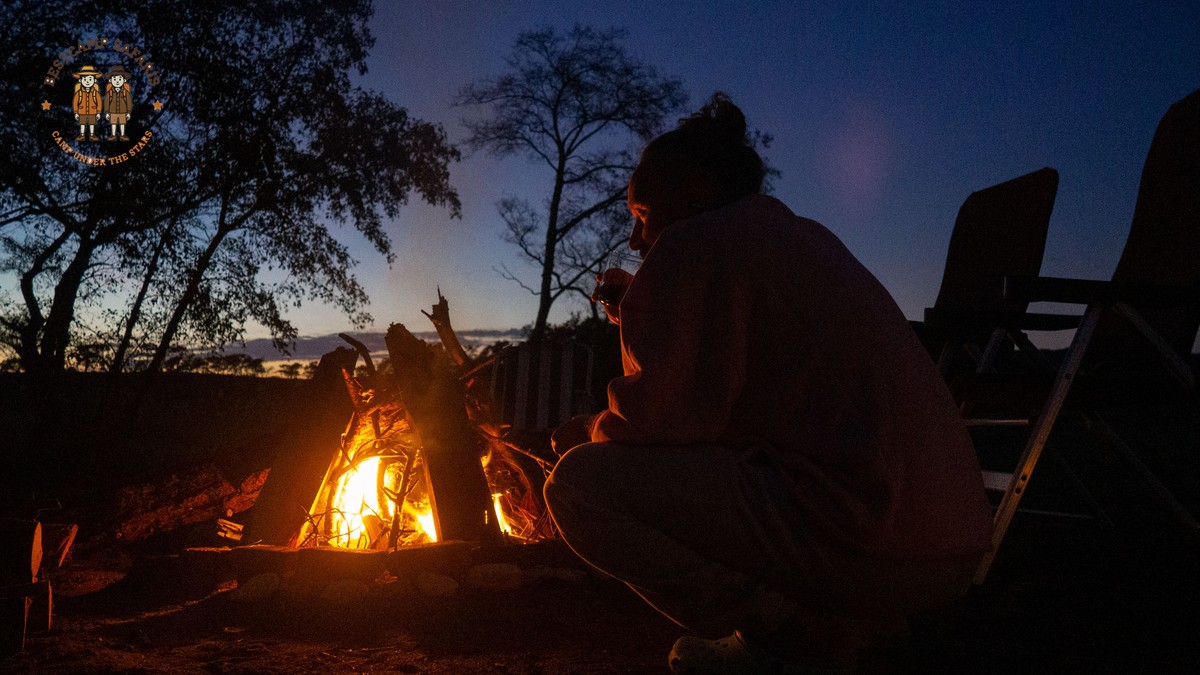
After dark, guests should remain inside their zipped tent unless a staff member escorts them. Use a torch or headlamp when instructed to move. Do not walk between tents alone, approach wildlife, or assume a quiet camp is empty of animals. Nocturnal species, including hippos, make unescorted movement risky.
Once the sun drops, the camp belongs to the animals. A mobile camp in Amboseli may sit near a hippo path to the swamp, and a camp in the Mara may have lions moving through the grass nearby. Hippos can walk silently on soft feet, and a tent wall hides almost nothing from outside noise. That is why the escort rule is non-negotiable.
BestCamp staff give every guest a torch at check-in and point out the path to the bush toilet, the dining tent, and the camp bell or radio. If you need to leave the tent at night, you call for an escort rather than walking alone. It is a simple system that keeps both you and the animals safe, since animals react badly to surprise.
How Tent Zips, Doors and Emergency Access Work
Guests should close tent doors and windows fully at night, but a wildlife-safe closure is not the same as a burglar-proof lock. A simple zip closure keeps animals and insects out while preserving rapid evacuation. Heavy padlocks can delay escape and are generally inappropriate unless camp staff specifically recommend them.
A safari tent has two layers. The outer canvas door and the inner mesh screen both close with zips, and you close both before bed. The zip stops insects, rain, and most smaller animals like mongooses, but it does not stop an elephant. If an elephant leans on your tent, you need to get out fast, and a padlocked door would trap you. A lock slows the one thing you may need most in an emergency, a quick exit.
Before bed, check that your zip is closed from the inside, and keep your torch and shoes near the door. Know which side opens, and in a new tent, practice once in daylight. It feels small, but it matters at 2am when you hear a branch snap.
What Happens When Wildlife Enters or Approaches Camp
If wildlife approaches or enters camp, guests should stay quiet inside the tent and follow staff instructions rather than shouting, chasing animals, or leaving to look. Trained camp staff assess the animal, manage movement around the site, and decide whether guests should remain sheltered, move under escort, or wait until the animal has passed.
Elephants are the most common large visitor after dark. They may step around tents, sniff the air, and move on. The wrong move is a camera flash, which may make the elephant charge. The wrong move is shouting, which can turn a slow walk into a fast one. The right move is to stay still and let staff do their job.
In a BestCamp mobile camp, night staff use red-filter torches to watch animal movement and speak to each other by radio. If an elephant is between your tent and the mess tent, they wait rather than call you to breakfast. Their goal is always to reduce excitement, not add to it.
The BestCamp Safaris Difference
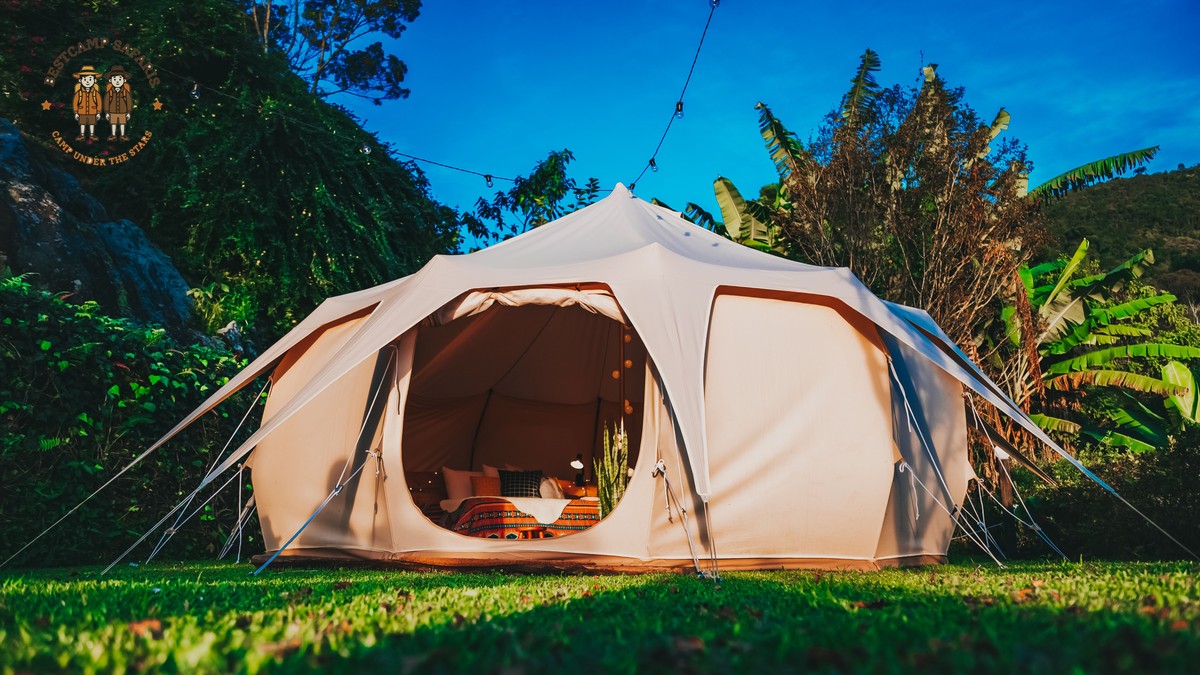
The BestCamp Safaris difference shows up before it gets dark. Staff walk the tent line with a printed checklist, checking every zip, guy line, and lamp. They collect empty food wrappers at dinner and move bins to a locked store. They brief you on the bush toilet, the staff bell, and the radio. They do not just point at a tent and leave.
The camp is not fenced, and that is the honest part. BestCamp does not pretend canvas is a wall. It treats the tent as a shelter, not a fortress. What makes the difference is the routine. Staff know the local conditions, from afternoon winds in Amboseli to hippo paths near a river camp, and they know who is on night watch. When you know why the rules exist, you are safer and calmer.
A BestCamp mobile camp feels remote, and that is the point. But remote does not mean unmanaged. It means the management is quieter, simpler, and more experienced.
Frequently Asked Questions
Are safari tents safe from lions and elephants?
Safari tents are designed and operated to provide shelter, but canvas is not an animal-proof wall. Safety depends on staying zipped inside after dark, keeping food and rubbish away from sleeping areas, following staff instructions, and never approaching wildlife.
Do safari tents have locks?
Most safari tents rely on closable zips rather than strong padlocks. The purpose is to keep the tent closed against insects, weather, and curious animals while allowing fast exit in an emergency. Ask camp staff before adding any lock, because a lock can create a safety disadvantage.
Can you leave a safari tent at night?
Do not leave a mobile safari tent alone at night unless camp staff have arranged an escort. Wildlife can move through an unfenced camp without making noise. Use the camp lighting, bell, or staff-call procedure instead of walking alone.
Where do you keep food in a safari tent?
Keep food, leftovers, and rubbish in the camp designated dining or storage area, never in the sleeping tent. Food smells can attract wildlife even when food is sealed. Follow camp instructions for toiletries, snacks, drinks, and waste before bed.
What happens if an elephant comes into camp?
Stay inside your zipped tent, remain quiet, and follow staff instructions. Do not use a flash, shout, approach the elephant, or try to drive it away. Staff will monitor the animal and decide when movement is safe.
Plan Your Mobile Camp Safari With BestCamp Safaris
A mobile camp stay is not a test of nerve. It is a managed experience. When you are ready to sleep under canvas in the Mara or Amboseli, the BestCamp Safaris team can plan the route, the camp, and the safety briefings. View our mobile safari trips or visit the contact page to start planning.


