
 Adventure Tours
The first thing that surprises most people is not the animals. It is the road. I have sat in a Land Cruiser at 5:30am as it crawled through black cotton soil that had turned to glue. This “kenya safari road conditions guide” walks you through the road surfaces, the seasons, and what a real transfer feels like. Plan around the roads and the bush gives you more. Ignore them and a short drive becomes a long morning.
kenya safari road conditions guide: road surfaces explained
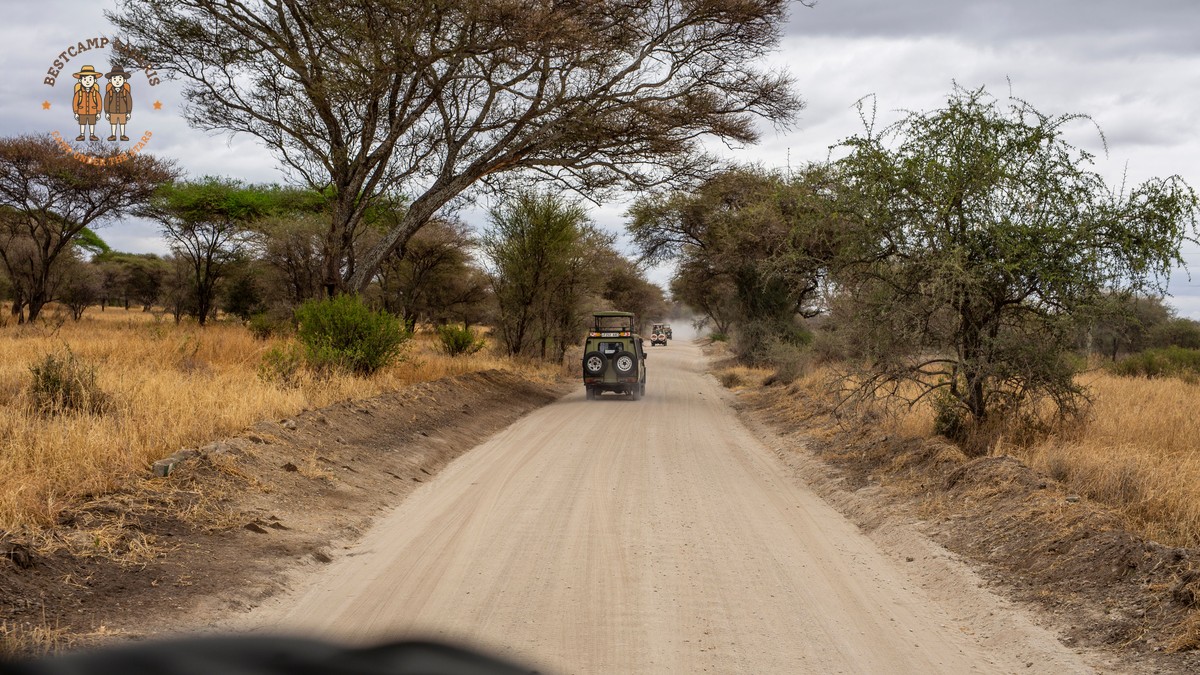
Kenya safari travel combines three basic road surfaces: paved highways, compacted gravel called murram, and rough park tracks. Tarmac routes between Nairobi and major towns are the easiest. Murram roads develop potholes and corrugation. Black cotton soil around parts of the Maasai Mara can become sticky clay after rain, slowing or stopping vehicles even with four-wheel drive.
On tarmac, practical speeds sit closer to 50 to 60 km/h, not highway speeds. Trucks, bicycles, and small towns slow you down. The stretch from Nairobi to Narok is mostly good tarmac. You can cover the 165 km in about three hours in light traffic. But the tarmac ends well before the game begins.
Then comes murram. This is compacted gravel used on many park approaches and conservancy roads. When it is freshly graded, it is fine. When it is not, corrugation rattles the roof rack and every water bottle in the truck. The murram section from Narok toward the Sekenani gate on the eastern side of the Maasai Mara is a classic.
Black cotton soil is the one you learn to respect. It appears in patches around the Mara and some northern conservancies. It looks harmless when dry. Add rain and it turns into deep, sticky clay that grips tires and builds up under the wheel arches. A four-wheel-drive vehicle can still stop moving if the driver pushes too hard. Experienced drivers know which tracks to avoid after rain.
How the Rainy and Dry Seasons Affect Safari Roads
The hardest road conditions usually arrive during the long rains from roughly March or April through May. Short rains around October and November can still create mud and swollen crossings, but showers are often shorter. June to September and December to February generally bring firmer, more predictable roads.
The long rains are the real test. The ground saturates, low crossings called luggas fill with water, and gravel roads wash out in places. Park approaches can turn to soft mud or become temporarily impassable. Good operators change routes or delay departures rather than risk getting stuck.
The short rains are less reliable but still matter. A heavy October shower can turn a dry track into mud for a few hours, though it is often passable again by late afternoon. August and September are the driest and most predictable months on most routes.
The rainy season does bring real savings, but you trade comfort and speed for it. Many camps drop their rates from April through May. A few even close. The Maasai Mara National Reserve entry fee stays at USD 200 per adult per day from July to December and USD 100 from January to June. That means a late June safari can save USD 100 per adult per day in park fees alone. Private conservancies like Naboisho and Mara North bundle their conservation fees into lodge rates, roughly USD 80 to 150 per person per night, and these often drop in the low season too. The savings are real, and so is the mud.
Road Conditions and Drive Times by Major Safari Destination
Expect the easiest road access around Lake Nakuru and Amboseli, where paved approaches cover more of the journey. Nairobi to Maasai Mara commonly takes five to six hours in dry conditions, longer after rain. Tsavo routes are mixed, while Samburu and northern circuits may face rough tracks or river delays.
Here is a practical comparison of major routes, with distances, dry-season drive times, road surfaces, and current non-resident park fees.
| Route | Distance (km approx.) | Dry-season drive time | Road surface | Park fee (non-resident adult) |
|---|---|---|---|---|
| Nairobi to Maasai Mara via Narok | 280 km | 5 to 6 hours | Tarmac to Narok, then murram and black cotton sections | USD 100 Jan-Jun, USD 200 Jul-Dec (county-run, not KWS) |
| Nairobi to Amboseli via Emali | 240 km | 4 to 5 hours | Mostly tarmac, short murram near the park | USD 90 (KWS) |
| Nairobi to Lake Nakuru | 160 km | 3 hours | Nearly all tarmac | USD 90 (KWS) |
| Nairobi to Tsavo East via Voi | 330 km | 5 to 6 hours | Tarmac to Voi, then murram and rough tracks | USD 80 (KWS) |
| Nairobi to Samburu via Isiolo | 340 km | 6 to 7 hours | Tarmac then rough northern sections | Roughly USD 90 to 100 (indicative, not KWS) |
| Nairobi to Naboisho Conservancy (via Mara road) | 290 km | 6 hours | Tarmac to Narok, murram to gate, rough conservancy tracks | USD 80-150 per person per night bundled in lodge rate |
These drive times assume dry weather and no long stops. In the rainy season, add one to three hours on unpaved sections. The last 30 km before any Mara gate can take as long as the first 150 km on tarmac.
Do You Need a 4×4 for a Kenya Safari?
A 4×4 is strongly preferable for remote parks, independent driving, and travel during or just after heavy rain. But visitors on guided safaris do not need to hire or operate one themselves. Professional safari vehicles and drivers handle rough tracks, recovery decisions, and route changes.
If you are self-driving, use a proper 4×4 with high clearance and good tires. A two-wheel-drive sedan can reach Lake Nakuru and Amboseli in the dry season, but it should not attempt the Mara interior, Tsavo after rain, or any northern circuit. Even a 4×4 can get stuck in black cotton soil after heavy rain. Driver experience matters more than the badge on the fender.
On a guided BestCamp Safaris trip, you sit in the back and watch the road. Our driver-guides know which tracks to avoid and how to read a river crossing. They also carry recovery gear, spare tires, and satellite communication. Our guide on who helps during a safari emergency covers this in more detail, but the short version is that you are never alone on a BestCamp route.
What Travelers Should Expect on Safari Transfers and Game-Drive Tracks
Safari roads can be dusty, corrugated, potholed, and slow even when technically open. Paved roads run closer to 50 to 60 km/h, gravel sections often average 30 km/h, and game-drive tracks are slower still. Build buffer time into transfers and expect jolts.
A real transfer from Nairobi to the Mara looks like this. Leave at 7am to beat the traffic on Mombasa Road. Stop at the Mai Mahieu viewpoint for 10 minutes to look back over the Rift Valley. Reach Narok around 10:30am. Then the tarmac slowly gives way to murram south of town. By 12:30pm you reach the Sekenani area, and the last hour to camp is a slow crawl through wheel-deep ruts.
Game-drive tracks are another world. In a private conservancy like Naboisho, guides often avoid certain black cotton patches entirely after rain. They radio each other about river levels and which tracks are open. In a fly-camp, the access road may wind for 20 km from the main camp through bush that feels completely remote. You may walk the last few hundred meters into camp after dark, guided by lamplight and the canvas tents glowing ahead.
This is part of the appeal for overland and bush-camping travelers. The road becomes part of the safari, from the dust to a bush breakfast packed for the drive. But it also means you need realistic expectations. Our guide to practical safari-camp planning covers power, charging, and medical devices at remote camps.
The BestCamp Safaris Difference
We drive these roads every week, not once a year. Our route planning starts with road conditions, not just distances. Before each departure, we check river levels, short-range forecasts, and reports from other guides on the same corridor. If the Narok road is bad, we may switch to a flight into the Mara rather than burn half a day on mud. If tarmac north to Nanyuki is clear, we might keep the scenic road transfer and save the flight cost.
Our vehicles are Toyota Land Cruisers with high clearance, proper tires, and radios. Our driver-guides are trained for mud, rutted tracks, and safe river crossings, and they know when to stop and wait rather than dig in. We coordinate with local camp managers and rangers along the route. If a road washes out, we reroute. If a vehicle gets stuck, we have a network ready. Our guide to bush-tent logistics for families explains why this matters before you commit to a remote site. We will tell you what the access track actually looks like, not just what the lodge website says.
Frequently Asked Questions
Are the roads in Kenya good for a safari?
Major highways linking Nairobi with towns are generally manageable, but roads inside parks and conservancies are often unpaved. Conditions range from smooth gravel to deep potholes, corrugation, mud, and flooded crossings, depending on the destination and recent rain.
Do you need a 4×4 for a safari in Kenya?
A 4×4 is recommended for self-drive travel and remote or rainy-season routes. Travelers on a guided safari normally use an experienced driver, so they do not need to drive themselves. Ask the operator whether the itinerary can change if a road becomes impassable.
Can you go on safari in Kenya during the rainy season?
Yes, safaris operate during the rainy seasons, but journey times and access can be less predictable. The long rains from March or April through May bring the greatest risk of mud and flooding. Lower prices and fewer visitors can make the inconvenience worthwhile for flexible travelers.
How bad are the roads from Nairobi to Maasai Mara?
The road from Nairobi toward Narok is largely paved, but the approach from Narok to park gates and interior Mara tracks can be rough. The journey commonly takes five to six hours in dry conditions and longer after rain.
What are Kenya safari roads like in April and May?
April and May are typically the most challenging months for safari road travel. The long rains can soften gravel, flood low crossings, and turn black cotton soil into deep mud. Paved routes usually stay open, but interior tracks may need route changes or delays.
Plan Your Kenya Safari With BestCamp Safaris
The roads are part of the trip, but they should not be the whole trip. If you are deciding between a road transfer and a flight, or figuring out whether a remote fly-camp is worth the rough access, we can help. We will plan around the weather, the surface, and your comfort level. Let us build a route that gets you to the canvas and the coffee at sunrise without surprises.
Plan your trip with BestCamp Safaris


