
 Wildlife Tours
You land in Nairobi at dawn, pick up a 4×4, and the first question is not where to go. It is how much driving you will trade for another park. Eight days fill fast in Kenya. I have sat in a mess tent at 6am with a warm mug while a Land Cruiser idled outside, and eaten a late dinner because a transfer turned into seven hours on a corrugated road. The route matters more than the list of parks.
This is a practical Kenya safari 8 day itinerary for travelers who want a full week of wildlife without losing days to road transfers, built around a core Amboseli plus Mara route, with notes on when Naivasha, Nakuru, or Ol Pejeta is worth the extra stop.
Best Kenya Safari Route for 8 Days
The most balanced eight-day Kenya safari route is Nairobi, Amboseli, and the Masai Mara. That means one night near Nairobi, two nights in Amboseli, three nights in the Mara, and a final Nairobi night or airport transfer. It delivers elephants, Kilimanjaro views, strong predator country, and fewer exhausting transfers than a four-park itinerary.
Fit Naivasha, Nakuru, Amboseli, and the Mara into eight days and you lose a full day between Naivasha and Amboseli alone. Cut that leg and gain a third Mara night, worth six game drives instead of four.
Kenya Safari 8 Day Itinerary, Day by Day
Day 1 arrive in Nairobi. Days 2 and 3 in Amboseli. Day 4 transfer toward the Great Rift Valley. Days 5 to 7 in the Masai Mara. Day 8 return to Nairobi and depart. Travelers wanting Naivasha or Nakuru can swap in one Mara night, but adding every major park usually means longer drives and less time watching wildlife.
Day 1 lands you at Jomo Kenyatta International Airport. Stay near Wilson Airport if you fly out the next morning, since Nairobi traffic is not a joke. Day 2 you drive or fly to Amboseli for an afternoon game drive, where elephants often cross the dry lake bed at dusk. Day 3 is a full Amboseli day, with big herds below Kilimanjaro at sunrise. Day 4 you move to Naivasha or Nakuru for one night, or push straight toward the Rift Valley. Day 5 you enter the Mara via Sekenani Gate, reached through Narok town. Days 6 and 7 are full Mara days, one built around the Mara River in migration season. Day 8 returns you to Nairobi, so book a late departure.
Which Parks and Reserves to Visit
Choose Amboseli for elephant herds and Kilimanjaro scenery, and the Masai Mara for big cats, plains wildlife, and migration viewing. Add Lake Nakuru for rhinos or Lake Naivasha for boating and walking. Ol Pejeta is the strongest alternative when conservation matters more than savanna scenery.
| Destination | Drive time from Nairobi | Current non-resident fee | Why it earns a stop | Biggest drawback |
|---|---|---|---|---|
| Amboseli National Park | 4 to 5 hours, 240 km | USD 90 per adult per day, KWS | Large elephant herds, Kilimanjaro views | Busy lodge loop in dry season |
| Masai Mara National Reserve | 5 to 6 hours, 270 km | USD 100 Jan to Jun, USD 200 Jul to Dec, Narok County | Big cats, migration, huge prey base | Peak fee doubles in high season |
| Lake Naivasha | 1.5 to 2 hours, 90 km | Activity fees USD 30 to 80, indicative | Boat trips, Crescent Island, birds | No big cats, can feel developed |
| Lake Nakuru National Park | 2.5 to 3 hours, 160 km | USD 90 per adult per day, KWS | Rhinos, flamingos when levels allow | Lake levels change bird numbers |
| Ol Pejeta Conservancy | 3 to 4 hours, 220 km | Roughly USD 90 to 120 per day, indicative | Rhino conservation, chimp sanctuary | Different feel from classic savanna |
Amboseli plus Mara wins most eight-day arguments. Naivasha is close and cheap but adds no new predator. Nakuru adds rhinos but pulls you north for a day.
How Much an 8-Day Kenya Safari Costs
Budget, mid-range, and luxury trips differ mainly in camp type and vehicle privacy, not just price. Budget uses basic tented camps and a shared 4×4. Mid-range uses named permanent camps with a private vehicle. Luxury uses premium or fly-in camps with fewer guests per tent and more personal guiding.
These are indicative ranges, per person sharing, for the Amboseli plus Mara route with transfers and park fees included. Flights and drinks are not included. Budget runs roughly USD 1,800 to 2,500. Mid-range runs roughly USD 2,800 to 4,500, using camps like Kibo Safari Camp in Amboseli or Ashnil Mara Camp and Zebra Plains Mara Camp in the Mara. Luxury runs roughly USD 5,500 to 9,000 plus, using Porini Amboseli Camp, Porini Mara Camp, or fly-in mobile camps.
Ask for an itemized quote, since fees change by season, especially the Mara peak fee. A single supplement often adds 30 to 50 percent. A balloon safari over the Mara runs roughly USD 450 to 550 per person, and a Wilson to Mara flight runs roughly USD 180 to 280 one way.
Driving Times and Transport Logistics
Road transfers can consume a large part of an eight-day itinerary. Nairobi to Amboseli is roughly four to five hours, Nairobi to the Mara five to six hours, and Naivasha to Amboseli about five to six hours. Private vehicles allow flexible stops, while short flights save time but raise the budget.
Use a private 4×4 with an experienced driver-guide. Shared minibuses are cheaper but bouncier and slower. The worst leg is Amboseli to the Mara by road, often meaning back through Nairobi or a long rural route. Many fly Amboseli to Wilson and connect to the Mara, but that can still eat a full day. A transition night in Naivasha or Nakuru is the only good reason to add one of those lakes. Light aircraft usually enforce a 15 kg soft-sided luggage limit.
Where to Stay: Camps and Lodges
Stay inside or beside each destination when possible, since proximity cuts early-morning transfer time. Compare properties by location, room type, power, family setup, meals, water, and emergency support, not just star rating. Mobile camps offer a more immersive stay but fewer fixed facilities.
In Amboseli, Kibo Safari Camp sits right at a park gate on stable power. In the Mara, Ashnil Mara Camp and Zebra Plains Mara Camp sit along river lines with easy reserve access. Traveling with children, see our guide to family safaris in Kenya on how family tents work, since many run two sleeping areas and a shared bathroom. If you use medical equipment, our notes on medical needs and safari camps cover CPAP machines and power access. Ask your operator who helps during emergencies, since that depends on camp radios, airstrip access, and ambulance clearance.
In a mobile tented camp, your 5am alarm is someone walking the canvas line with a thermos of tea, and an askari walks you to breakfast with a lamp since there are no lit pathways. That costs more than a lodge with a pool and a lobby.
Best Time to Take an 8-Day Kenya Safari
The best month depends on priorities, not one universal season. Dry months make wildlife easier to spot, and migration timing can make the Mara attractive, though crossings are never guaranteed. Green-season travel offers lower rates, fewer visitors, and strong young-animal sightings, with more rain.
June to October and January to February are the most reliable dry months. July to September is peak Mara season, also when the Mara fee doubles to USD 200 per adult per day. Our guide to the Masai Mara migration season breaks down crossing timing month by month. November, March, and April bring green grass, lower rates, and newborn wildebeest.
What Wildlife Can You See
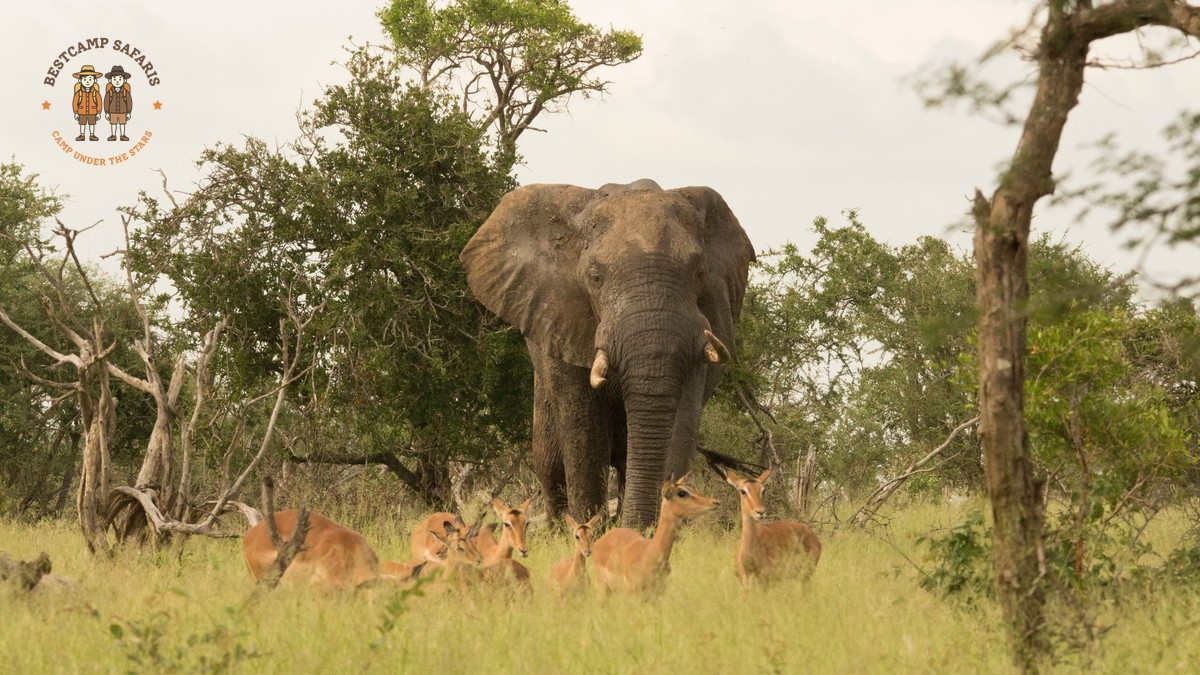
An eight-day route can deliver elephants in Amboseli, plus lions, cheetahs, leopards, giraffes, zebras, and large herds in the Mara, with possible rhinos at Nakuru or Ol Pejeta. The Big Five is possible but never guaranteed, since sightings depend on habitat, weather, season, and guide skill.
In Amboseli you will likely lose count of elephants. In the Mara you have a real chance at lion, cheetah, and leopard. Rhinos are the hard one, so if that matters, swap a Mara night for Nakuru or add Ol Pejeta. Good guides also spend time on small details, like a lilac-breasted roller on a termite mound, instead of racing between radio calls.
What is Included and What to Pack
Most packages should state whether transfers, accommodation, meals, park fees, a private 4×4, drinking water, guide, and game drives are included. Pack lightweight neutral clothing, a warm layer, sun protection, binoculars, insect repellent, comfortable shoes, and essential medication. Our packing checklist for a Kenya safari covers this in more detail.
On a small aircraft, expect one soft-sided bag at 15 kg, including camera gear, so skip the hard suitcase. Morning drives can be 10 degrees Celsius at 6am, then 28 by 10am, so pack a fleece and gloves. Closed shoes save your ankles, and a headlamp helps after dark. Bring cash for gratuities, since remote camps rarely have an ATM.
The BestCamp Safaris Difference
BestCamp Safaris plans an eight-day Kenya safari around daily drive time, not just a park count. We check each camp’s quiet hours, generator schedule, and power points before quoting a route. We know which Amboseli camps reach the Kimana gate before the park opens, and which Mara camps sit close enough to the Talek River for a sunrise drive without a long transfer. When a traveler asks whether one more park is worth a full day in a vehicle, we give a straight answer.
Frequently Asked Questions
Is 8 days enough for a Kenya safari?
Yes, if the route is focused. Two nights in Amboseli and three in the Masai Mara beat every major park, since more stops mean less game-drive time.
Can you do Amboseli and Masai Mara in 8 days?
Yes. A workable plan is one arrival night near Nairobi, two nights in Amboseli, three in the Masai Mara, and a final transfer out. The road between parks is long, so a flight or overnight stop helps.
How much does an 8 day safari in Kenya cost?
There is no single price, since accommodation, season, fees, vehicle type, and group size change the total. Ask for a per-person quote that separates transport, lodging, meals, fees, and guiding.
Is Lake Nakuru or Lake Naivasha better for an 8 day safari?
Nakuru suits rhinos and a conventional park drive. Naivasha suits boating, birdlife, hippos, and walks such as Crescent Island. For maximum Mara and Amboseli time, skipping both may work better.
What is the best month for an 8 day Kenya safari?
It depends on whether you want dry-season viewing, migration interest, lower prices, or greener scenery. Migration can make the Mara appealing in season, but crossings are never guaranteed, so match the route to your travel month.
Plan Your Trip
Plan this Kenya safari 8 day itinerary with BestCamp Safaris. Tell us your travel month and park priorities. Get in touch with BestCamp Safaris and we will build the route around your actual trip days, not a template.


