
 Wildlife Tours
I have woken up at 5am in a mobile tented camp in Mara North with the canvas snapping softly and a hyena walking past the fly sheet. That morning cost more than just the flight and the camp. Part of it was a daily conservation fee. Most travelers see that as a line item. I see it as the reason the grass is still there.
Kenya safari conservation fees are not one charge. They split into two main buckets. KWS fees cover national parks like Amboseli, Tsavo, and Nakuru. County and conservancy fees cover places like the Maasai Mara National Reserve and private conservancies.
This guide is for people who have already seen the Mara from a lodge. You probably want Samburu, Laikipia, Meru, or a Chyulu Hills fly-camp. You also want to know whether the fee goes to a county, a national agency, or a community.
What Kenya Safari Conservation Fees Cover
A conservation fee is a daily access charge. It is not a tax on your whole trip. It pays for rangers, anti-poaching patrols, road grading, research, and community land leases. In KWS parks, the money goes into park operations. In conservancies, it often goes directly to landowner families.
The line between “park fee” and “conservancy fee” matters. A national reserve or KWS park gives you broad access. A private conservancy gives you fewer vehicles and a closer relationship with the families who own the land.
The table below uses current figures as of August 2026. Park fees change without much warning, so have your operator confirm them before payment.
| Place | Governing body | Non-resident adult fee | Notes |
|---|---|---|---|
| Maasai Mara National Reserve | Narok County | USD 100 per day Jan-Jun, USD 200 per day Jul-Dec | Reserve entry only. Peak fees match migration. |
| Amboseli National Park | KWS | USD 90 per day | Park entry, roads, swamp patrols. |
| Lake Nakuru National Park | KWS | USD 90 per day | Park entry and rhino sanctuary. |
| Tsavo East or Tsavo West | KWS | USD 80 per day per park | Separate tickets if you visit both parks. |
| Chyulu Hills National Park | KWS | USD 40 per day | Entry only. Camp and conservancy fees extra. |
| Mara North or Naboisho Conservancy | Private | USD 80-150 per person per night | Indicative, usually bundled into camp rate. |
Child, Kenyan citizen, East African resident, and African visitor rates are lower. They can be half or less of the adult non-resident rate. Do not assume the discount is automatic. Ask your operator to select the correct category in eCitizen before paying.
KWS Park Fees and the eCitizen Step
KWS parks like Amboseli, Tsavo, and Nakuru now use the eCitizen portal. You or your safari operator buys a ticket before you reach the gate. The ticket is connected to your passport number. You cannot always pay cash at the gate. I prefer having the ticket loaded the night before so we roll through the Amboseli gate just after dawn.
A KWS day ticket usually covers one calendar day, not a rolling 24 hours. If you enter at 4pm and expect the same ticket to work for a full game drive the next morning, you may be disappointed. Stay inside the park or buy a fresh ticket. This is one reason fly-camps and mobile camps inside a park can save money. You pay entry once and stay inside.
Maasai Mara National Reserve is different. Narok County runs it, not KWS. The fee does not go through eCitizen. Narok County has its own payment system, and your camp will usually handle it. But as the table shows, the reserve fee is higher in the peak months.
Maasai Mara Reserve Fees Are Seasonal
I have sat in the Mara in November and in February. The grass is different. So is the price. From January through June, the non-resident adult fee is USD 100 per day. From July through December, it is USD 200 per day. The peak season price matches the migration.
That fee gets you into the national reserve. It does not get you into Mara North, Naboisho, or Olare Motorogi. Those are private conservancies on the edge of the reserve. If you sleep in a conservancy and want a day inside the reserve, you pay both. The camp will arrange it, but it should be a visible line on your quote.
This is the honest trade-off. The reserve gives you huge open plains and river crossing access. It can also mean crowded sightings. A conservancy costs more per night, but it limits vehicle numbers and pays landowner leases. I have watched a leopard in Mara North with two other vehicles. That is the conservancy model working.
For more on that system, read how Maasai Mara conservancies benefit communities and wildlife.
Conservancy Fees Are a Different Line Item
A conservancy fee is usually charged per person per night. In Mara North, Naboisho, and Olare Motorogi, it typically runs roughly USD 80 to 150 per person per night. The exact amount depends on the camp and lease. It is often bundled into the lodge or mobile camp rate.
In Laikipia, many ranches have their own conservancy charges. They often sit in an indicative range of USD 100 to 150 per person per night, but each property sets its own fee. Samburu and Meru national parks use KWS entry fees, so expect a similar indicative band to Tsavo or Amboseli, around USD 80 to 90 per adult per day, subject to change.
The good news for a repeat Africa visitor is that these fees often buy a calmer experience. Lower vehicle density. Walking access. Night drives that are not allowed in most national parks. I have walked back to camp after dark by lamplight in a Laikipia conservancy. That quiet feeling is part of what you pay for.
How Fees Appear on a Multi-Park Route
Kenya safari park combinations are where fee mistakes get expensive. A route that combines Nairobi, Amboseli, Tsavo West, and the coast will have a new KWS ticket each time. That is not a scam. Each park is a separate management unit.
Here is a typical BestCamp route with three paid access nights.
| Itinerary step | Conservation or park fee | Included in camp quote? |
|---|---|---|
| 1 night Nairobi Tented Camp | Nairobi National Park USD 80 per adult | Usually not included, paid separately |
| 3 nights Amboseli mobile camp | KWS USD 90 per adult per day | Included on full-board camp nights |
| 2 nights Tsavo West mobile camp | KWS USD 80 per adult per day | Included on full-board camp nights |
| 3 nights Mara North fly-camp | Conservancy USD 80 to 150 per person per night | Included in camp rate. Mara Reserve day entry extra if requested. |
Use Kenya safari park combinations that make sense before locking a route. A good mobile camp quote follows the format in what Kenya safari mobile camp prices include. If fees are missing, ask why.
Common Fee Mistakes That Cost You a Day
- Double-paying for the Mara Reserve and a conservancy. Understand that they are separate access areas. Sleeping in Naboisho does not grant reserve entry.
- Assuming a KWS ticket covers multiple parks. It does not. Amboseli and Tsavo West each need their own ticket.
- Buying a child ticket without the right passport age proof. Gate staff check.
- Paying at the gate in cash. Some gates no longer accept cash. Arrive with an eCitizen ticket.
- Forgetting that peak Mara fees start in July. A July quote should use USD 200 per day, not the January figure.
The BestCamp Safaris Difference
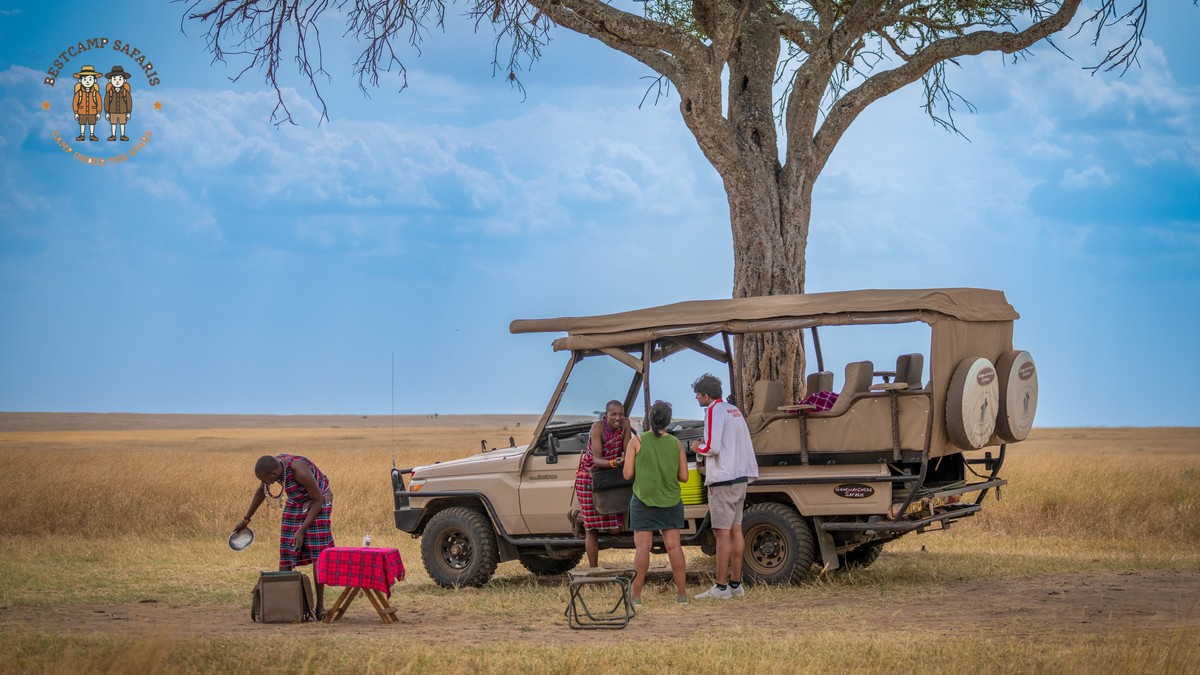
BestCamp Safaris is a Kenyan operator that plans around camp logistics, not just animal checklists. We have packed a bush breakfast before first light. We have walked into camp after dark with a lamp. We know which fee is included and which one appears at the gate.
When we quote a route, we line out conservation fees. You see the KWS ticket, the Narok County reserve fee, and the conservancy charge. If a fee changes after booking, we tell you before the trip and adjust only that line. That transparency matters more than a pretty brochure.
Our team also handles eCitizen loading for KWS parks and Narok County payments for the Mara. You do not sit at a gate with a credit card and a hope. If you want to sleep in a mobile tented camp in Mara North, we can include the conservancy fee in the night rate and avoid a surprise at checkout.
Plan Your Trip
The point of Kenya safari conservation fees is not to make paperwork. The point is that the money keeps the parks open and the conservancies intact. I would rather know exactly where my fee goes than wonder.
Talk to us about a route that fits your travel dates and comfort level. We can put together a fly-camp circuit through Chyulu Hills, Amboseli, and the Mara, or a slower Laikipia and Samburu loop. Plan your trip with BestCamp Safaris through our contact page.


