
 Adventure Tours
This guide is built for Sami-speaking travelers planning a mobile camping safari in Kenya. You know what it means to live with the land rather than on it. Your people have followed reindeer across Sápmi for generations, moving camp when the season demanded it. Kenya’s mobile camping safari works the same way. You sleep in canvas, you wake before dawn, and you move when the wildlife does. This guide is written for you, with real numbers, real places, and honest trade-offs.
What Sami-Speaking Travelers Should Know About Mobile Camping
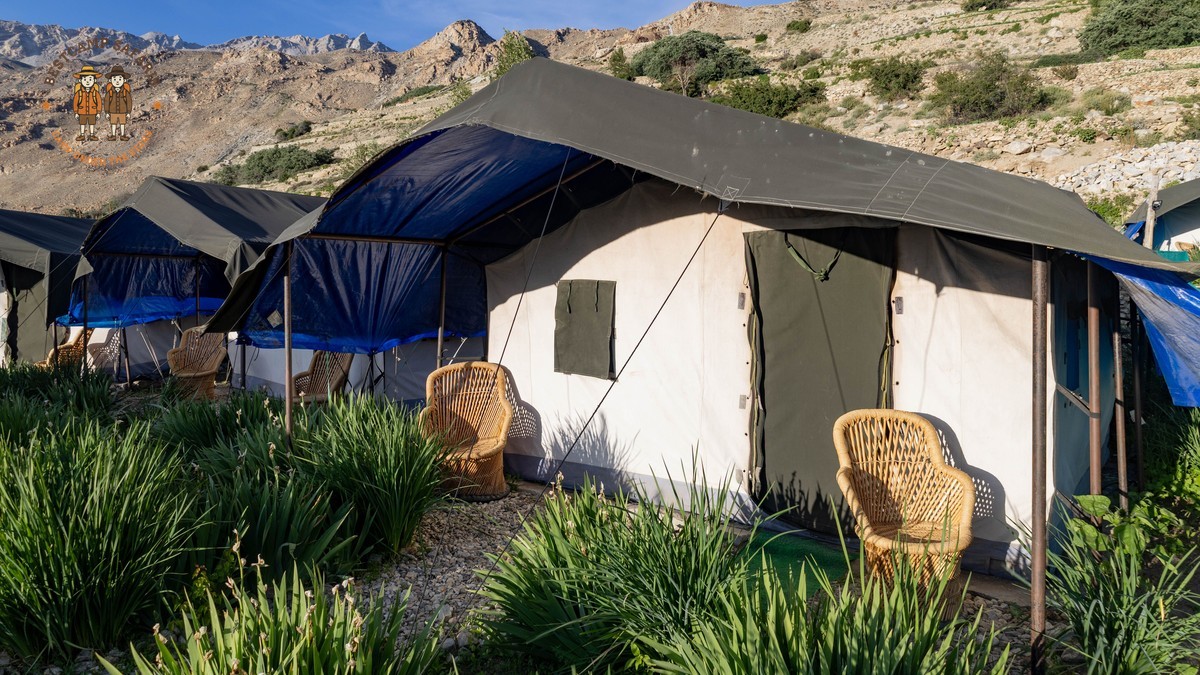
A mobile camp is not a permanent tented camp. It is a camp that gets built for you, serviced for you, and packed away when you leave. The tents are walk-in safari tents with proper beds, not backpacking shelters. A full crew moves ahead of you or alongside you, setting up camp so it is ready when you arrive.
This is different from a lodge or a permanent tented camp like Porini Mara Camp, which has fixed structures, running water, and a permanent dining area. A mobile camp might have a bucket shower heated over a fire. It might have a long-drop toilet with a canvas screen around it. It is closer to the ground than any lodge, and that is the point.
If you have camped in a lavvu during a cold Sápmi autumn, you already understand the ethos. You carry what you need, you respect the weather, and you leave no trace. The difference here is that someone else carries the heavy things and does the cooking.
Best Parks and Conservancies for Mobile Camping
Not every park in Kenya allows mobile camping. Some have designated campsites only, while others let you camp almost anywhere with a guide. Here is what you need to know about the main options.
Masai Mara National Reserve is the classic choice. It is run by Narok County Government, not the national parks authority. Non-resident entry fees are USD 100 per adult per day from January to June, and USD 200 per day from July to December when the wildebeest migration peaks. Mobile camping is allowed in designated areas, and the wildlife density is unmatched.
Naboisho Conservancy and Mara North Conservancy sit next to the Mara Reserve. These are private conservancies where your camping fee is bundled into your lodge or camp rate. Expect USD 80 to 150 per person per night on top of your camp costs. The benefit is exclusivity. Fewer vehicles, more walking safaris, and a genuine wilderness feel.
Amboseli National Park (KWS, USD 90 per adult per day) gives you Mount Kilimanjaro as a backdrop. The park is drier and dustier than the Mara, but the elephant herds are spectacular. Camping here is more basic, with fewer permit options, so check with your operator first.
Samburu and Laikipia in the north are quieter and wilder. They suit travelers who want to be far from other tourists. Prices vary, so expect an indicative range of USD 70 to 100 per adult per day depending on the specific reserve or conservancy.
Tsavo East and Tsavo West (KWS, USD 80 per adult per day) are vast and remote. Good for experienced campers who value solitude over density of animals. The red elephants of Tsavo are worth the drive.
Mobile Camping Comparison Table
| Destination | Entry fee (non-resident, per adult/day) | Drive from Nairobi | Camping feel | Best season |
|---|---|---|---|---|
| Masai Mara Reserve | USD 100 (Jan-Jun), USD 200 (Jul-Dec) | 5-6 hours (270 km) | Classic savanna, busy in peak | Jul-Oct for migration |
| Naboisho Conservancy | USD 80-150/night bundled | 5-6 hours (270 km) | Exclusive, private, walking safaris | Jun-Feb |
| Amboseli NP | USD 90 | 4 hours (240 km) | Dusty, open, Kilimanjaro views | Jun-Oct, Jan-Feb |
| Samburu NR | Indicative USD 70-100 | 5-6 hours (350 km) | Remote, dry, unique species | Jun-Oct |
| Tsavo East/West | USD 80 | 4-5 hours (300 km) | Vast, wild, uncrowded | Jun-Oct |
| Chyulu Hills NP | USD 40 | 3 hours (200 km) | Green hills, walking terrain | Jun-Mar |
Pricing by Tier
Mobile camping costs vary wildly depending on comfort level. Here is an honest breakdown of what you will pay per person per night, all inclusive of camp crew, meals, and most activities.
Budget mobile camping runs from USD 150 to 250 per person per night. This means basic dome tents, camp beds, shared long-drop toilets, bucket showers, and simple meals cooked over a fire. You are camping, not glamping. Good budget operators include Camping in Style and Bushcamp Expeditions.
Mid-range mobile camping runs from USD 300 to 500 per person per night. This typically adds en-suite chemical toilets, solar lighting, larger walk-in tents with proper mattresses, and a chef who produces restaurant-quality food. BestCamp Safaris operates in this space, as do Porini and Gamewatchers.
Luxury mobile camping costs USD 600 to 1000 per person per night. Think star-beds under mosquito netting, brass fittings, private fly-camps with hot tubs, and champagne sundowners. &Beyond, Elewana, and Asilia do this well. You pay for the bush, not the building, and it is still more intimate than any lodge.
These are indicative ranges for 2026. Exact quotes depend on season, group size, and how remote your route is. Always ask for a written breakdown before you book.
Sample 6-Day Itinerary
Here is a realistic route that a first-time mobile camper from Sápmi might follow, with real distances and drive times.
Day 1: Nairobi to Amboseli. Leave Nairobi after breakfast. Drive 240 km south, about 4 hours with a stop. Set up camp inside the park or just outside the boundary. Evening game drive to see elephants against Kilimanjaro.
Day 2: Amboseli morning drive, then move north. Early game drive at dawn, then break camp by 10am. Drive back toward Nairobi, then west to the Mara region. This is a long day, roughly 7 to 8 hours with lunch stop. Sleep at a camp near the Sekenani Gate of the Masai Mara.
Day 3: Masai Mara full day. Sunrise game drive, mid-morning break, afternoon drive. If the timing is right (July to October), you will see river crossings. Nights are spent in the same camp. This is where the migration action happens.
Day 4: Naboisho Conservancy. Move your camp into Naboisho for a walking safari. This is the closest you will get to a reindeer-herding lifestyle, but with Maasai guides instead of Sami herders. Walk for a few hours in the morning, rest through the heat, then a night drive.
Day 5: Mara North Conservancy. Shift camp again. This area has fewer vehicles than the main reserve. Focus on big cats and quiet bush breakfasts.
Day 6: Fly or drive back to Nairobi. A shared charter flight from the Mara airstrips costs roughly USD 250 to 350 per person and takes about an hour. Driving takes 5 to 6 hours. Take the flight if you have a tight schedule.
What Daily Camp Life Is Actually Like
You wake at 5:30am to the sound of canvas flapping and the camp crew moving quietly. The air is cool, maybe 14 to 16 degrees Celsius, which feels warm after a Sápmi winter but cold after a Kenyan day. Tea and coffee arrive at your tent before you dress.
The morning game drive runs from 6:30am to about 11am. You stop somewhere in the bush, not at a designated picnic site, and the crew hands out a breakfast of eggs, sausage, fruit, and thermos coffee from a metal box. This is called a bush breakfast.
You return to camp for lunch and the hottest hours of the day, which are 2pm to 4pm. You sleep, or read, or sit in the shade. At 4pm, tea is served with cake. The evening game drive runs until sunset, around 6:30pm, and you return to camp in the dark, guided by a lamplight held up by a staff member.
Dinner is served at a long table under a mess tent or open-sided canopy. Then the crew banks the fire and you walk to your tent with a torch. The ground feels different at night. It is cooler, and the sounds are closer than they were during the day. You notice every rustle and every distant cough of a leopard.
What’s Included and Not Included
Most mobile camping packages include park or conservancy fees, all meals, camp setup and crew, game drives with a professional guide, and drinking water. Alcoholic drinks, tips for staff, and personal insurance are not included.
Flights between Nairobi and the Masai Mara are usually not included in camp rates. Visa fees are separate. Kenya now has an eTA system for most nationalities, including Nordic passport holders. The eTA costs USD 34 and should be applied for at least a week before travel. Travel insurance is mandatory in practice, even if not in law, because medical evacuation can cost thousands of dollars.
Packing List and Gear Considerations
Kenya is hot in the day, often 28 to 32 degrees Celsius, but nights can drop to 12 degrees. A warm fleece is essential, this will not surprise you. A headlamp is more useful than a torch. A neutral-colored, brimmed hat and high-SPF sunscreen are non-negotiable.
For the camp itself, stop reading online lists that tell you to bring a backpacking stove. This is not that kind of camp. You need comfortable walking shoes, a pair of sandals for camp, and a light rain jacket if you come between March and May or November.
Binoculars matter. A decent pair costs USD 100 to 200 and makes the difference between seeing a lion and actually watching it. Your phone camera is not enough for wildlife photography, so consider a bridge camera or a basic DSLR with a 200mm lens.
Guides, Staff, and Safety at a Mobile Camp
A typical mobile camp has one professional guide, one cook, and two to four camp hands for a group of six to eight guests. The guide holds a Kenya Professional Safari Guides Association certification. Security is not a wall or a fence. It is the knowledge of the guide, the positioning of the camp, and the presence of an armed ranger in remote conservancies. Camp staff walk you to your tent at night, and you do not wander outside the camp perimeter after dark. That is the single most important safety rule, and it is non-negotiable.
Honest Problems and Trade-Offs
Mobile camping is not for everyone. The showers are solar-heated, which means lukewarm water at best. The toilets are chemical or long-drop, which takes getting used to. Laundry is limited because water is carried in. You will get dust in your sleeping bag and red soil in your socks.
The biggest trade-off is weight and pace. Breaking camp and moving takes half a day out of every travel day. If you want a restful trip with a different base every night, a mobile camping route is a poor choice. If you want to truly sleep in the wild, it is the only honest way to do it.
There is also the winter darkness to consider. Kenyan days are roughly 12 hours long year-round. If you are used to the bright endless days of a Sápmi summer, the equatorial dusk and dawn rhythm may feel short. Plan for early nights.
Best Time of Year to Go
The dry months of June to October and January to February are best for game viewing. The migration peaks in the Mara from July to October, which is also when the USD 200 entry fee applies. The green season from November to December and April to May has lower fees, greener scenery, and more birds, but some roads become impassable after heavy rain.
Language and Communication on Safari
Most professional safari guides speak English as a second or third language. Maasai guides often speak Maa, Swahili, and English. Communication is straightforward if you speak conversational English.
Many guides also have some German or French, but very few speak Northern Sami or Finnish. If your English is limited, ask your operator for a guide with a Nordic language background in advance. They exist, but they book out early. You can also download a translation app with offline Swahili phrases, a small gesture that the crew will appreciate. The cultural echo between Sami reindeer herding and Maasai pastoralism is real. Both are mobile cultures built around animals and seasonal movement. A Maasai guide will recognize the parallel quickly, and it makes for excellent conversation around the fire.
The BestCamp Safaris Difference
BestCamp Safaris operates mid-range mobile camps that balance genuine wilderness with decent comfort. We set up genuine walk-in tents in conservancies like Naboisho and Mara North, not just in the crowded reserve. Our guides are trained to read the land, not just the animal sightings. We can arrange a guide who speaks a Nordic language on request, subject to availability, and we will always be honest about whether that is possible for your dates.
We understand what a traveler from Sápmi is looking for because we have hosted several. We know that you are not afraid of canvas, that you respect cold mornings, and that you want to know how remote a site really is. We answer those questions with exact locations, not vague descriptions.
We also keep our group sizes small, max eight guests per camp, so that mornings are quiet and evenings feel personal. Our prices are transparent. You know what is included and what is not before you book.
If you have questions about mobile camping in Kenya, or if you want a sample itinerary tailored to your travel dates, get in touch with BestCamp Safaris and tell us a little about your group. We would love to host you under canvas in the Kenyan bush. For a broader overview of mobile camping, read our mobile camping safari guide for Sorbian-speaking travelers, our mobile camping safaris for Bislama speakers, or the safari guide for Scottish Gaelic-speaking travelers. Each one is written for a community that knows what it means to live lightly on the land.


