
 Wildlife Tours
You have spent months planning a family holiday that does not feel like a compromise. This is the family safari Kenya Gujarati speaking parents trust for straight answers, not glossy brochure talk. You want your kids to see a lion in the wild, not just in a textbook. You also want them to eat proper dal, rotli, and shaak at the end of the day. This guide is for you. It covers the practical side of a family safari in Kenya, with a focus on what matters to Gujarati-speaking parents.
We skip the glossy surface. We talk about camps that accept children, what happens when the tent flap closes, and how to handle meals without onions or garlic. You get honest answers about money, flights, and park fees. This is a peer-to-peer chat, not a brochure.
Why Kenya Works for Gujarati Families
Kenya is a reliable choice for a first family safari. The infrastructure for visitors is mature. Camps employ experienced guides who have seen generations of children pass through. The animals are plentiful, especially in the Masai Mara.
From India, the practical barriers are lower than you might think. Direct flights exist. Indian food is available at more camps than you would guess. And because Kenya has a large Indian-origin community, the cuisine is often closer to home than in other safari countries.
You also get a routine that suits children. Mornings start early, with a game drive at dawn. You return to camp for a big breakfast. Afternoons are free for rest or a swim. Sunset brings another drive. The pace is gentle, which is exactly what young kids need.
Best Time to Visit from India
Time your trip around two things: the wildebeest migration and your kids’ school holidays.
The Masai Mara hosts the migration from July to October. The river crossings are most likely between August and September. This is also the driest time, which means better game viewing and less mud.
But this is also peak season. Camp prices go up. The Mara gets busy. The park entry fee nearly doubles, from USD 100 to USD 200 per adult per day.
The alternative is June or November. You still see plenty of animals, including predators. The crowds are thinner. The green scenery is beautiful. Prices are lower. If your school calendar allows, these months give you better value.
Avoid April and May. The long rains turn many roads into thick mud. Some camps close entirely.
Flights and Getting There
You have two main entry options from India.
Mumbai (BOM) to Nairobi (NBO) is the most direct route. Kenya Airways operates a nonstop flight. The flying time is about six and a half hours. The flight usually departs in the evening and arrives early morning, which gives you a full day to recover.
Ahmedabad (AMD) to Nairobi is trickier. There is no direct flight. You will need to connect, usually through Mumbai, Delhi, or an airport in the Gulf like Dubai or Doha. This adds at least four to six hours to your total journey.
Once you land in Nairobi, you have two options to get to the Mara.
Option 1: Fly to the Mara. A small plane from Wilson Airport in Nairobi to a Mara airstrip like Kichwa Tembo or Musiara takes about 45 minutes. This is the best option with young children. It saves you a long day on bumpy roads.
Option 2: Drive from Nairobi. The road to the Masai Mara is about 270 kilometers. With stops for toilets and lunch, the drive takes five to seven hours. The last stretch into the reserve is often rough and dusty. Older kids might enjoy the scenery. Toddlers might not.
| Route | Mode | Distance | Time | Kid Comfort |
|---|---|---|---|---|
| Mumbai to Nairobi | Nonstop flight | 4,600 km air | 6.5 hrs | High |
| Ahmedabad to Nairobi | Connecting flight | Varies | 10-14 hrs | Medium |
| Nairobi to Masai Mara | Scheduled flight | ~230 km air | 45 min | High |
| Nairobi to Masai Mara | Road transfer | 270 km | 5-7 hrs | Low-Medium |
Visas and eTA for Indian Passport Holders
Indian citizens need a visa or eTA to enter Kenya. The Kenyan government now uses an electronic Travel Authorization system, or eTA.
Apply online before you travel. The official cost for the eTA is USD 34 per person, plus a small processing fee. Do this at least two weeks before departure. You will need a passport valid for six months, a return ticket, and proof of accommodation.
There is a common mistake: using a third-party visa agent and overpaying. The official eTA portal is the only one you need.
Food: The Real Question for Gujarati Parents
Let us be direct. The food situation is better than it was five years ago, but it is not universal. You need to choose your camps carefully.
Most mid-range and high-end camps offer vegetarian meals. Many will also make Indian-style dal and rice on request. But there is a difference between vegetarian and strict Jain food.
Jain food means no onions, no garlic, no root vegetables like potatoes, carrots, or radish, and no meat or eggs. This is the hardest request to fulfill.
From our experience, these are the two situations you will find:
The high-end fly-in camps. These camps have large kitchen teams. Properties in the Naboisho or Mara North Conservancies, like some of the BestCamp partners, can prepare strict Jain food with separate utensils. They confirm the menu with you before you arrive. This works. However, this level of service comes with a price tag, often USD 450 to USD 700 per adult per night.
The budget road-safari camps. These camps are often inside the Masai Mara National Reserve. They have smaller kitchens. They can do good vegetarian food, but strict Jain cooking is harder. They need at least five days of notice. Even then, they may use the same pan for onions earlier that day. You must ask for a dedicated section of the kitchen. It is a stress you might not want during a family holiday.
The practical advice is this: pay a little more for a camp with a proven Jain kitchen. Your peace of mind is worth the difference.
Here is what you should ask the camp when booking:
- Do you have a separate vegetarian kitchen?
- Can you avoid onion, garlic, and root vegetables?
- Do you have pure ghee or oil for cooking?
- Can you make theplas or rotli fresh for breakfast?
Also, carry a supply of your own snacks. Roasted chana, makhana, and dry fruits travel well in a sealed container.
Family-Friendly Camps and Age Limits
Most camps in Kenya accept children over the age of 6 or 7. Some exclusive properties set the minimum at 10 or 12 years old. This is often for insurance and safety on game drives.
For a family safari Kenya Gujarati speaking parents can trust, look for camps that offer:
- Childminders or babysitting services on-site.
- Shorter game drives tailored to kids.
- Swimming pools for afternoon cooling off.
- Family tents that are large enough for a private area.
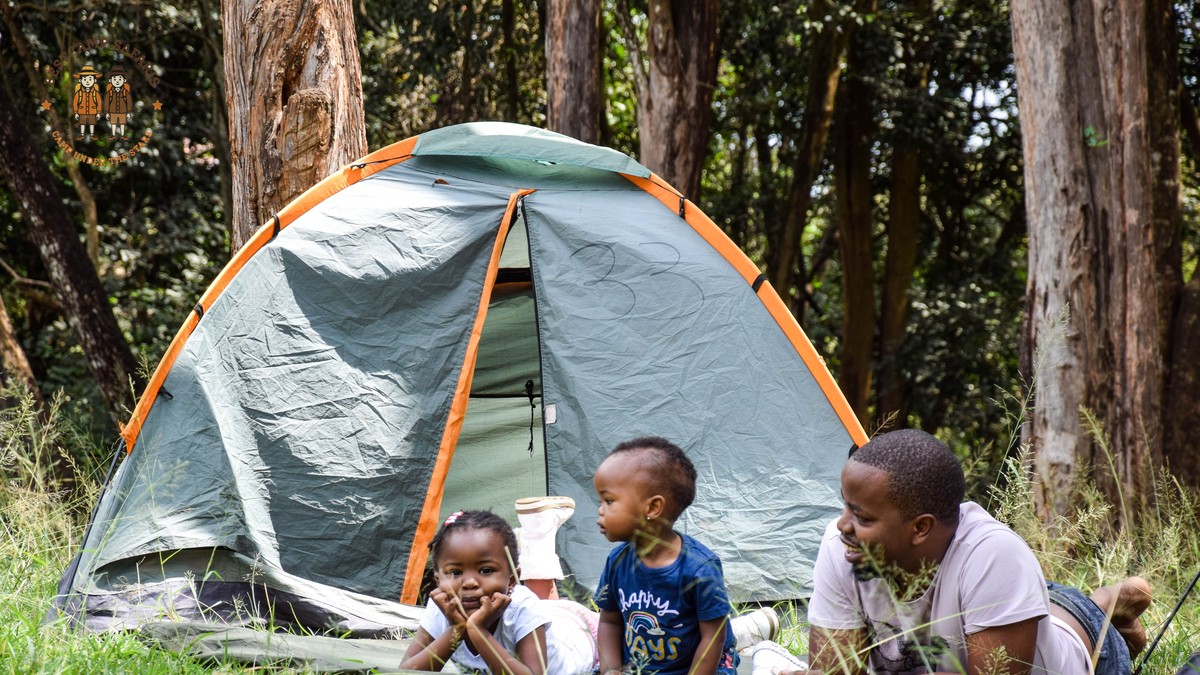
A family-sized tent in a permanent camp is usually canvas over a wooden frame. It has a proper bed, a private bathroom with a flush toilet, and sometimes a veranda. In a mobile tented camp, the setup is simpler. The canvas is double-layered for warmth. The floor is a raised wooden platform. You might have a bucket shower instead of a plumbed one.
Before you book, ask if the tent has two separate sleeping areas. This allows parents to stay up late while kids sleep. Also ask about the distance to the central dining tent. With a toddler, a 5-minute walk in the dark is not ideal. Some camps provide a flashlight and an escort for evening walks.
Sample Itinerary: 7 Nights from Nairobi
Here is a realistic plan for a first-time family trip.
| Night | Location | Base Camp | Main Activities |
|---|---|---|---|
| 1 | Nairobi | Your hotel | Arrive, rest, recover from flight |
| 2-4 | Masai Mara Reserve | River-side camp | Afternoon game drive, full day in the reserve |
| 5 | Travel | Naboisho Conservancy | Easy transfer, afternoon walk or drive |
| 6-7 | Naboisho | Luxury fly-camp | Night drives, sundowners, bush breakfast |
Total cost estimate for a family of four (two adults, two kids under 12):
- Park fees: USD 200 per adult per day for the Mara. This is higher from July to December. It is USD 100 per adult from January to June. 3 nights in the Mara costs USD 1,200 for adults alone.
- Naboisho Conservancy fees: This is bundled into the lodge rate. The rate is roughly USD 80 to USD 150 per person per night.
- Flights from India: USD 450 to USD 700 per person return in economy.
- Accommodation with meals: USD 300 to USD 500 per adult per night for mid-range, or USD 600+ for premium.
For a full breakdown, a realistic total for a 7-night family safari is between USD 8,000 and USD 12,000, excluding international flights. This is a labeled indicative range based on current rates.
What Is Included and What Is Not
Most camp rates are “fully inclusive”. This usually means:
- All meals and select drinks
- Two scheduled game drives per day
- Conservancy or park fees where applicable
- Airport airstrip transfers
- Laundry service (at most camps)
It does not usually include:
- Masai Mara Reserve daily entrance fee (paid separately, cash or card)
- International flights
- Tips for guides and camp staff (budget USD 10 to USD 15 per person per day)
- Visas and travel insurance
- Hot air balloon rides (around USD 450 per adult)
Please carry enough US dollars in cash for tips and small purchases. The camps trade in US dollars, not Indian rupees.
Packing for Kenyan Mornings
The best advice we can give is about layers. Mornings start cold, often around 10 to 12 degrees Celsius. By mid-day it can be 28 degrees. You will peel off fleeces and put on hats. Do this multiple times a day.
Pack a small duffel bag, not a large suitcase. The small aircraft that fly to the Mara have a luggage limit. The usual limit is 15 kilograms per person in a soft-sided bag. Hard-shell suitcases do not fit in the cargo hold.
For kids, pack:
- A warm fleece jacket and a windbreaker
- Long trousers for evening drives
- Closed-toe shoes for walking
- Sun hat and sunglasses
- High-SPF sunscreen, preferably reef-safe
- Insect repellent containing DEET
- A refillable water bottle for each child
Health, Safety, and Vaccinations
Kenya is a malaria zone. The Masai Mara sits at altitude, but malaria is still present. Talk to a travel doctor in India at least four weeks before your trip. They will likely prescribe anti-malarial tablets for the family.
Vaccinations required for Indian citizens are a Yellow Fever certificate. You need this if you fly direct to Kenya. It is a legal requirement for entry. Carry the certificate with you. Typhoid and Hepatitis A are recommended but not always mandatory.
Do not drink tap water. Every camp provides filtered or bottled water for free. Use this for brushing teeth too. The food at camps is cooked and safe. Stick to cooked vegetables and ripe fruit that you peel yourself.
Can Guides Speak Hindi or Gujarati?
The short answer is sometimes. Many guides in the Mara grew up in Kenya, and many speak Swahili and English. Some speak Hindi or Gujarati because of local communities. It is not standard.
Ask your BestCamp Safaris planner to request a Gujarati-speaking guide for you at the camp. This is possible at some properties, but you must ask in advance. If a Gujarati guide is not available, Hindi is more common. If you get an English-only guide, that is still fine. The game drive language is simple. You will be pointing at animals most of the time anyway.
The BestCamp Safaris Difference
We get your specific situation. A family safari Kenya Gujarati speaking parents plan needs detail, not generalities. We have slept in the tents, tested the Jain kitchens, and timed the drives. We know which camp has a reliable babysitter, and which one only has a fridge full of soda.
We work with a select number of camps. We choose them based on food verification, child facilities, and how smooth the camp move is. We will tell you honestly that the camp with the best Jain food is a fly-in property in the Mara North Conservancy, and that it costs more. We will also tell you that the road camp might work if you pre-order 6 days ahead and bring your own theplas.
You get a real plan with real numbers. No fake promises.
Frequently Asked Questions
Is Kenya safe for families with young children? Yes. Camps are secure, and guides are trained for safety. The main risks are sun and bugs, not crime.
What is the minimum age for kids on safari? Most camps accept children over 6. Many will let younger kids join but may not allow them on evening night drives. Ask when booking.
Is strict Jain food available? Yes, at higher-end camps that confirm separate kitchens. Budget camps need 5+ days notice and may compromise.
Does Kenya have direct flights from India? Yes, from Mumbai to Nairobi daily. No direct from Ahmedabad.
How much does a family safari cost from India? Expect USD 8,000 to USD 12,000 for a family of four for 7 nights, excluding international flights.
Do Indian citizens need a visa? Yes, an eTA applied online. Cost is about USD 34 per person.
Ready to Plan Your Family Safari in Kenya?
Planning a trip with kids is about timing, food, and rest. We make that easy. We match you with camps that pass our strict food and family checks.
Contact BestCamp Safaris through our tour page or contact page. Tell us your kids’ ages, your dietary rules, and your travel months. We will send you a detailed plan with exact camp names and prices. Your kids will remember the elephants. You will remember the peace of mind.
Plan your family safari with BestCamp Safaris


