
 Adventure Tours
The first time I woke up in a mobile tented camp in the Masai Mara, I heard hyenas before I heard my alarm. It was 5am, the canvas was cold and damp with dew, and someone was already boiling water outside for the wash basin. That moment costs very different amounts of money depending on which camp you book, and most comparison guides never explain why.
This post breaks down luxury vs budget safari camp Kenya options using real camps, real prices, and real logistics. No vague tiers. Just what you get for what you pay.
Luxury vs Budget Safari Camp Kenya: What Counts as Each Tier
A budget camp usually means a fixed or semi-permanent tented camp outside the main reserve gate, with shared facilities and a set daily schedule. A luxury camp means a private conservancy location, an en-suite tent or villa, and a level of staffing built around one small group at a time.
Mid-range sits between the two. It is often the best value, since you still get a private vehicle and a real bathroom, without paying for a plunge pool you’ll use twice.
The difference is not really about how many animals you see. It is about space, privacy, and how much of the day is planned around you specifically.
Accommodation and Tent Comparison
Budget camps put you in a dome or canvas tent with two camp beds, a shared ablution block, or a bucket shower filled on request. If you have never used one, read what a bucket shower at a budget camp actually involves before you go. That way it will not catch you off guard on night one.
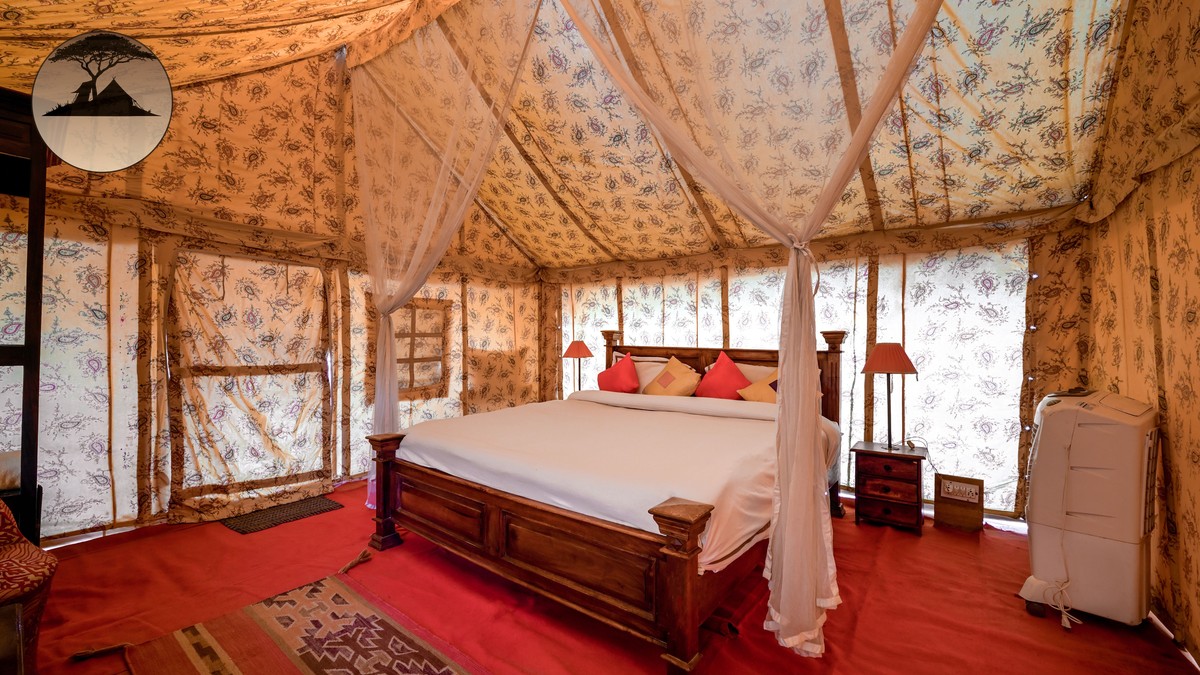
Mid-range camps give you a walk-in canvas tent with an attached bathroom, a proper flush toilet, and a shower fed by a solar heater. Luxury camps go further: king beds, indoor and outdoor showers, sometimes a private plunge pool, and a veranda facing the river or the plains.
At a camp like Angama Mara, on the Oloololo Escarpment above the Mara, the tents are closer to a boutique hotel room than anything canvas usually suggests. At a public campsite near Talek gate, you are close to the ground, close to camp noise, and close to the budget you set.
Price Per Person Per Night: A Real Comparison
Prices below are indicative ranges for 2026, based on typical rack rates for the Masai Mara region. Always confirm current rates directly, since camps adjust seasonally.
| Tier | Example camp | Location | Price per person/night (all-in) | Vehicle | Bathroom |
|---|---|---|---|---|---|
| Budget | Typical budget tented camp, Talek area | Outside Masai Mara Reserve, near Talek gate | $150-250 | Shared 6-7 seat vehicle | Shared block or bucket shower |
| Mid-range | Basecamp Eagle View | Naboisho Conservancy, on an escarpment above the Koiyaki Plains | $350-550 | Shared vehicle, max 6 guests | En-suite, hot shower |
| Luxury | Angama Mara | Oloololo Escarpment, above the Mara | $800-2,000+ | Private vehicle | En-suite, sometimes plunge pool |
| Luxury | Cottar’s 1920s Camp | Olderkesi Conservancy, southeastern Mara, bordering the Serengeti | $800-2,000+ | Private vehicle | En-suite, sometimes plunge pool |
The budget row is a composite of typical camps in the Talek area, not one named property, since budget operators and their rates change often. Mid-range and luxury rows name specific camps you can look up and book directly.
On top of the room rate, most conservancy camps add a separate nightly conservancy fee, often $80 to $100 per person, in addition to any national reserve entry fee. This is one of the biggest hidden costs in a luxury quote. It is worth understanding how conservancy fees stack on top of luxury camp rates before you compare two prices that look similar on the surface.
Masai Mara National Reserve also charges a non-resident entry fee, payable whether you stay budget or luxury, if your camp sits inside or borders the reserve. Narok County manages the reserve and has adjusted this fee more than once in recent years. Published rates have moved in the rough range of $80 to $200 per adult per day, depending on season. Treat any figure here as an estimate rather than a fixed number. Confirm the exact current rate with your camp or tour operator before you lock in a budget, since county rates can change with little notice.
Game Drive Vehicles and Group Size
This is where the budget and luxury experience feels most different in practice. Budget camps run shared 4×4 vehicles, often seating 6 to 7 guests, sometimes mixed between different rooms in camp. You do not choose your drive time. You go when the truck goes.
Luxury camps and most conservancy properties give you a private vehicle, sometimes with just your own group and a dedicated guide. You can ask to stay with a hunting cheetah for an extra 40 minutes, or head out before sunrise instead of after breakfast.
A shared vehicle from Nairobi’s Wilson Airport to a Mara airstrip is not part of this comparison. That flight, around 45 minutes, or a road transfer of roughly 270 km and 5 to 6 hours, is usually priced the same regardless of camp tier.
Dining and Food and Drink
Budget camps serve set menus, buffet-style, with tea, coffee, and juice included. Alcohol is usually pay-as-you-go. Meals are good, hearty, and timed around the drive schedule rather than around you.
Luxury camps build meals into the experience itself. Think a bush breakfast table set up mid-drive, with linen and a folding chair, packed away again before the heat sets in. Wine, spirits, and sometimes a private dinner under the stars are often included in the nightly rate. It is one of the clearest luxury markers, because staffing that kind of meal takes people, not just ingredients.
Guides, Staff Ratio, and Service Level
Budget camps run a lean team. One guide might cover two or three vehicles’ worth of guests across a day, and camp staff rotate through several tasks. It works, but you are one of many.
Luxury camps often run close to a one-to-one staff-to-guest ratio once you count the guide, the tracker, the butler service, and the kitchen team assigned that night. Your guide learns your name and your interests by the second drive.
Mid-range sits in between, usually with one guide per vehicle and a smaller, more personal camp team than budget, without the full luxury staffing model.
Best Parks and Conservancies for Each Tier
Budget travelers do well in areas just outside the main reserves, like Talek or Sekenani near the Masai Mara. Camps there are cheaper, and drives into the reserve still take only 10 to 20 minutes.
Luxury travelers get the most value in private conservancies bordering the Mara, such as Naboisho, Mara North, Olderkesi, or Olare Motorogi. Guest numbers are capped by contract, and walking safaris and night drives are allowed, unlike inside the national reserve itself.
Amboseli, with its Kilimanjaro backdrop, and Samburu, further north, both offer the same budget-to-luxury spread, though camp density is lower at both. Drive time from Nairobi to Amboseli is usually 4 to 5 hours by road, a little shorter than the Mara road transfer. Samburu sits farther north again and takes longer still to reach by road.
How to Decide Which Tier Is Right for You
Ask yourself three questions. Do you need a private vehicle, or are you happy sharing with people you’ll likely enjoy meeting? Do you want a bathroom in your tent, or can you handle a short walk to a shared block? And is a sundowner with wine included worth $300 or more a night to you, compared to buying your own beer at a budget bar tent?
If you answered “share is fine” twice, budget or mid-range will serve you well. You will see the same wildlife as anyone else in the same reserve that week. If privacy and pace matter more than saving money, luxury earns its price.
Tips for Getting the Best Value
Book mid-range over strict budget if you can stretch the difference. The jump from a shared block to an en-suite tent matters more to comfort than the jump from en-suite to a plunge pool.
Travel in the shoulder months, like November or March, when luxury camps often drop rates by 20 to 30 percent but wildlife viewing is still strong. Ask camps directly about connectivity too. Wifi and charging access at different camp tiers varies a lot, and budget camps sometimes only offer charging at a central mess tent, not in your room.
FAQ
Is a budget safari in Kenya worth it? Yes. You see the same animals in the same reserve, with less privacy and simpler facilities.
How much does a luxury safari cost per day in Kenya? Roughly $800 to $2,000 or more per person, per night, all-in, before flights.
How much does a budget safari cost per day in Kenya? Roughly $150 to $250 per person, per night, plus park fees.
Do budget camps have shared or communal bathrooms? Often yes, though some offer a private bucket shower on request.
How many people share a vehicle on a budget safari? Usually 6 to 7 guests in one 4×4.
Is it worth paying extra for a private conservancy? If you want walking safaris, night drives, or fewer vehicles at a sighting, yes.
What do you give up by choosing a budget camp? Privacy, a private vehicle, and included alcohol, mainly. The wildlife access stays the same.
The BestCamp Safaris Difference
We have stayed in both. We know what a 5am wake-up feels like on a camp bed with two blankets, and what it feels like with a hot water bottle already tucked in for you. Our team builds trips around your actual budget, not a generic tier. We tell you upfront which costs are baked into the room rate, and which ones, like conservancy fees, get added on. No guesswork, no inflated quotes.
Plan Your Trip
Ready to compare real camps and real prices for your dates? Talk to our safari planning team and we will map out a Masai Mara itinerary that matches your budget. That could mean a shared vehicle and a bucket shower, or a private plunge pool above the escarpment.


