
 Adventure Tours
The first time I heard “your shower is ready” shouted outside my tent at a fly camp near the Chyulu Hills, I had no idea what to do next. It was just past 6pm, the light was going orange over the lava rock, and a camp attendant named Josphat was already hauling a canvas bag up a pole behind my tent. That bag was my shower. This is a bucket shower safari camp explained the way nobody explained it to me: what it actually is, how much water you get, and what happens if you’re not fast enough.
If you’re planning your first trip and keep seeing “bucket shower” listed in a mobile camp’s amenities, this guide walks through the whole thing, no vague brochure language.
Bucket Shower Safari Camp Explained: What It Actually Is
A bucket shower is exactly what it sounds like, with one upgrade. Instead of tipping water over your head from a bucket, camps rig a canvas or rubber bag to a pulley system mounted on a pole or tree branch above a private shower area at the back of your tent. A camp attendant fills that bag with hot water, hoists it up, and connects it to a simple showerhead, usually a wide, rain-style nozzle.
You get an on-off valve, sometimes a rope you pull to open and close the flow. Water comes down by gravity, not pressure. It feels less like a hotel shower and more like standing under a warm rain cloud that someone controls from a hook.
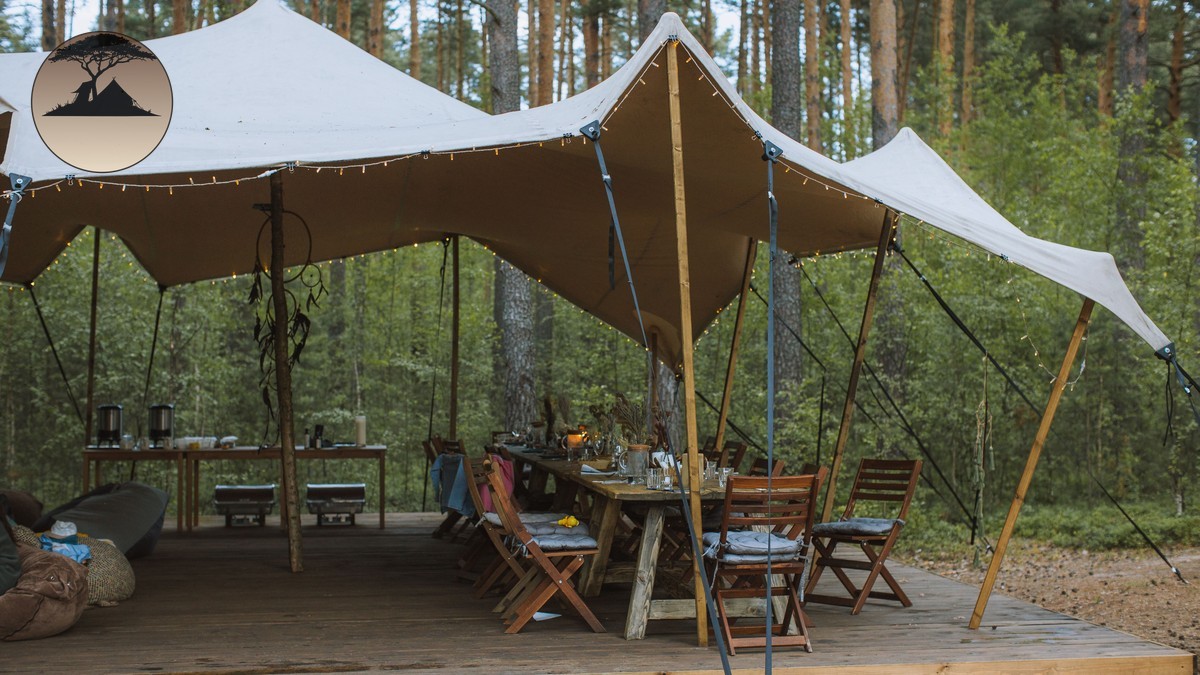
Most mobile camps and fly camps in Kenya use this setup because there’s no borehole, no plumbing, and no reliable grid power out in a conservancy or a temporary site. You can read more about how mobile camps are set up and torn down if you want the full picture of what happens before you ever step foot on site.
How the Water Gets Hot
Two methods dominate in Kenya. The older, more common one is a wood-fired water heater called a “donkey boiler,” a metal drum set over a small fire that heats water fast, usually in 15 to 20 minutes. Staff time this to your game drive schedule so it’s ready when you get back to camp.
The newer method is solar. Camps with a fixed water tank, like some of the semi-permanent sites in the Maasai Mara conservancies, run water through solar-heated coils during the day. By late afternoon it’s warm without anyone lighting a fire.
Here’s the trade-off nobody else tells you straight: wood-heated water often carries a faint woodsmoke smell, which some guests find part of the charm and others find odd on their skin. Solar water has no smell at all, but on a cloudy day, or after 6pm in June and July when temperatures drop fast at altitude, it can run cooler than you’d like.
How Much Water Do You Actually Get?
This is the number everyone actually wants. Bucket shower bags typically hold between 10 and 20 liters (2.5 to 5 gallons), though some larger camp setups use bags up to 40 liters for two people sharing a tent. For comparison, a standard home shower head in the US uses roughly 9 liters a minute, so a 15-liter bucket gives you about 100 seconds of continuous flow if you leave the tap running the whole time.
That’s the whole game. You’re not meant to leave it running.
| What you’re doing | Water used (approx.) |
|---|---|
| Wetting down | 2-3 liters |
| Shampoo and soap (tap off) | 0 liters |
| Rinsing hair | 4-6 liters |
| Rinsing body | 4-6 liters |
| Buffer left over | 2-3 liters |
A 15-liter bag covers one adult comfortably if you shut the tap off between wetting and rinsing. Two people sharing a 20-liter bag will need to hustle, and the second person often gets a noticeably cooler stream by the end.
Step-by-Step: Using a Bucket Shower Without Getting Cold Halfway Through
- Tell your attendant your preferred shower time when you check in, usually right before dinner or right after the morning game drive.
- Wait for the call. Staff fill and hoist the bag only when you’re ready, so the water doesn’t cool while it waits.
- Step in and open the valve to wet down fully. This takes 15 to 20 seconds.
- Close the valve. Lather up, shampoo, shave, whatever you need, with the water off.
- Open the valve again to rinse. Move fast and rinse hair first, since heat rises and the last liters run cooler.
- Close the valve as soon as you’re clean. There’s rarely a refill mid-shower unless you ask in advance.
If you’re staying at a genuine fly camp, like a Chyulu Hills fly camping safari, expect this exact rhythm every evening. It becomes routine by night two.
Tips to Avoid a Cold Shower
- Shower first if you can. Whoever goes first in a shared tent gets the hottest, fullest bag.
- Ask for a slightly later fill time if you’re not ready right when the drive gets back. Staff would rather delay ten minutes than reheat cooled water.
- Keep shampoo and soap within arm’s reach before you turn the tap on the first time. Fumbling costs you liters.
- In cooler months (June through August, when Mara nights can drop to 10°C), ask for an extra top-up bag if you’re washing longer hair. Most camps will do this without charge.
- If you’re worried about the water itself rather than the temperature, it’s worth understanding whether tap water is safe on a Kenya safari before you travel, since shower water and drinking water follow very different rules at camp.
Do All Camps Use Bucket Showers?
No. Bucket showers are mostly a mobile and fly camp feature. Permanent lodges with borehole access and grid or generator power usually run plumbed showers with a header tank, which gives steadier pressure and a longer hot-water window, though still not unlimited.
| Camp type | Example location | Distance from Nairobi | Shower system | Typical water per shower |
|---|---|---|---|---|
| Fly camp | Chyulu Hills | approx. 220 km / 4-5 hr drive | Bucket, wood-fired | 10-15 liters |
| Mobile tented camp | Maasai Mara Reserve | approx. 270 km / 5-6 hr drive or 45 min flight | Bucket, wood-fired or solar | 15-20 liters |
| Semi-permanent tented camp | Amboseli region | approx. 240 km / 4 hr drive | Bucket or gravity tank, solar | 20-40 liters |
| Permanent lodge | Tsavo West | approx. 240 km / 4 hr drive | Plumbed, header tank | Unlimited (lower pressure) |
Park fees vary by reserve and change year to year, so treat these as indicative: Maasai Mara National Reserve runs around USD 80 per person per day, Amboseli National Park around USD 60, and Tsavo West around USD 52. Always confirm current rates when booking, since county and KWS fees are adjusted periodically.
The BestCamp Safaris Difference
We tell you which camp on your itinerary has a bucket shower and which has plumbing, before you pack. That sounds small until you’re the second person in your tent standing under a stream that’s gone lukewarm.
Our guides also coordinate shower timing with the actual game drive schedule at each camp, not a generic dinner-hour guess, so your water is hottest when you’re most likely to want it, right after a dusty afternoon drive. And if you’re on a multi-camp itinerary that moves between a fly camp and a lodge, we flag the shift in advance so nothing catches you off guard on night three.
We’ve slept in these tents ourselves. We know which camps smell faintly of woodsmoke after a shower and which run silent solar lines, and we’ll tell you the difference honestly rather than let you find out at 6pm with soap in your eyes.
Plan Your Trip
A bucket shower is a small detail, but it says a lot about how a camp runs, how staff pay attention, and how close you’ll feel to the bush at night. If you want a first safari where the small logistics are handled before you arrive, start planning your trip with BestCamp Safaris and we’ll walk you through exactly what each camp on your route provides.


